Pablo Torre's Investigation Unveils Clippers' Major Violations
Pablo Torre didn’t wait for the NBA to validate his work. He couldn’t. Not when the richest owner in the league, a global sports media giant, and a chorus of high-profile critics were all pushing back on his story.
But when the league finally dropped the hammer on the Los Angeles Clippers, the plot twisted in his direction.
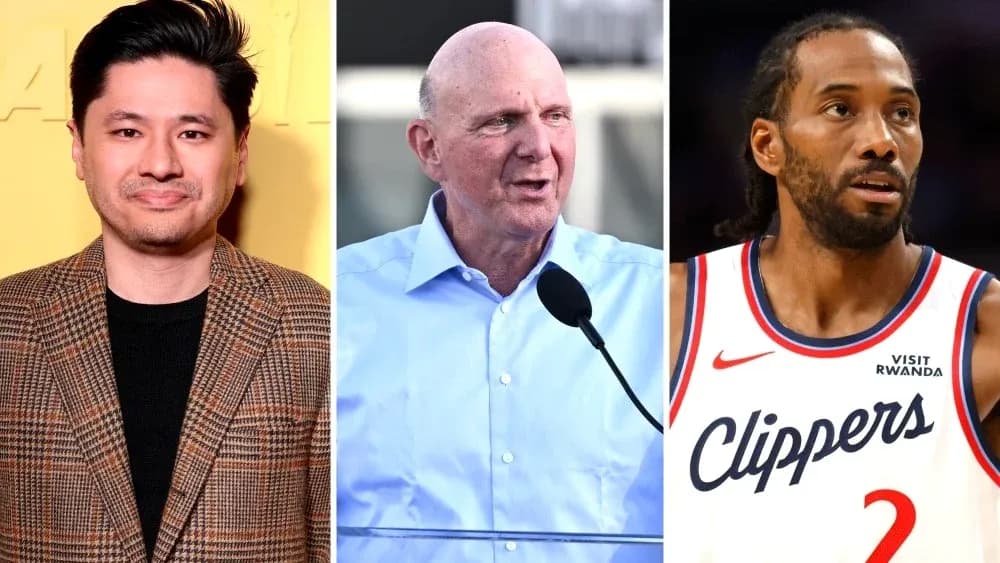
A $30 million fine. Five first-round draft picks stripped. A year-long suspension for Steve Ballmer. The harshest punishment ever handed to an NBA franchise. All tied to the same web of off-court money, back-channel deals and salary-cap gymnastics that Torre’s podcast, “Pablo Torre Finds Out,” had been digging into for months.
The NBA’s independent investigation, led by the law firm Wachtell Lipton, concluded the Clippers had “committed multiple significant rules violations.” It found that Kawhi Leonard, through his uncle Dennis Robertson, pushed the organization to “assist him in obtaining off-court income opportunities,” secured those opportunities, and then failed to reimburse the team for personal expenses it covered.
For Torre, who’d already won a Pulitzer Prize for his work on the case, the ruling didn’t feel like a victory lap so much as confirmation of a story he’d already told in painstaking detail.
“Journalism does not exist to be validated by the entity it investigates,” he says. He’s careful with the word “vindication,” even now. The work, he insists, has to stand on its own.
It had not felt that way in August.
That was when ESPN — his former employer — published a story headlined, “Sources: NBA has no evidence Ballmer funneled money to Leonard via sponsors.” The piece framed the Clippers and Ballmer as clear of the most explosive accusation and, in the process, cast doubt on Torre’s reporting without ever calling him before publication.
The fallout was immediate. Ballmer had already “vehemently” denied any role in an alleged $28 million no-show endorsement deal for Leonard from Aspiration, whose co-founder is now serving 14 years in prison for defrauding investors — Ballmer among them. Ballmer’s allies lined up behind him. Mark Cuban and Ty Lawson blasted Torre publicly. Puck’s Peter Hamby accused him of chasing “clout and clicks and building your audience.”
Now, the league’s own report paints a very different picture of what went on in Los Angeles.
Adam Silver didn’t hold back. The commissioner called the violations “flagrant” and ripped the Clippers’ “institutional and leadership failures.” Leonard, for his part, released a carefully worded statement: “I accept full responsibility for the lapses in judgment by people within my inner circle,” he said, while insisting “integrity and respect for this game are fundamental to who I am.”
Ballmer went the other way. He labeled the probe “a heavily biased investigation” and vowed to explore “every legal remedy to address this gross injustice.”
The clash was dramatic. The subtext was familiar to Torre. Billionaire owner versus investigative reporter. Superstar versus uncomfortable facts. Legacy media versus an independent podcast that had slowly, methodically, followed the money.
The ESPN episode still gnaws at him.
He describes “not a great” experience watching his old network publish a story that mirrored the Clippers’ preferred narrative. He says a crisis PR manager hired by Ballmer shopped around a version of events that would best protect the owner. The result, in Torre’s view: a piece that looked and sounded a lot like the team’s own press release.
The NBA shot that framing down almost immediately. Torre says the league refuted the idea that there was “no evidence” of wrongdoing. His frustration runs deeper than that. ESPN, he says, never called him before running the story. When he later provided a statement — “We stand by our reporting. We look forward to the NBA’s ruling. And our investigation continues.” — he was told it would be included. It wasn’t.
So he watched as a mainstream behemoth weighed his yearlong, document-heavy, source-backed series against a crisis-management campaign and decided the latter sounded more credible than a reporter it once employed.
Puck’s criticism cut on a different axis. Hamby’s podcast, which painted Torre as a clout-chaser, felt “strangely personal,” he says. To Torre, it came from people who hadn’t really engaged with the work, yet felt free to attack his standards and credibility. “Either incompetence or malice,” he says now. He no longer cares which.
Some of the loudest voices against him have since walked their comments back. Cuban and Lawson both issued public apologies, which Torre says he “deeply appreciated.” But the bigger question — why so many people instinctively sided with the billionaire and the superstar over a Pulitzer-winning, deeply sourced investigation — still lingers.
On the court, the power imbalance is obvious. Off it, Torre’s reporting exposed just how far a franchise was willing to go to keep a generational talent happy.
The league’s sanctions landed hardest on Ballmer and the Clippers. Leonard, who benefited financially from the scheme, walked away with a $700,000 fine and no suspension. A relative slap on the wrist for a player who, according to Torre’s reporting and the NBA’s findings, pocketed tens of millions.
It looked like a soft touch. It wasn’t an accident.
Torre’s work suggests the NBA made a calculated decision: give Leonard and the players’ union enough to settle, keep arbitration off the table, and avoid a prolonged, messy fight that could drag the league through a public legal grinder. By settling with Leonard, the league removed one of Ballmer’s strongest tools to contest the punishment inside the NBA’s own system.
That left the Clippers owner with one path: court.
Ballmer has already signaled he’s willing to take it, threatening to sue the NBA, Silver, Wachtell Lipton, Torre — “whoever he wants,” as Torre puts it. The league’s legal strategy, in Torre’s view, is not a clean mirror of the full truth or of everyone’s culpability. It’s a compromise designed to contain damage.
Leonard’s statement fits that pattern. It nods to “lapses in judgment” by people in his “inner circle” while maintaining that his own integrity remains intact. Torre doesn’t buy the idea that Leonard was in the dark. He points to meetings Leonard attended, requests he knew about, and documents bearing his signature, in sections affirming his knowledge and consent.
“Kawhi Leonard is an adult,” Torre says flatly. At 35, he knew what was on the table. Still, the statement gives Leonard a clean exit line: regret, a hint of contrition, and then a fresh start in Toronto, where he’s expected to land via trade.
The irony is sharp. This entire saga, Torre argues, is about a player Ballmer wanted so desperately that he exposed himself and his franchise to a set of risks he either didn’t see or chose to ignore.
Torre, meanwhile, is already chasing the next story.
He’s not, he stresses, investigating the New York Knicks or Jalen Brunson. “They are not a target,” he says. “At the moment I’m absolutely not focusing on the Knicks or Jalen Brunson.”
His attention has shifted across town — and across sports.
On his podcast, Torre is about to launch a new multi-part investigation into Mark Walter, the Los Angeles Dodgers owner who is under federal scrutiny over $21 billion in undisclosed loans made by two insurance companies he owns. Walter recently sold the Lakers to Bob Iger and Joshua Kushner for $12.5 billion, a transaction that has raised its own set of questions.
Torre says part one drops Friday. It involves federal agencies. It involves Hall of Fame basketball players. It involves a team in Los Angeles — and a baseball team in Los Angeles. The goal is familiar: take something that looks impossibly complex and show the public why it’s not just understandable, but urgent.
The sale of the Lakers to Iger and Kushner is one of the entry points, not the whole story. Torre and his team have spent months on the reporting, ramping up in recent weeks as the Clippers case reached its climax.
The league has rendered its verdict on Ballmer and Leonard. The penalties are historic. The statements are on the record. The lawsuits are likely coming.
Torre’s work, though, keeps moving to the next fault line in the sports world’s money and power. The question now isn’t whether he’ll be vindicated again.
It’s who, exactly, is ready to be investigated next.