Northwest Division: A New Era of Competition
The Northwest Division has teeth again.
From Nikola Jokić’s ticking title window in Denver to a LaMelo-fueled reset in Minnesota and a retooled contender in Oklahoma City, this is no longer a soft landing spot on the schedule. Portland suddenly has star power again. Utah might finally have its next headliner. Every night looks like a problem.
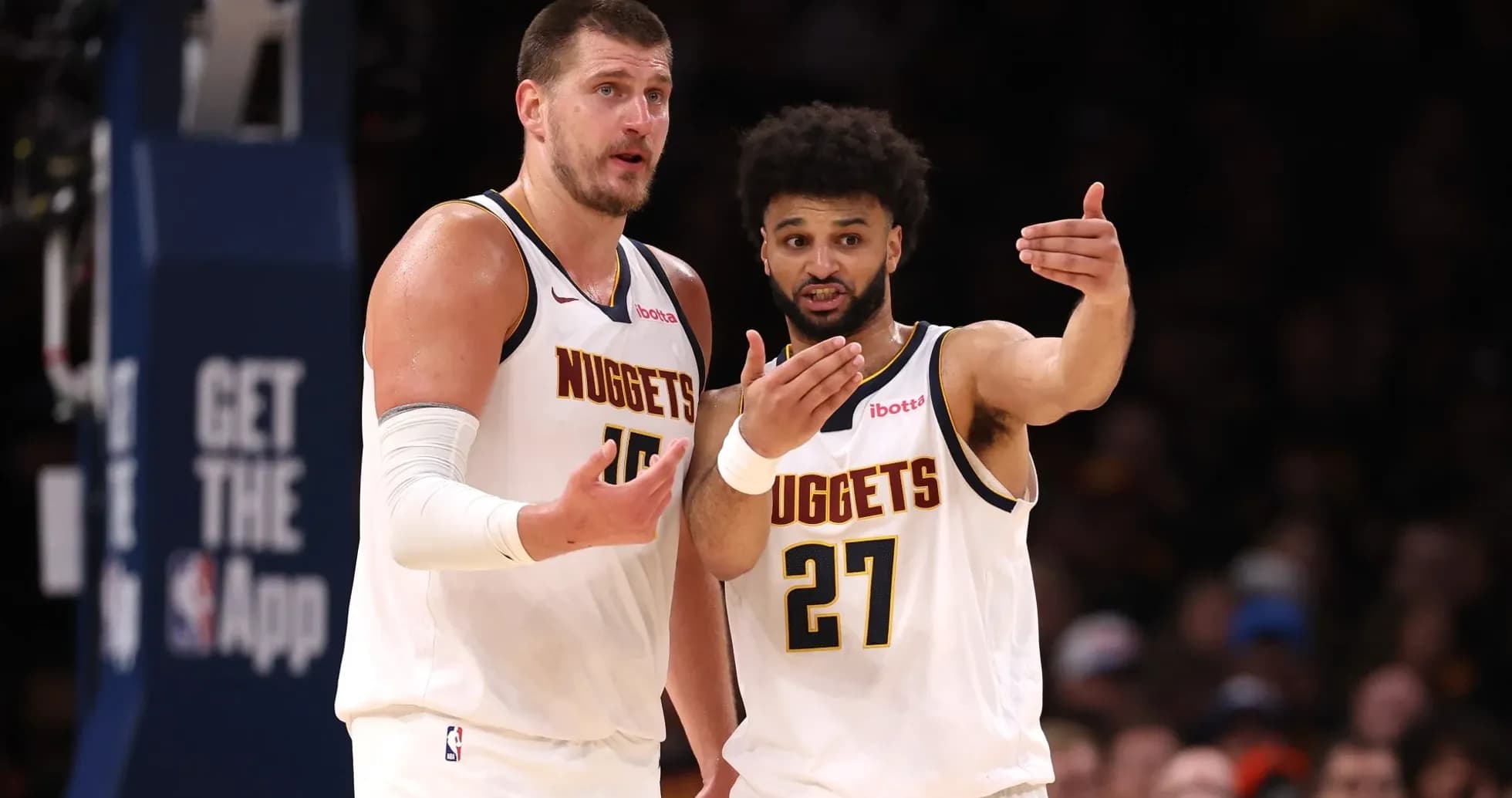
Denver Nuggets: Racing the Clock, Not the Conference
The Nuggets just survived a season that would’ve buckled most teams. Aaron Gordon played only 36 games. Nikola Jokić missed nearly a month. They still went 54-28 and then crashed out in the first round.
The mission hasn’t changed: squeeze everything out of Jokić’s remaining MVP-level years. Denver now lives in the same existential space as the Warriors with Stephen Curry and, until recently, the Bucks with Giannis Antetokounmpo. How many more seasons at this level do you get? How many can you afford to waste?
Denver’s answer is continuity at the top and calculated risk around the edges. Jokić still has Jamal Murray. Gordon is still the ideal connective piece, if he can finally stay on the floor. That trio alone is good enough to drag this group to 50 wins in a loaded West.
The real swing comes from the supporting cast. Peyton Watson is gone, shipped out largely to ease financial pressure. In his place, the Nuggets are betting on volume and versatility: Marvin Bagley III, Bruce Brown back in the fold, Trevon Brazile, Alpha Diallo, Bryce Hopkins. That’s not star power. That’s a challenge.
Can DeMar DeRozan still manufacture big buckets when the offense stalls? Can Cam Johnson stretch the floor consistently enough to open Jokić’s passing lanes? Can Christian Braun and Bagley inject the energy and scoring punch Denver lacked in the postseason?
If those answers trend positive, Denver isn’t just hanging on to contention. It’s right back in the middle of it.
Minnesota Timberwolves: LaMelo Arrives, the Ceiling Moves
Minnesota’s rise stalled, but it didn’t collapse. After two straight trips to the Western Conference Finals, the Timberwolves stepped back, bowing out in the second round despite a 49-33 record and another blistering year from Anthony Edwards.
So the front office went hunting for the one thing Edwards never had in Minnesota: a genuine, top-tier point guard.
Enter LaMelo Ball.
For the first time, Edwards won’t have to moonlight as both primary scorer and lead playmaker. Ball changes the geometry of this team. He lives to survey the floor, to sling passes into windows others don’t see, to turn a simple pick-and-roll into a highlight. He can be reckless, yes, but he’s never shared the court with an MVP-level force like Edwards before. That cuts both ways.
Ball will make Edwards’ life easier. Edwards will give Ball the kind of elite running mate he’s never had. The Wolves are betting that this partnership doesn’t just work — it explodes.
The roster around them is built to run, jump and suffocate. Jaden McDaniels can guard almost anything. Ayo Dosunmu and Terrence Shannon Jr. bring more length, speed and edge on the perimeter. Rudy Gobert still anchors the back line. Jonathan Kuminga, Trey Lyles and Cody Williams deepen the forward rotation after the exits of Kyle Anderson, Mike Conley, Joe Ingles, Julian Phillips, Julius Randle and Naz Reid.
On paper, this might be the best, and certainly the most athletic, team of Edwards’ tenure. The Wolves didn’t just solve a long-standing point guard problem. They raised the bar on what this group is supposed to be.
Oklahoma City Thunder: Still the Standard
A year after winning the title, Oklahoma City came back with the league’s best record at 64-18 and another MVP campaign from Shai Gilgeous-Alexander. It still ended in frustration: Jalen Williams played only 33 games, and the Thunder lost a Game 7 at home to the Spurs in the Western Conference Finals.
That’s the cruelty of the top tier. One injury, one bad night, and the season is gone.
OKC’s response has been subtle but significant. Some of the championship core is out, mostly under the weight of the salary cap. Lu Dort, their defensive heartbeat on the perimeter, is gone. Isaiah Joe and Aaron Wiggins, two trusted guards who soaked up minutes and allowed Shai to pick his spots and conserve energy, are gone too. Branden Carlson also exits.
In their place: size, youth and more developmental bets. Aday Mara arrives as a skilled big. Otega Oweh and Bennett Stirtz join the backcourt mix. The expectation is clear — this team’s advantage is depth, and that can’t change.
So the onus falls on the next wave. Ajay Mitchell and especially Jared McCain have to step into the space Joe and Wiggins vacated. They don’t need to be stars. They just need to be reliable, tough, and ready when the games tighten.
With a healthy Jalen Williams back, Chet Holmgren coming off an All-NBA season, and Shai still in his prime, the Thunder’s bar remains sky-high. This isn’t a cute young team anymore. It’s a machine with a championship standard, trying to prove last year’s ending was a stumble, not a slide.
Portland Trail Blazers: Star Power, All at Once
Portland wasn’t supposed to matter last season. Then Deni Avdija broke out, the Blazers caught a wave, and 42-40 turned into a surprise playoff berth before a first-round exit.
Now comes the real intrigue.
Micah Nori steps in as a first-time head coach at the exact moment the franchise regains its familiar face and adds another lightning rod. Damian Lillard, who missed all of last season while recovering from injury, is back. He’s already cemented as one of the three greatest players in franchise history, alongside Bill Walton and Clyde Drexler. The nostalgia is easy. The fit is the question.
Because this isn’t just Dame’s return. It’s Dame plus Ja Morant.
Morant arrives from Memphis looking to restore his own trajectory, to remind the league he’s more than just a highlight reel and a cautionary tale. How those two share the ball, the stage and the crunch-time possessions will define the Blazers’ season more than any scheme Nori draws up.
There’s plenty around them. Jrue Holiday brings championship poise and defensive steel. Scoot Henderson is still developing, but he’s no afterthought. Donovan Clingan offers size and rim protection. Avdija has already shown he can tilt games.
Jerami Grant, Kris Murray, Matisse Thybulle and Blake Wesley depart, while Branden Carlson, Micah Potter and Jeremy Sochan arrive to reshape the frontcourt and rotation.
Shaedon Sharpe is still on the mend from a knee injury, which tempers some of the wing explosion. Even so, Nori inherits a nucleus that screams postseason. The only real question is how quickly he can turn all that talent into something coherent.
Utah Jazz: A New Hope at No. 2
Utah spent last season doing what rebuilding teams do: taking their lumps. A 22-60 record, no postseason, and a heavy emphasis on youth and development.
The reward might have finally arrived.
The Jazz have never owned the No. 1 overall pick, but drafting second this year might feel close enough. Inside league circles, plenty of draft obsessives believe Darryn Peterson has No. 1-caliber talent anyway. He can score from deep, from mid-range, and at the rim. If that skill set survives the jump to the NBA, Utah may have found the star it’s been chasing in the long, sobering aftermath of the Donovan Mitchell–Rudy Gobert era.
There’s a cost to every step forward. For Utah, it came in the form of Walker Kessler. The seven-footer with elite defensive instincts and soft hands, a player they’d spent years grooming as their center of the future, left for the Lakers in a sign-and-trade. That one stings.
To stabilize the front line, the Jazz brought in Jaxson Hayes, still just 26, and Jusuf Nurkić. Josh Green and Josh Okogie add toughness and defensive bite on the perimeter. Hayden Gray, John Konchar, Kevin Love, Bez Mbeng and Cody Williams move on.
The vision is clear: Peterson, Keyonte George and Ace Bailey are the backcourt and wing engines of tomorrow. Jaren Jackson Jr. and Lauri Markkanen are the established anchors of today. If that young trio can grow fast enough, Utah’s painful reset might finally start to feel like a launch.
In a division this unforgiving, that’s the only way out.