Nikola Jokic: Redefining the Role of a Center in the NBA
Nikola Jokic has turned a 12-year NBA career into a running argument for greatness. Not just “best big man of his era” greatness, but something heavier, something that forces you to rethink what a center can be.
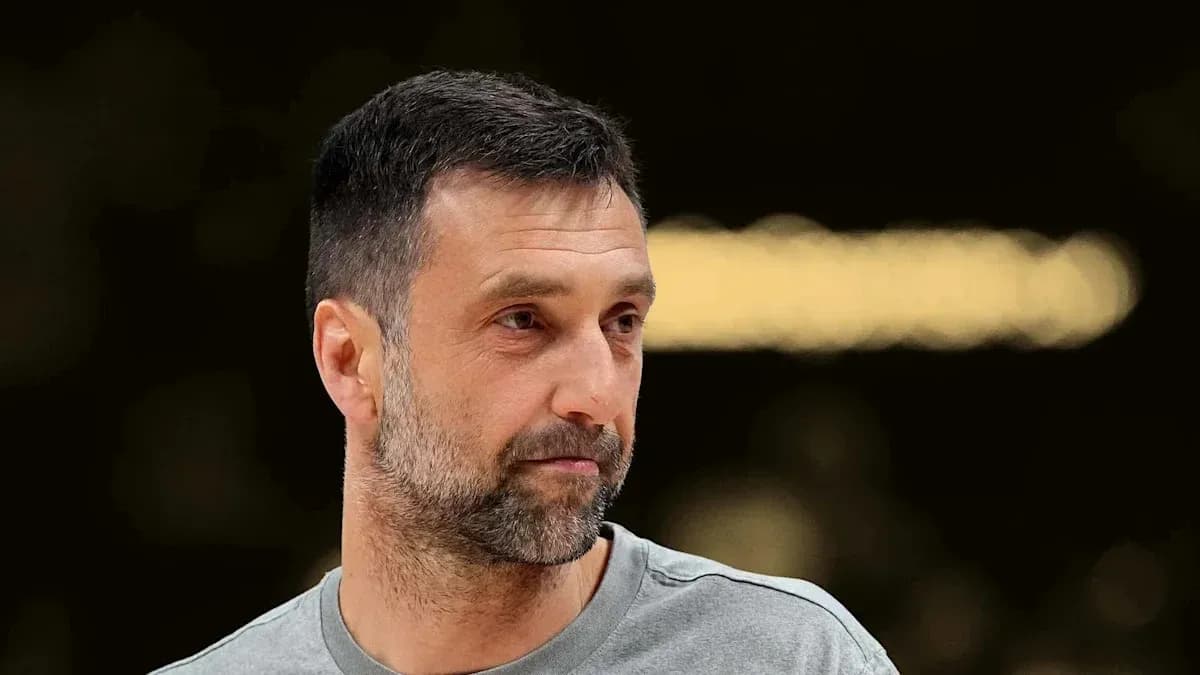
Serbia gave him to the league. Denver gave him the stage. But one of the men who truly understood what was coming was standing next to him long before the parades and the trophies: assistant coach Ognjen “Ogi” Stojakovic.
Seeing a superstar in a “chubby, slow, unathletic guy”
Stojakovic remembers the first time he really watched Jokic. Not the highlight reels, not the draft footage. The player in front of him.
“First thing when I saw him, in my mind, he was a mix of talent, and I always said it. I said Pau Gasol, Steve Nash, and Dirk Nowitzki when I saw him,” Stojakovic told Basketball Network.
That’s not a casual comparison list. Those are three Hall of Fame pillars, three very different kinds of genius. And Jokic, at that stage, didn’t exactly look like a future three-time MVP. He was a plodding, round-edged big from Europe who didn’t fit the modern NBA prototype of a high-flying, end-to-end athlete.
Stojakovic saw past the body type.
For him, Nash was the starting point. “Steve Nash wasn't very fast, right? But he ran a lot. And then he wasn't very athletic, but he could score. He had all those kinds of different shots that helped him to be kind of great. Also, a great passer and so on.”
Gasol brought the template of a big man with touch and skill. “Pau Gasol again, we know big, skilled. He could do a little bit of everything.” Nowitzki added the scoring genius from awkward angles. “Dirk Nowitzki, again, not an athletic guy, but he was able to score a lot of points.”
The more Stojakovic watched, the more the puzzle pieces clicked. “I'm proud that I recognize that. I'm proud that actually I had the right approach,” he said.
He wasn’t just flattering himself. Time has backed him up.
A guard’s mind in a center’s frame
Look at Jokic now and those comparisons feel almost conservative.
His court vision and passing audacity would not have been out of place in Nash’s Phoenix prime. No-look lasers, cross-court darts, pocket passes that slice through defenses before they even rotate—Jokic sees the floor like a point guard, not a 7-footer.
His scoring package leans into that Nowitzki territory: wrong-footed floaters, step-backs, high-arching jumpers from angles that defy coaching manuals. The shots look improvised, even casual. The efficiency screams otherwise.
Then there’s the Gasol influence in his footwork and post craft. Jokic doesn’t need to jump over you when he can step around you. Spins, counters, pivots, soft touch—he plays in tight spaces with a calm that makes double teams feel almost pointless.
Put it all together and you get a rare archetype: a guard trapped in a big man’s body. A 7-footer who can shoot, rebound, pass, dribble, post up, and run an offense at an elite level. Across the NBA’s 80-year history, that combination has barely existed.
Turning “weaknesses” into weapons
The league has sprinted into an era of speed and vertical explosion. Jokic never bothered to chase that trend. He bent the game toward his strengths instead.
Stojakovic recognized early that Denver had something different on its hands. Not a player who needed to be forced into the mold of a rim-running, pick-and-roll big, but a fulcrum. Someone you could build an entire offensive system around.
He had seen this before in pieces. Nash, Gasol, Nowitzki—none of them overwhelmed opponents with raw athleticism. They learned to turn every perceived shortcoming into a competitive edge: angles, timing, touch, positioning.
Stojakovic saw the same path for Jokic and leaned into it.
The work behind the wizardry
Talent alone doesn’t turn a second-round pick into a three-time MVP and a future Hall of Famer. Jokic’s game looks effortless now, but it took years of quiet, detailed work.
Stojakovic lived in that space, in the shadows of the spotlight. Film sessions. Footwork refinement. Reading defenses. Removing weaknesses, one by one, until there were no obvious holes left to attack.
He understood that Jokic’s genius needed structure, not restriction. The job wasn’t to tame his creativity, but to sharpen it. To polish the wild passes without killing the imagination behind them. To expand the scoring package without overloading the playbook.
The result is what the league sees today: a superstar who plays the game entirely on his own terms, with a style that feels both old-school and completely new.
Fans get to enjoy the show. Teammates get the easy buckets. Opponents get the headaches.
And somewhere on the sideline, Ognjen Stojakovic can quietly allow himself a moment of satisfaction. He called it from day one—and then helped make it real.