NBA Roster Changes: Fantasy Implications for Key Teams
The NBA just redrew its own map.
Giannis Antetokounmpo in Miami. LeBron James in Philadelphia. LaMelo Ball running with the Timberwolves. Franchises that once built around those pillars now have to improvise on the fly, and nowhere is that more obvious than in the rotations that will decide who sinks, who swims and who quietly becomes a fantasy goldmine in High Score formats.
Let’s walk through five of the most intriguing puzzles.
Milwaukee Bucks: A New Backcourt, A New Identity
Milwaukee didn’t just pivot this summer. It spun.
Trading Antetokounmpo to the Heat tore up the old blueprint and dropped the Bucks into a different timeline. The return, though, wasn’t about short-term respectability. It was about building a new core. Jaime Jaquez Jr. and Kel’el Ware headline the youth movement, but the real heartbeat of this offense now lives in the backcourt.
Tyler Herro walks in as the primary scorer and, barring a shock, the starting shooting guard. He’s going to have the ball. A lot. Expect him to lead the team in usage and soak up the kind of volume that makes him a weekly High Score anchor.
Next to him, Ryan Rollins looks like the quiet steal of last season turned centerpiece of this one. At 24, he averaged 17.3 points, 4.6 rebounds, 5.6 assists, 1.5 steals and 2.5 threes. Those aren’t empty numbers on a bad team; that’s the statistical profile of a guard you can build around. He should open as the starting point guard and stay there unless something goes badly wrong.
Behind them, the chaos begins—and that’s exactly where fantasy value hides.
Kevin Porter Jr. brings a 24.3% usage rate and a game wired for streaks. He’s at his most dangerous when he dominates the ball, the type of player who can sleepwalk through a week and then explode for 30-plus in one night, single-handedly winning a High Score matchup.
Brayden Burries, taken 10th in the draft, is the organization’s statement of intent. Top-10 guards don’t get drafted to watch. Expect minutes, mistakes, and the freedom to learn on the job. Kasparas Jakučionis, the 20th pick a year ago and part of the Heat haul, adds yet another layer of upside.
On a rebuilding roster, the tie usually breaks toward the rookie. Burries is the late-round swing that makes the most sense, with a long runway and a franchise invested in his success. Porter, though, is the ceiling play. If you only need his best night, not his weekly consistency, his volatility turns from liability into weapon.
Milwaukee isn’t just finding a backcourt. It’s finding its next identity, one possession at a time.
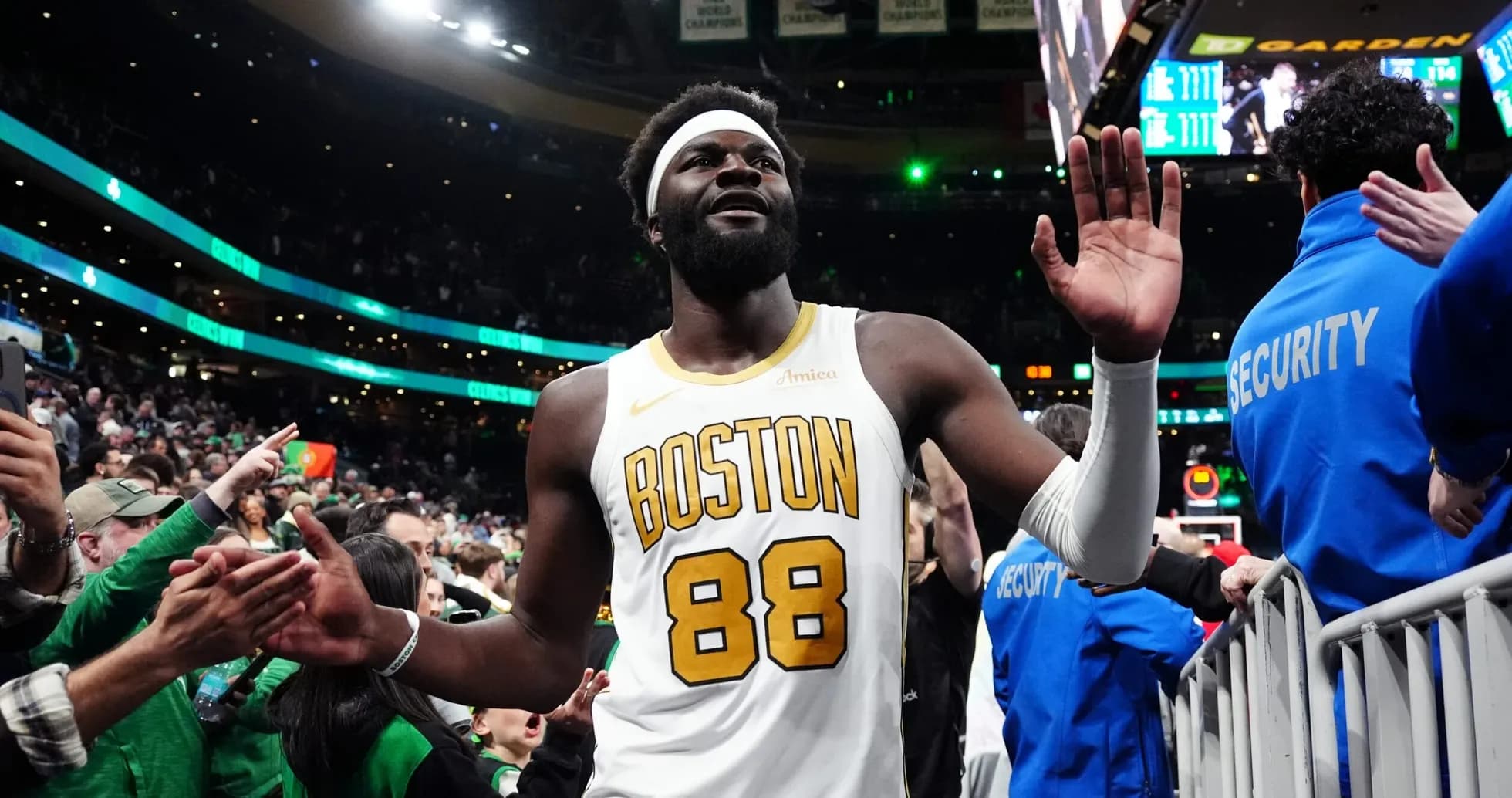
Boston Celtics: Two Big Men, One Crucial Balance
Boston spent last season reshaping its universe around a recovering Jayson Tatum. Center was an afterthought. Then Neemias Queta stepped into the void and made himself useful.
He did enough to keep the job. He didn’t do enough to end the conversation.
At the deadline, the Celtics tried to fast-track the position with Nikola Vučević. The fit never quite clicked in a compressed window, and he’s already out of the picture. The front office went back to the drawing board and came away with a very different answer: Mitchell Robinson.
Poached from the Knicks, Robinson brings elite rebounding and violent rim protection. He’s the more accomplished player, the one with the established formula. New York learned the hard way that his explosiveness comes with a condition: keep his minutes in check. Under 20 per game in each of the last two seasons, and his body held up, his impact stayed sharp.
Boston is likely to respect that blueprint. A bench role, carefully managed minutes, and a focus on keeping him fresh from October to April. Even with that caution, something closer to 25 minutes a night feels realistic.
That’s all he needs.
In High Score, a 14-rebound, three-block line is 23 fantasy points before he even sees the ball go through the net. Robinson instantly becomes one of the better values on the board in that format.
Queta doesn’t disappear. He remains in the rotation and, in ten-man fantasy builds, can be paired with Robinson—one in your starting lineup, the other cycling through a Utility slot depending on matchups and form.
The Celtics don’t need a star at center. They need a partnership that works. Between Robinson’s punch and Queta’s stability, they might have found it.
Charlotte Hornets: A Crowded Center, A Clear Headliner
Charlotte was supposed to be a year away. Instead, the Hornets punched into the Play-In Tournament behind LaMelo Ball, Brandon Miller and Kon Knueppel, hinting at a future that might arrive early.
Then they tore up the script.
Ball went to Minnesota. Miles Bridges landed in Phoenix. The front office didn’t tinker; it detonated and rebuilt.
In the middle of that chaos, Moussa Diabaté emerged as one of last season’s best stories. Endless energy. Relentless rebounding. A center who played like every board was personal. He earned his place. Charlotte just wanted more firepower.
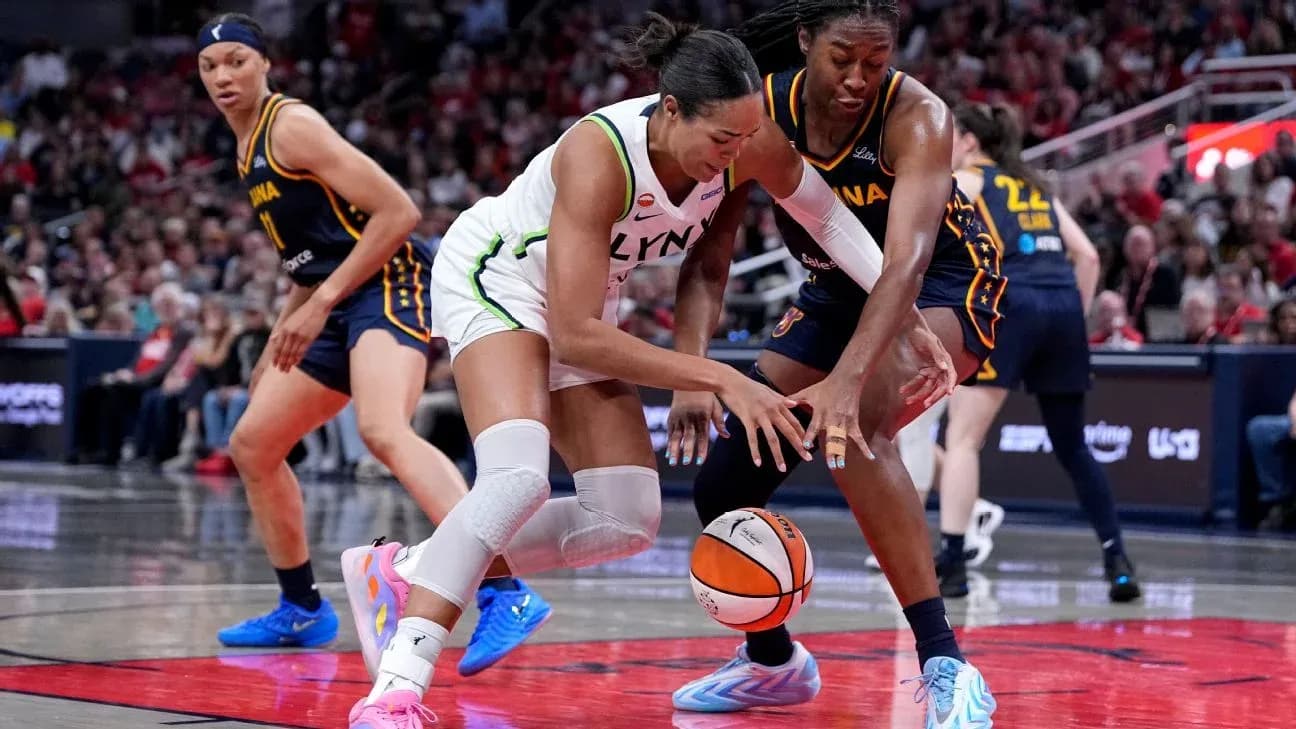
Naz Reid provides it. Acquired in the Ball deal, Reid brings a stretch element that changes the geometry of the floor. He can play power forward or center, drag bigs out to the three-point line and still bang inside when needed. Expect him to log heavy minutes, likely starting at the four and sliding to the five in smaller, more dynamic lineups.
The Hornets didn’t stop there. With the 14th pick, they grabbed Hannes Steinbach, fresh off a college season at Washington where he averaged 18.5 points, 11.8 rebounds and 1.2 blocks. Those are serious numbers, and they hint at a player who can produce immediately if the minutes are there. Ryan Kalkbrenner, a 2025 second-rounder, lingers as depth and competition.
Make no mistake: this frontcourt orbits around Reid now. He’s the straightforward fantasy starter, the safest bet for volume and production.
Diabaté becomes the wild card. His minutes could swing from night to night as Charlotte experiments with combinations and tries to balance energy, defense and shooting. Steinbach is the long play. If he carves out more than 20 minutes a night, he becomes a viable piece in 12-team and deeper leagues, with the kind of weekly ceiling that can mimic a starter’s best outing.
The Hornets are rebuilding on the fly, but they’re doing it with options. For fantasy managers, that’s exactly what you want.
Memphis Grizzlies: Life After Ja, Questions In The Backcourt
Ja Morant’s departure to Portland closes one chapter in Memphis and opens another with a very different tone.
The Grizzlies didn’t get a point guard back. They got Jerami Grant, a proven scorer who can stretch the floor and attack mismatches, and Kris Murray, a versatile forward with room to grow. The frontcourt foundation now belongs to Cameron Boozer, the third pick in the 2026 Draft, and Zach Edey, the towering presence in the middle.
The real fight, though, is on the perimeter.
Scotty Pippen Jr. and Ty Jerome will scrap for point guard minutes. Pippen’s injuries limited him to 10 games last season, and that absence opened the door for Cam Spencer to show what he could do as a lead guard. He responded with 11.1 points and 5.6 assists in just 24 minutes per game—numbers that jump off the page in a High Score context.
Cedric Coward and Walter Clayton Jr. join Jerome and Spencer in the shooting guard mix. Coward, the 11th pick in the 2025 Draft, carries the pedigree and the investment that usually translate into opportunity. Memphis will want to see what he looks like as a starter.
The likely shape? Pippen reclaims the starting point guard job if he’s healthy. Jerome becomes the primary backup across both guard spots, a stabilizer off the bench. Coward gets every chance to lock down the starting two. Spencer, after his strong audition, forces his way into meaningful minutes as a secondary creator and occasional primary ball-handler.
For standard fantasy leagues, that’s a headache. Five guards, all under 30 minutes, all cannibalizing each other’s ceilings.
High Score flips that logic. You don’t need consistency. You need spikes. Spencer’s 5.6 assists alone translated to more than 11 fantasy points per night last season. Someone in this five-man backcourt is going to pop most weeks, and that makes all of them viable late-round darts in this format.
Memphis is no longer Morant’s team. It’s a committee, and committees can be messy. They can also be profitable if you pick the right piece at the right time.
New Orleans Pelicans: Three Centers, One Big Decision
New Orleans stared down a rough 2025-26 season and chose patience over panic.
The Pelicans largely ran it back, reportedly adding Bennedict Mathurin to the wing rotation and banking on a full, healthy season from Dejounte Murray. Around them, the front office doubled down on continuity, even bringing back DeAndre Jordan on a two-year, $7.9 million deal. His value now lives mostly in the locker room, guiding a young frontcourt still trying to figure out who it wants to be.
On paper, the Pelicans have no shortage of options at center. In practice, they have one looming question: who grows best next to Zion Williamson?
Derik Queen flashed real upside when given extended minutes last season. He showed touch, feel and enough presence to make the organization wonder how high his ceiling might be. Yves Missi remains in the frame as well, another young big with tools and intrigue.
Then there’s Herbert Jones, the defensive savant who ended last season as the starting center. He’s not a traditional five, and he’ll never be a volume scorer, but his impact is undeniable. Nearly two steals and a block per game translates to nine High Score points from defense alone, before you even factor in anything he chips in on the other end.
The long-term logic points toward Queen. Starting him alongside Zion gives New Orleans the clearest read on whether that duo can anchor a playoff frontcourt. They need that answer sooner rather than later. Still, Jones opening at center again is a live possibility, especially if the coaching staff leans into defense and versatility. Missi should see the floor regardless, even if only in shorter bursts.
From a fantasy standpoint, Queen is the swing you want. He carries the most upside and the clearest path to a role that can grow as the season unfolds. Jones and Missi belong in the late-round lottery, too, particularly in High Score formats where one strong night—one game stuffed with stocks and hustle stats—can make an entire week.
The Pelicans have their stars. What they decide to do at center will tell us whether this is a team ready to push back toward the postseason, or one still searching for the right combination in the shadows of the West.