NBA's Forgotten Stars Ready to Shine in 2026-27
Every NBA season leaves a few names buried under bad timing rather than bad basketball. A knee gives out in December. A trade drops a player into a role that never fits. A six-week shooting slump hardens into a narrative that lingers long after the numbers snap back.
Heading into 2026-27, this group has something most “forgotten” players don’t usually get: leverage. Health. Bigger roles. New contracts. A chance to remind everyone that talent didn’t go anywhere.
And in Yahoo Fantasy’s High Score format, that combination can swing leagues.
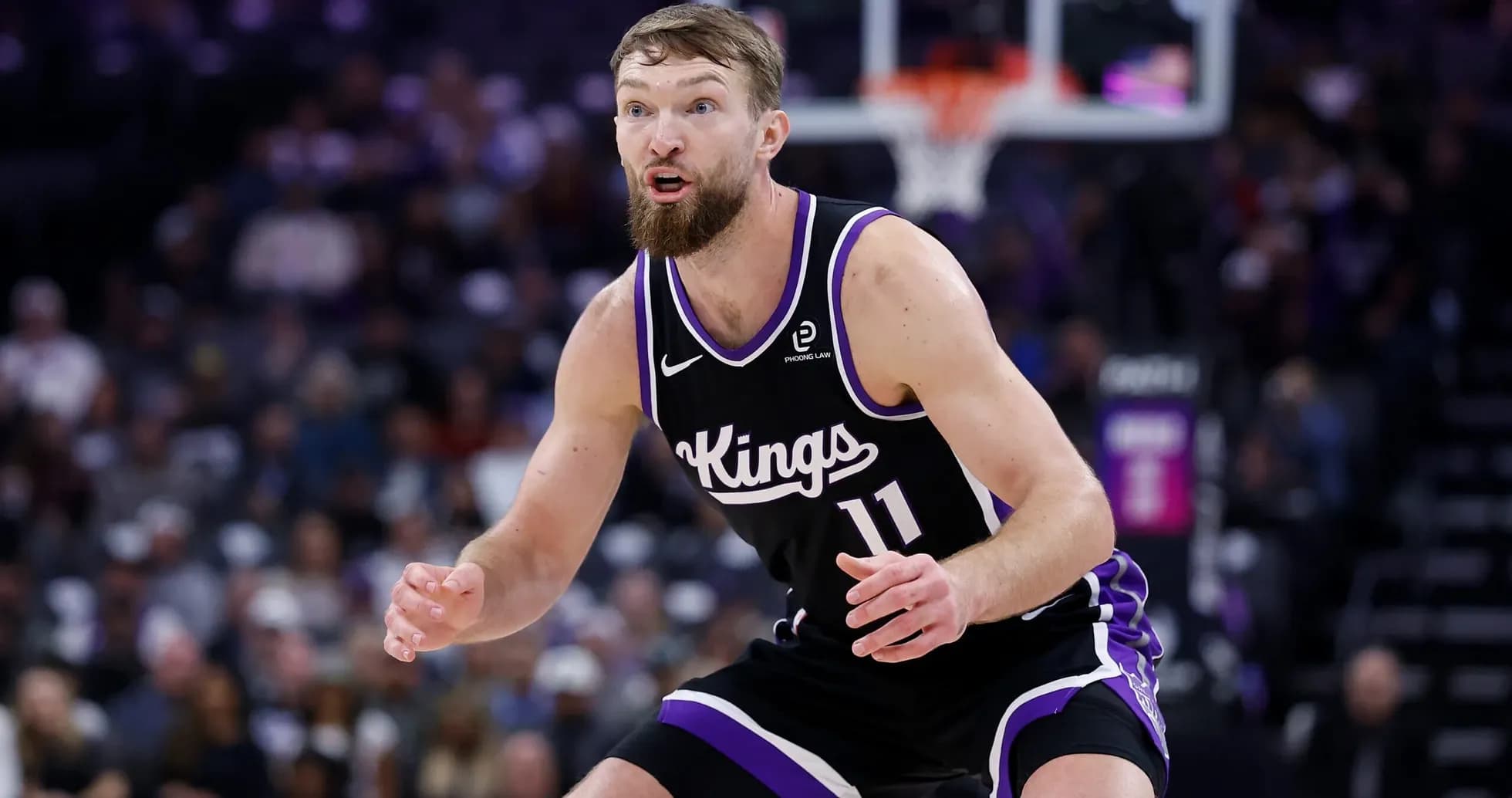
Domantas Sabonis, Kings
The triple-double machine returns
Between 2023-24 and 2024-25, only one player in the NBA stacked more triple-doubles than Domantas Sabonis. Nikola Jokić. That’s the entire list.
Sabonis posted 36 triple-doubles over those two seasons, anchoring Sacramento’s offense as a nightly hub. That kind of production doesn’t just vanish because of one bad year on the injury report.
A torn meniscus in his left knee wrecked 2025-26 and forced season-ending surgery, but the timeline is friendly. He’s tracking toward full clearance for training camp at 30, right in the sweet spot for a big man whose game leans on touch, feel and vision rather than raw explosion. The Kings are retooling, not rebuilding, and Sabonis walks back into a locker room that still needs him to be the primary playmaker.
In fantasy terms, that’s gold.
In points leagues, Sabonis is a top-15 piece when he’s right. Rebounds and assists drive those formats, and he piles up both in obscene volume. Category leagues are trickier. He’ll dominate rebounds, rack up assists and boost field-goal percentage, but he brings almost nothing in blocks and bleeds value in turnovers. He’s the kind of star you build a specific roster around, especially if you’re willing to punt defensive stats.
High Score is where he becomes a cheat code. A “routine” Sabonis night — say 20 points, 12 rebounds, eight assists — lands around 50 fantasy points in that scoring system, with assists doubled and turnovers wiped off the board. Very few frontcourt players can touch that weekly ceiling. Jokić, obviously. After that, the list gets short fast.
If the knee holds up, Sabonis doesn’t just reappear. He reclaims his spot as one of the most reliable engines in fantasy.
Coby White, Hornets
From sixth man to franchise guard
Teams don’t hand out three-year, $74 million contracts to keep guys in the second unit. The Hornets certainly didn’t. When they shipped LaMelo Ball to Minnesota, they cleared the runway and handed Coby White the keys to the backcourt.
Charlotte hasn’t been shy about the plan: they’re building around him.
We’ve already seen what White looks like when the ball finds him consistently. In Chicago in 2024-25, he averaged 20.4 points and 4.5 assists over 33.1 minutes across 74 games. That’s not a hot streak. That’s a workload. His 21-game stint with the Hornets after the deadline last season came off the bench in a messy, shifting rotation. It was never going to be a fair sample of what he can be as a lead guard.
Now he gets clarity. A long-term deal. A defined role. A franchise desperate to snap a playoff drought that stretches back to 2015-16.
In points leagues, that’s exactly what you want: usage. Volume is the entire game there, and White is about to see as much of it as he’s ever had. Category managers have to be more selective. He’ll give you points, threes and assists, but his field-goal percentage has always dragged, and he doesn’t generate many steals. He fits best on rosters that are already strong in efficiency and defense and just need pure scoring and playmaking.
High Score is kinder than his category profile suggests. When assists count double and efficiency doesn’t matter, a 28-point, six-assist night suddenly lands in the mid-40s. That’s a serious return from a guard who’s going to have the green light in a backcourt built for him.
On the nights Charlotte lets him hunt, White won’t just fill a guard slot. He’ll swing matchups.
Derrick White, Celtics
The glue guy with star-level impact
Strip away one number — 32.7 percent from three — and Derrick White just turned in one of the best all-around seasons of his career.
He averaged a career-high 16.5 points. He posted career highs in steals (1.1), blocks (1.3) and assists (5.4). Boston leaned on him heavily as Jayson Tatum missed most of the season, and he responded with the kind of two-way volume that front offices dream about and fantasy managers often underestimate.
The three-point dip is the outlier. White hit 38.4 percent from deep the year before. Shooters have cold years. The variance usually corrects. His scoring drop in the playoffs followed the same chilly pattern and has dragged his stock down more than his overall profile deserves.
Opportunity is still sitting there.
Boston swapped Jaylen Brown for Paul George, a blockbuster move that adds another star wing but also another question mark. George turns 37 this season and has topped 70 games just once since 2019-20. White, by contrast, has played at least 73 games every year since 2021-22. Availability is a skill, and he has it.
In category leagues, a guard who averages better than a steal and a block per game is a rarity. That combination props up two of the thinnest categories in fantasy. Add in his assists and solid scoring, and you have a guard who fills gaps instead of creating them.
High Score turns his defensive work into a weapon. Steals and blocks are worth three points each there, so his baseline in those columns alone can justify the draft pick. When the offense pops — a 20-point game with five assists, two steals and two blocks — you’re looking at 45-plus fantasy points. Those are matchup-breaking nights.
Durability makes him especially valuable in points and roto formats, but the real edge is his multi-category profile. White doesn’t need a hot shooting year to matter. He just needs his usual workload.
Walker Kessler, Lakers
The specialist built for this format
For five games last season, Walker Kessler looked like he’d found the next level. Then his shoulder gave out.
Before the surgery, he averaged 14.4 points, 10.8 rebounds, 1.8 blocks and 1.4 steals per game — the best stretch of his career, and enough to convince the Lakers to lock him in with a four-year, $130 million deal in July after trading for him. That kind of commitment tells you exactly how they view his trajectory.
The caveat is obvious. Availability has flickered on and off since his rookie year. But the skill set travels. Kessler protects the rim, finishes everything around the basket and inhales rebounds at a rate very few centers can match. At 25, he’s now stepping into an offense with better spacing and more reliable playmaking than he’s ever enjoyed.
In category leagues, he’s not a balanced piece. He’s a foundation. You build around his strengths. He can almost single-handedly carry blocks, rebounds and field-goal percentage, but he has the potential to hurt you at the free-throw line. That pushes him into punt-FT% territory, where he becomes a cornerstone instead of a headache.
High Score, though, is his perfect home. With blocks and steals worth three points apiece, a “routine” Kessler line — 16 points, 13 rebounds, three blocks — jumps to roughly 40 fantasy points without a single assist. That’s exactly what this format rewards: big men who dominate the defensive box score and don’t need playmaking to matter.
With three frontcourt slots to fill, managers who believe in his health will see the upside clearly. If his shoulder holds, he’s the kind of specialist who wins weeks almost by himself.
Christian Braun, Nuggets
The quiet metronome in Denver’s machine
Denver didn’t hand Christian Braun five years and $125 million in October 2025 on a whim. At 24, he’d just averaged 15.4 points, 5.2 rebounds and 1.1 steals as a starter on a contender. The Nuggets saw a long-term piece, not a placeholder.
Last season unraveled on him. He played only 44 games and shot 30.1 percent from three, a steep drop from his established norm. That looks more like a disrupted year than a new reality. Trade rumors have buzzed around him, but the expectation is that he stays in Denver in a role he already knows and has already succeeded in. DeMar DeRozan will soak up some possessions, but Braun has never needed high usage to matter.
That’s what makes him so steady in fantasy.
He’s the most format-neutral player in this group. Category leagues probably squeeze the most value out of him: points, threes, steals and a respectable field-goal percentage across four columns, with three-point shooting the most obvious bounce-back candidate. In points leagues, he settles in as a stable late-round starter — rarely spectacular, rarely a liability.
High Score is less forgiving. His game is built on doing a lot of things well rather than spiking one or two categories. He doesn’t rack up enough assists or blocks to launch those 40-point fantasy explosions that define the format. His ceiling games usually land in the low 30s, which makes him more of a bench piece there than a centerpiece.
Still, on most fantasy platforms and in most builds, Braun is exactly what contenders need: a reliable, low-drama contributor who fills space around stars.
In a league that forgets quickly, these five walk into 2026-27 with something to prove and the tools to prove it. The question isn’t whether the talent is still there.
It’s which managers are willing to bet that circumstance finally catches up to it.