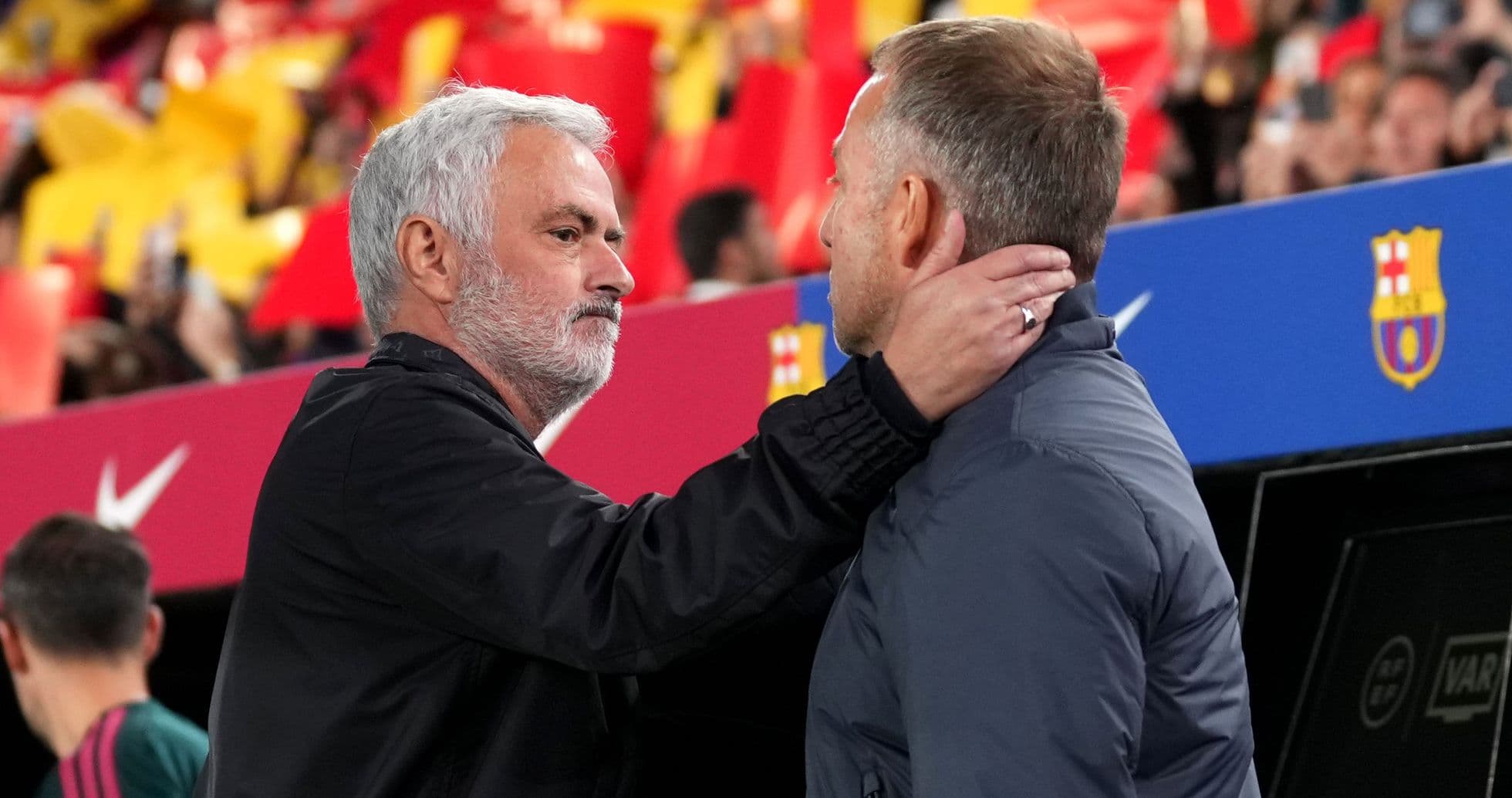
How Jose Mourinho Outsmarted Hansi Flick to Secure a 2-1 Win in His Real Madrid Clasico Return
Jose Mourinho marked his return to the El Clasico stage with a 2-1 triumph at Spotify Camp Nou. Kylian Mbappe'sBarcelona their first La Liga loss this season. This victory, Madrid's fifth straight, moved them to third place, three points behind Hansi Flick's/strong team and one behind Atletico Madrid. Their success stemmed from a clear strategy: surrender possession, absorb pressure, then strike swiftly on counter-attacks.
Contrasting Styles
The differences were clear. Barcelona dominated possession with 62%, completed 644 passes versus Madrid’s 385, and fired 17 shots compared to nine by Madrid. Yet, Madrid generated better chances, posting an expected goals (xG) of 1.98 against Barcelona's 1.26, launching five counters to Barcelona's two.
Barcelona's Approach
Hansi Flick set up in a 4-2-3-1 formation focusing on extended possession and a high defensive line. Rodri and Pedri controlled midfield; Fermin Lopez replaced the injured Dani Olmo in the No.10 role; Raphinha spearheaded the attack, while Lamine Yamal and Anthony Gordon stretched wide.
This plan kept Madrid under pressure for long periods, with Gordon troubling goalkeeper Andriy Lunin from the left flank. However, midfield errors from Pedri allowed Madrid dangerous breaks, including early shooting chances for Arda Guler and a near goal from Yan Diomande before halftime.
Barcelona’s only goal came from a set piece in the 61st minute when a short corner found Pedri, whose clever dummy and disguised pass let Raphinha score his 13th league goal.
Real Madrid’s Game Plan
Mourinho also lined up a 4-2-3-1 but instructed his side to maintain a mid-to-low block. Aurelien Tchouameni and Bernardo Silva formed the midfield double pivot. Federico Valverde operated as a right-back to contain Gordon, while Marc Cucurella tracked Yamal on the opposite wing.
The team faced two setbacks: goalkeeper Thibaut Courtois withdrew due to flu, and suspended Vinicius Junior was replaced by Yan Diomande on the left wing. Diomande emerged as Madrid’s most potent threat, and stand-in goalkeeper Lunin made five crucial saves to preserve the defensive shape.
The opening goal arrived against the run of play in the 41st minute. Bernardo Silva had space to release Diomande down the left. Barcelona failed to double up, and Diomande’s low cross was cleared but landed at Mbappe’s feet, who scored past Joan Garcia. This goal had an xG value of 0.50 but perfectly represented Madrid’s transition game.
The Tactical Duel
The key battle took place on Barcelona’s right side, where Cucurella closely marked Yamal, disrupting his flow with tight marking and fouls. Although Cucurella avoided a booking until stoppage time, Yamal found some space but missed a key chance when he scuffed a shot wide with only Lunin to beat.
In midfield, Barcelona dominated volume, but Madrid capitalized on turnovers. Valverde’s switches helped Madrid escape pressing, while Bellingham’s ball-carrying and tackling turned defense into attack repeatedly. Barcelona controlled tempo but couldn’t stop Madrid’s quick breaks.
Mid-Game Changes
An early injury forced a change when right-back Xavi Espart left after a challenge from Tchouameni. Alejandro Balde came on at left-back, pushing Joao Cancelo to right-back to manage Diomande.
After Barcelona equalized, Mourinho replaced the injured Valverde with Denzel Dumfries in the 62nd minute. Without Valverde’s distribution, Madrid lost some fluidity, allowing Barcelona their best moments. Lunin denied Martin’s header, Yamal’s shot went wide, and Frenkie de Jong’s effort was blocked after coming on.
Flick introduced Karim Adeyemi and Gabriel Jesus late, seeking a winner. But Mourinho’s final move decided the match. Eduardo Camavinga replaced a tiring Bernardo Silva in the 80th minute. Within a minute, following a turnover by Jesus, Bellingham’s skill and Guler’s link-up released Camavinga, who drove into the box, evaded Pau Cubarsi, and assisted Mbappe to score into an empty net in the 87th minute.
Summary
Madrid’s win demonstrated efficiency over possession dominance. Barcelona held the ball and territory, but their risky tactics were punished by Madrid’s swift counters, Lunin’s saves, and Mbappe’s clinical finishing. Mourinho’s pragmatic approach triumphed, proving the game hinges not on who holds the ball longest, but who acts decisively right after winning it back.
Additional Information
The author shares a personal journey from childhood dreams of football journalism to covering sports professionally. He recalls memorable football moments and players, appreciating teams like Milan and Barcelona, and following Mohamed Salah’s rise. His ideal lineup includes Buffon; Cafu, Van Dijk, Maldini, Roberto Carlos; Pirlo, Zidane, Iniesta, Kaka; Cristiano Ronaldo, Messi.