Morocco's World Cup Bid Faces Political Pushback
The race to host the 2030 World Cup final has slipped out of the back rooms and into the public arena in Morocco – and the country’s Prime Minister has just slammed the brakes on his own federation chief.
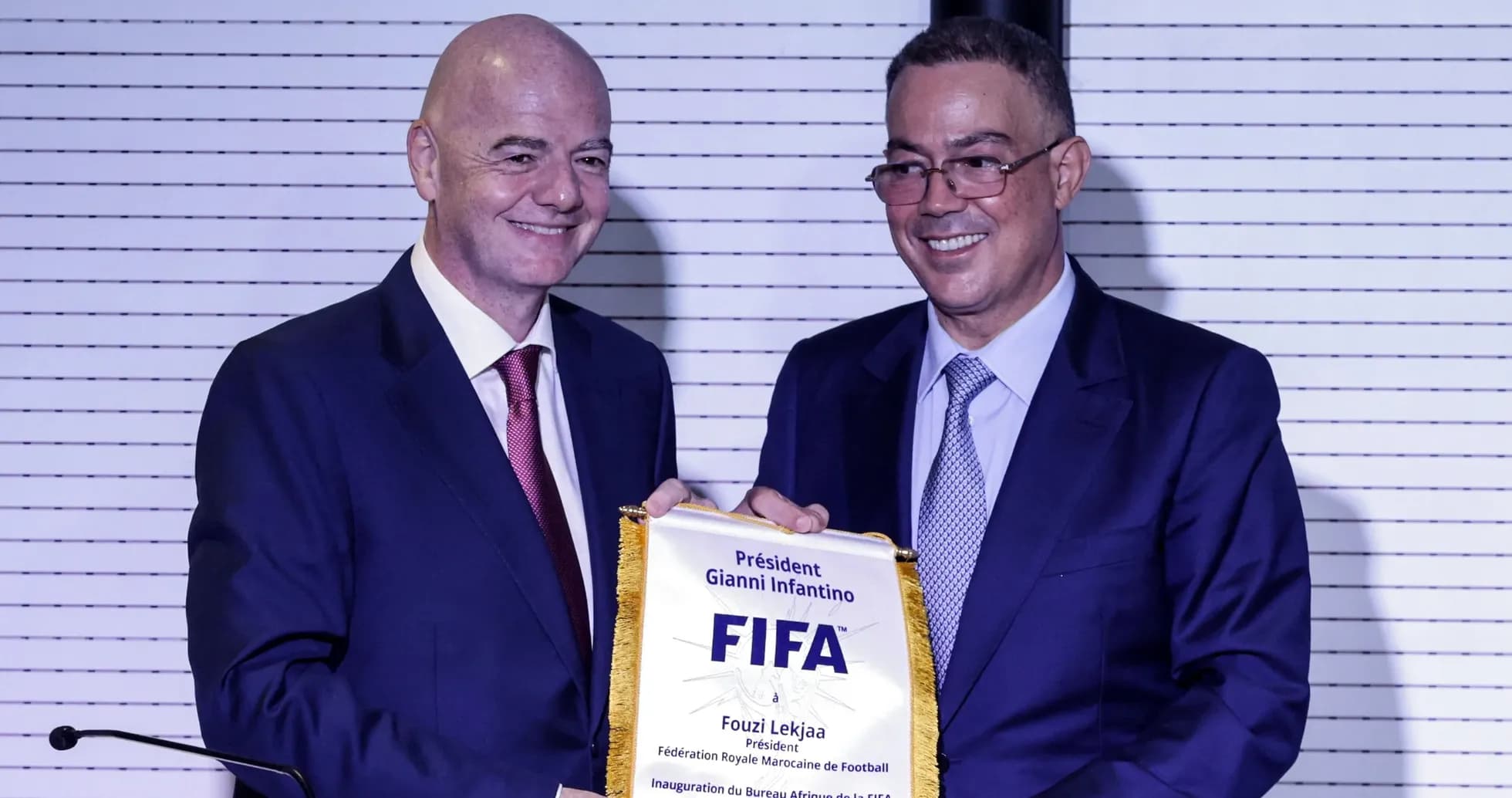
Fouzi Lekjaa, the powerful president of the Royal Moroccan Football Federation (RMFF), has been publicly talking up Casablanca’s yet-to-be-completed super stadium as the stage for football’s biggest night. At a political party event, he went as far as declaring that the new arena would have the “honour” of hosting the final.
That was a step too far for Aziz Akhannouch.
From a rally platform, the Prime Minister issued a blunt rebuke, warning Lekjaa to stop making promises on a decision that is not Morocco’s alone to take. With Spain and Portugal sharing hosting duties for the centenary tournament, Akhannouch moved quickly to contain what he clearly sees as a diplomatic own goal.
“Do not offer to host the big final game in Morocco while we still have not discussed the matter with our allies, Spain and Portugal,” he said, in remarks that cut through the usual political varnish. “There should be some respect, brothers. Stop using electoral promises to pull the rug out from under us. These are huge matters. Deciding where the final will be held is a major issue.”
The message was unmistakable: ambition is welcome, unilateral declarations are not.
A Final Without a Home – For Now
For all the noise on both sides of the Mediterranean, the only voice that truly counts has stayed quiet. FIFA has not confirmed the venue for the 2030 showpiece, limiting itself to the familiar line that “a decision will be made in due course.”
That silence has created space – and both Morocco and Spain are rushing to fill it.
Morocco is pushing hard to bring the World Cup final back to African soil for the first time since Johannesburg staged the 2010 climax. The bid is anchored by a colossal project: a 115,000-seat stadium under construction near Casablanca. If completed as planned, it would become the largest football-specific stadium on the planet, a concrete statement of intent aimed squarely at their European partners.
Spain’s Case: Champions, Stadiums, and Self-Belief
Rafael Louzan, president of the Spanish federation (RFEF), has been anything but shy about where he thinks the final belongs.
“Even though no decision has been taken, I believe Spain is the place because it cannot be any other way,” he told Cadena SER radio. He leaned on Spain’s status “as you know, we are currently world champions,” and pointed to what he called unquestionable organisational strength for major events. In his words, “reality dictates that the grand final cannot and must not be held anywhere other than in Spain.”
Spain’s argument rests on two pillars: success and infrastructure.
The men’s national team, fresh from beating Argentina to claim a second World Cup title this past summer, has restored a sense of footballing authority. Off the pitch, the country can already showcase elite venues without waiting for a single brick to be laid: a transformed Santiago Bernabeu in Madrid, now a multi-purpose, high-tech arena, and the expanding Spotify Camp Nou in Barcelona, which will again become one of the sport’s great cathedrals once renovation work is complete.
Those stadiums are not blueprints. They are reality. That, the RFEF believes, gives Spain the edge over Morocco’s ambitious but still unfinished mega-project.
Diplomacy, Deadlines, and a Delicate Balance
The Prime Minister’s intervention underlines the tightrope Morocco’s government is trying to walk. On one side, a nation energised by the prospect of hosting a World Cup final and determined to capitalise on the global goodwill generated by the men’s team’s historic run to the 2022 semi-finals. On the other, the need to avoid alienating Spain and Portugal in a joint bid that depends on unity as much as it does on spectacle.
The political reality is that the final will not be awarded on rhetoric alone. It will be shaped by infrastructure, logistics, commercial considerations, and the optics of sharing a centenary tournament across continents without fuelling resentment between partners.
There is time for that calculus to play out. The 2026 World Cup offers a clear precedent: New Jersey’s MetLife Stadium was only confirmed as the final venue in early 2024, long after the host nations were chosen. The 2030 decision can afford a similar wait.
For now, Morocco’s government wants to cool the temperature, rein in premature promises, and keep the bid looking united from the outside. The dream of a World Cup final in Casablanca is very much alive.
Whether it survives the politics of a three-way partnership is another contest entirely.