Marta Eyes Iconic Farewell at 2027 Women's World Cup on Home Soil
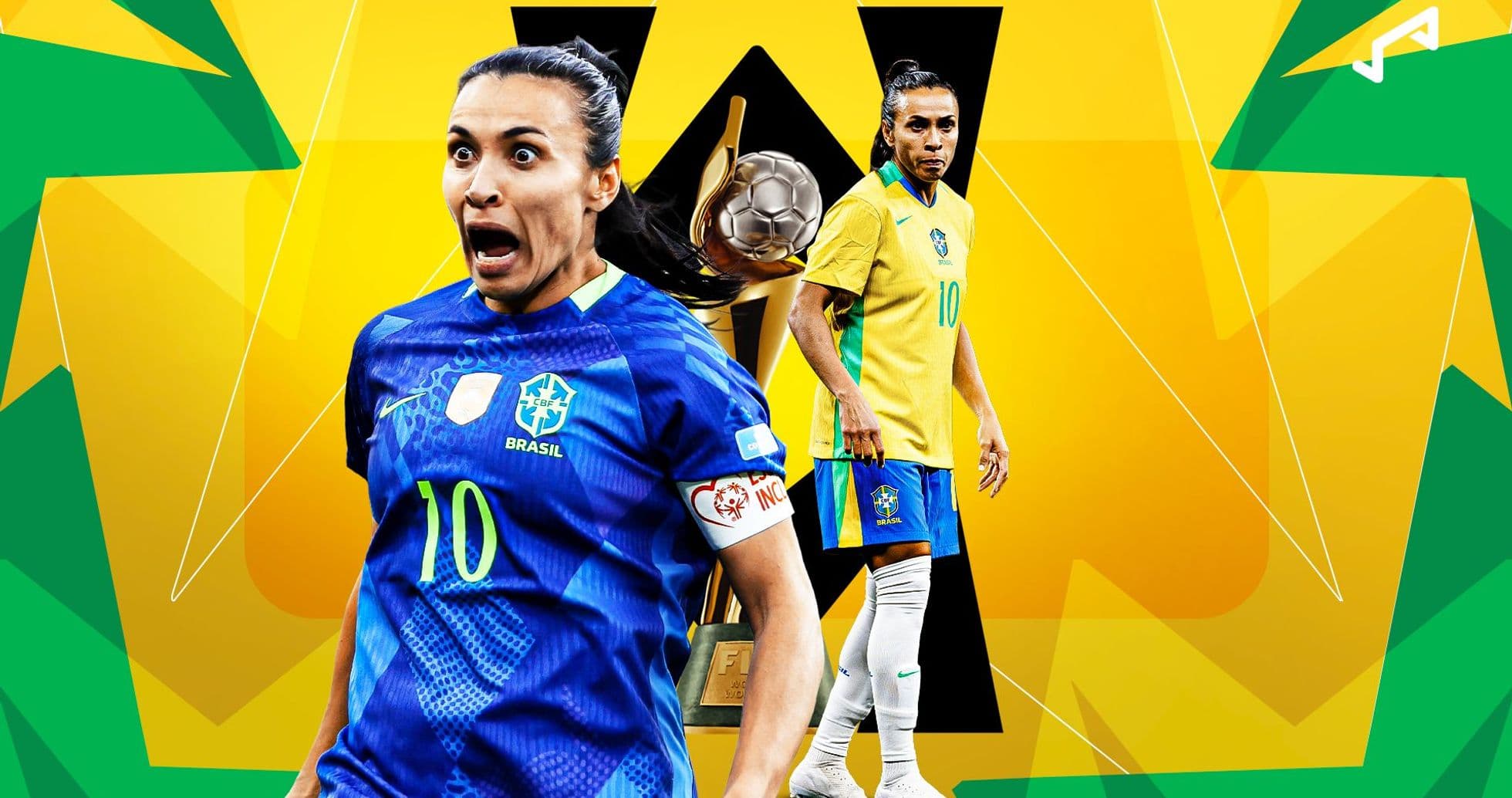
Widely hailed as the greatest female footballer ever, Marta is preparing for what could be her last appearance leading Brazil at the 2027 Women’s World Cup, hosted on home turf. At 41 years old when the tournament begins, she aims to inspire her country one final time.
The Unmatched Legacy of Marta
In football debates, names like Lionel Messi and Cristiano Ronaldo dominate the men's conversation, with legends such as Diego Maradona and Pelé also mentioned. In women's football, though, Marta stands alone. The Brazilian icon, once nicknamed “Pelé in a skirt” by Pelé himself, has dazzled fans for over two decades with a style that elevated her beyond mere talent.
Her brilliance helped secure trophies like the Champions League and Copa América titles, but most famously, she holds the record as the all-time top scorer in Women’s World Cup history. Despite this, a World Cup winner’s medal has eluded her.
Now 40, after initially retiring from international play following the 2024 Olympics—where Brazil narrowly lost the gold medal match to the United States—Marta reversed her decision and played a key role in Brazil’s 2023 Copa América victory. With Brazil hosting the 2027 World Cup, Marta may get one last chance to claim that elusive prize on home soil.
A Golden Generation That Almost Was
Back in 2007, Marta shone brightest as Brazil reached the Women’s World Cup final, only to fall 2-0 to Germany. That year, she won the second of five consecutive FIFA World Player of the Year awards. Yet she was surrounded by other stars: Cristiane, a prolific forward who twice finished third in FIFA Player voting; Formiga, a midfield stalwart with the most international caps ever; Pretinha, known for scoring critical goals at World Cups and Olympics; and Rosana, who earned over 100 caps and later helped Lyon win multiple Champions League titles.
This squad was a golden generation seemingly destined for World Cup glory.
Support Shortfalls and Missed Opportunities
Sadly, the Brazilian Football Confederation (CBF) failed to invest adequately in women’s football at the right times. Rosana has remarked that investment came late, after the team had to prove itself rather than being supported from the start.
Despite dominating South America with nine Copa América Femenina wins since 1991, Brazil stumbled repeatedly on the global stage, securing silver medals in the 2004 and 2008 Olympics but never clinching a major international title. This team might be the strongest in women’s football history never to win a major trophy.
Reflecting on the missed chances, Rosana called it heartbreaking that early investment wasn’t made to help the talented generation reach its full potential.
Club Success and Individual Honors
Away from international play, Marta flourished. She joined Umeå IK in Sweden in 2004, where her arrival coincided with four straight Damallsvenskan titles and a UEFA Women’s Cup win. Her unique style often broke the mold, winning games and trophies in unconventional ways.
Later stints in the United States brought two national championships, and a return to Sweden saw her embrace citizenship and fluency in the language. Alongside club triumphs, Marta collected numerous Golden Boots, Player of the Year honors, and Best XI nominations.
International Setbacks Persist
On the world stage, Brazil’s fortunes waned. The 2011 World Cup ended in a quarterfinal loss to the United States via penalties, while the 2012 Olympics saw defeat to Japan at the same stage. The 2015 World Cup ended in the round of 16 after Australia’s victory, and though the 2016 Rio Olympics brought a semifinal run, losing the bronze medal game was painful.
An Emotional Goodbye Seemed Near
During the 2019 World Cup, many felt it would be Marta’s farewell. At 33, four more years of international play was uncertain. After Brazil’s extra-time loss to hosts France in the round of 16, Marta delivered an emotional plea to future players:
“There’s not going to be a Formiga forever, there’s not going to be a Marta forever, there’s not going to be a Cristiane. Women’s football depends on you to survive. Think about it, value it more. We’re asking for support. You have to cry at the beginning and smile at the end.”
Her heartfelt message emphasized the fragility of progress and the need for continued support in women’s football.
One More Chapter
That did not mark the end. In 2023, despite another tough group-stage exit, Marta returned with renewed vigor. At 38, during a season where she led Orlando Pride to NWSL Shield and Championship victories, she helped Brazil reach the Olympic gold medal match—their best global result in years.
Looking ahead to 2027, only Marta remains from that 2007 squad. Though time has changed her role, her leadership and legacy pave the way for a new generation aiming to bring Brazil its first Women’s World Cup title. Wearing the captain’s armband once again, Marta will lead Brazil out on home soil, chasing the ultimate prize in a career that has already defined the sport.