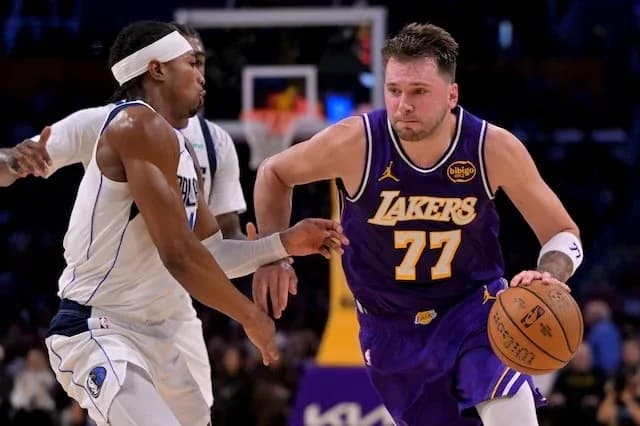
Luka Doncic Trade to Lakers: A Political Commentary
The trade that sent Luka Doncic to the Los Angeles Lakers has been called a disaster so often it almost sounds cliché. Then the President of the United States weighed in.
On Wednesday night at American Airlines Center in Dallas, Donald Trump stood on a stage built for politics and reached straight into basketball history. In front of Mavericks fans, in the Mavericks’ own building, he took aim at the deal that shipped their franchise star to the purple and gold. Eighteen months after the fact, the trade still stings enough to make a presidential speech.
You don’t usually get Oval Office commentary on front-office mistakes. This one broke through.
The fallout in Dallas has been brutal. The architect of the deal is gone. The “centerpiece” they received back is gone too. The organization has already moved on from both, a silent admission of how badly the gamble backfired. The Mavericks didn’t just lose a superstar; they lost the identity that came with him.
When the trade first hit social media, the reaction bordered on disbelief. Fans and media alike double-checked the accounts, refreshing feeds and assuming a hack. It felt like one of those fake trade graphics that float around in July. But this was real. Dallas had actually sent Doncic to Los Angeles for a return that looked, even in the moment, like pennies on the dollar.
The shock hasn’t worn off.
Doncic has settled into life as a Laker, and that might be the harshest reality for Dallas. He is no longer a visiting attraction in Los Angeles; he is the cornerstone. While the Mavericks scramble to reinvent themselves—having already flipped Anthony Davis, the main piece they brought back in the deal—the Lakers are mapping out the next era around a generational playmaker in his prime.
What was once just a bad trade has turned into a cautionary tale. Trump’s decision to bring it up, and to do so in Dallas of all places, only deepens its infamy. When a move is so lopsided it becomes a talking point at a political rally, it has left the sports pages and entered cultural lore.
Lakers, Doncic and the national spotlight
For the Lakers, the story is no longer about how they got Doncic. It’s about what comes next.
The 2026-27 season arrives with a different kind of buzz in Los Angeles. This is a new-look Lakers team built around one of the league’s brightest stars, and the national television schedule reflects it. The franchise will hit the league maximum of 34 nationally televised regular-season games, a clear sign of how central they’ve become to the NBA’s showcase slate.
The preview comes early.
ESPN will broadcast two of the Lakers’ preseason games from Crypto.com Arena as part of its five-game exhibition package. On Oct. 8, they host the Sacramento Kings. On Oct. 16, the Denver Nuggets come to town, with coverage split between ESPN and ESPN2.
Preseason lineups are always a mystery. Coaches manage minutes, veterans sit, rotations blur. Even so, these games offer an early glimpse of what the Lakers are building. Fans will be hoping to see Doncic on the floor, sharing possessions and rhythm with Austin Reaves as the backcourt chemistry takes shape under the national spotlight.
Dallas, meanwhile, will be watching from a very different place. The Mavericks are still searching for a new direction, still trying to escape the shadow of a trade that refuses to fade. The Lakers are on center stage with a global star.
The question now isn’t how bad the deal was. That verdict is in. The question is how far Doncic can carry the purple and gold while Dallas tries to rebuild from the wreckage.