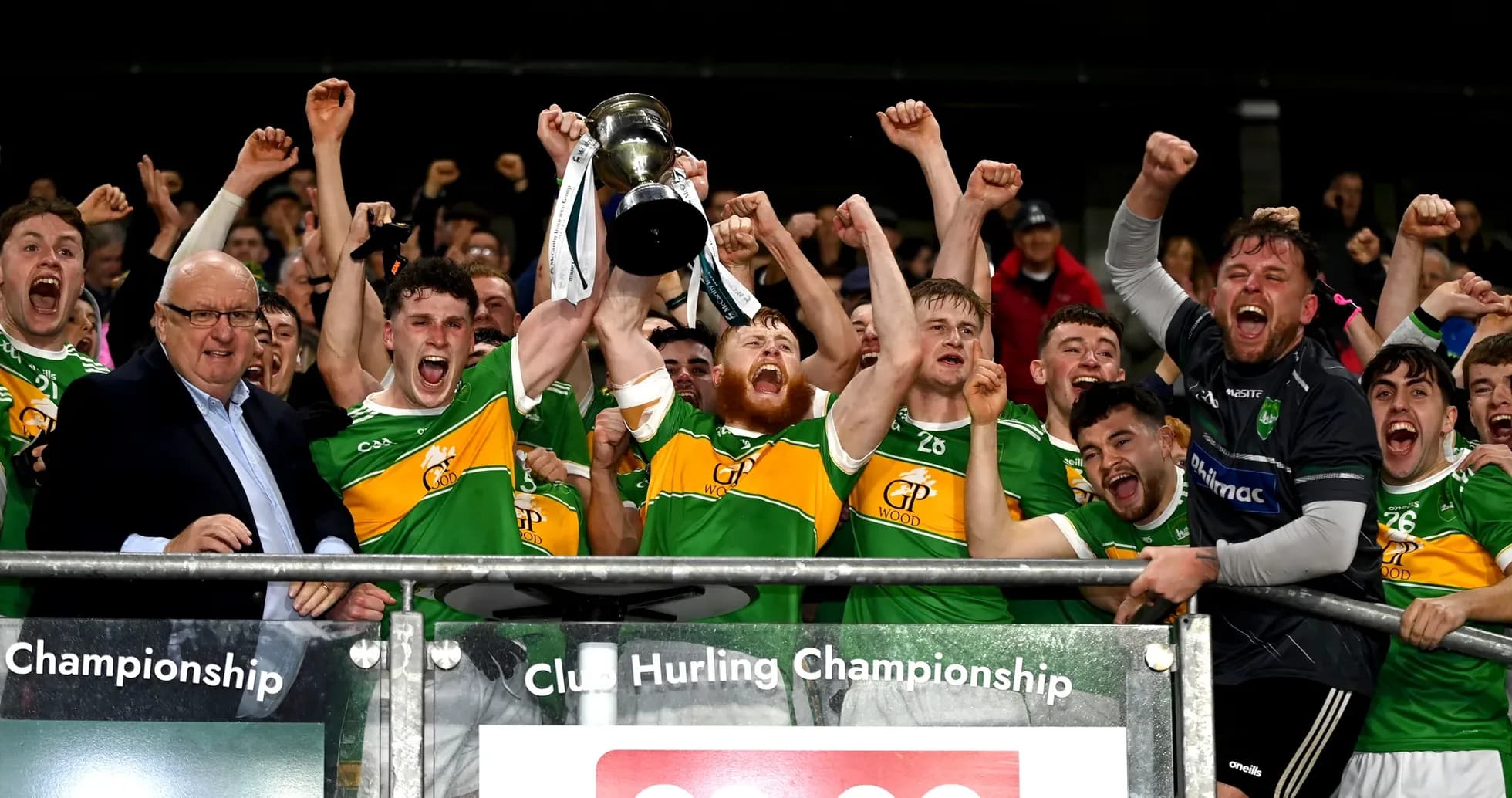
Kilmurry Crush Buttevant in McCarthy Insurance Group IAFC Final
Kilmurry: 2-18
Buttevant: 0-10
The roar from the Kilmurry end at SuperValu Páirc Uí Chaoimh on Friday night sounded like release as much as celebration. Another county title in the bag, another grade conquered, and that old scar from 1995 pushed a little further into the past.
This was supposed to be a test. It turned into a statement.
The Muskerry men dismantled Buttevant by 14 points in the McCarthy Insurance Group IAFC final, 2-18 to 0-10, adding intermediate honours to the JAFC crown of 2022 and the Premier JFC title claimed earlier this year. They now stride into the third tier of Cork football with momentum, depth and a ruthless edge that never gave Buttevant a sniff of back-to-back county titles.
Lightning start, ruthless edge
Kilmurry did not ease themselves into this. They tore into it.
After just 34 seconds, Ruadhrán Ó Curraoín clipped over the opening point. Ninety seconds later, the first hammer blow. Liam Wall, alive to the space and the moment, finished low to the net after a flowing move, punishing Buttevant’s early looseness. It came only moments after Mark Lenahan had carved out a decent goal chance at the other end. One side took their moment. The other didn’t. The tone was set.
Buttevant, in black and amber, needed time to settle. They got it on the scoreboard 11 minutes in through Aaron Horgan, with Lenahan adding another to make it 1-1 to 0-2. For a spell, it was tight, tactical, almost cagey. Both sides worked hard without much return. Scores were earned, not handed out.
Kilmurry, though, found their rhythm first. Their points came that bit easier, their movement sharper, their decision-making cleaner. Denis O’Mullane’s free, a driving effort from the indefatigable Seán O’Leary, and two from Wall pushed them 1-5 to 0-2 clear by the 22nd minute. The gap felt bigger than the numbers suggested.
At the back, Kilmurry were suffocating. Buttevant ran patterns, probed channels, but met a wall of green and gold. When a rare error did appear, Conor Hanlon took advantage to split the posts. It might have been a goal. It needed to be. Instead, it was just their first score in ten minutes.
The response was brutal.
Ó Curraoín strikes, Kilmurry tighten the grip
Just as Buttevant thought they had steadied things, Kilmurry ripped it away again. Kyle Kelleher, with the outside of his boot, curled over a gorgeous point that drew a murmur from the crowd. It was the kind of score that tells you a team is playing with a clear head and a light touch.
Then came the second goal.
A minute before the break, Ó Curraoín found himself in the right pocket of space, took aim and calmly rolled the ball into the corner of the net. No fuss. No panic. Just cold execution. Suddenly, it was 2-6 to 0-3 and Buttevant were staring down a mountain.
They did, to their credit, squeeze out something to cling to before the interval. David Hanlon nailed an awkward two-point free, a tricky effort that shaved the margin to 2-6 to 0-5 at half-time. It felt important. It also felt like they would need the first big punch after the restart to make it mean anything.
It never arrived.
Defence sets the tone, bench seals the deal
The second half opened in a slow, grinding fashion, dictated by Kilmurry’s structure and discipline. Their backs stayed tight, their lines compact, their work-rate relentless. Buttevant had possession, had territory, but met a defence that refused to fracture.
Then Kilmurry almost killed it completely. After sustained Buttevant pressure, a Wall two-point effort crashed off the post and dropped kindly to Ó Curraoín. The Galway man seemed certain to add a third goal, only for goalkeeper Ronan Donovan to throw himself in the way and produce a superb save. It was a rare moment where Buttevant came out on top in a key duel.
Michael O’Neill, sprung from the bench at half-time, clipped over the first score of the new half eight minutes in, trimming the deficit to six. It hinted at a revival. Kilmurry snuffed it out.
Two quick-fire points restored calm and stretched the lead to 2-8 to 0-6 with 18 minutes left. When O’Mullane then stroked over a two-point free, the cushion hit double figures. At that stage, Kilmurry were not just in control; they were dictating the terms of every exchange.
Buttevant needed a surge heading into the last quarter. They never found it. Hanlon tapped over a handy free, but it barely registered against the rising tide.
Wall, who had set the tone from the off, raised an orange flag, and substitute Tomás Collins clipped over his second point to push the margin to 2-13 to 0-7 after 51 minutes. The game was gone. Only the margin remained in doubt.
The sides traded scores as time ticked away. O’Mullane added again, while a two-point effort from Hanlon underlined Buttevant’s refusal to fold completely, even as the scoreboard grew harsher.
Kilmurry, though, finished with the kind of depth and hunger that marks out serious contenders. Substitute Joe McGinn made an instant impression with two late points, one from a free, before another replacement, Joe Ryan, stroked over the final score from a placed ball. Fresh legs, same standard. The bench didn’t just see it out; it embellished it.
A team on the rise
Wall finished with 1-4, including a two-point effort, Ó Curraoín with 1-2, O’Mullane with 0-4, and a spread of scores from Kelleher, Collins, McGinn, Ryan, and others spoke volumes about Kilmurry’s balance. This wasn’t a night carried by one star. It was a collective dismantling.
Buttevant had their moments. Hanlon’s 0-4 tally, including a two-pointer and a free, and the work of Lenahan and David Hanlon, who chipped in with 0-2 apiece, showed pockets of resistance. O’Neill and Horgan added a point each. It was honest, but it was never enough against a side this tuned in.
When Brian Crowley blew the final whistle, there was no great drama left. The contest had been decided long before the clock hit 60. What remained was significance.
Kilmurry have climbed from junior to Premier junior to intermediate with a kind of relentless purpose that is hard to ignore. The hurt of that 1995 intermediate final defeat to Dohenys no longer hangs over them in the same way. They are not the nearly men now. They are the coming force.
The question is no longer whether they belong at this level. It’s how far this surge can take them.