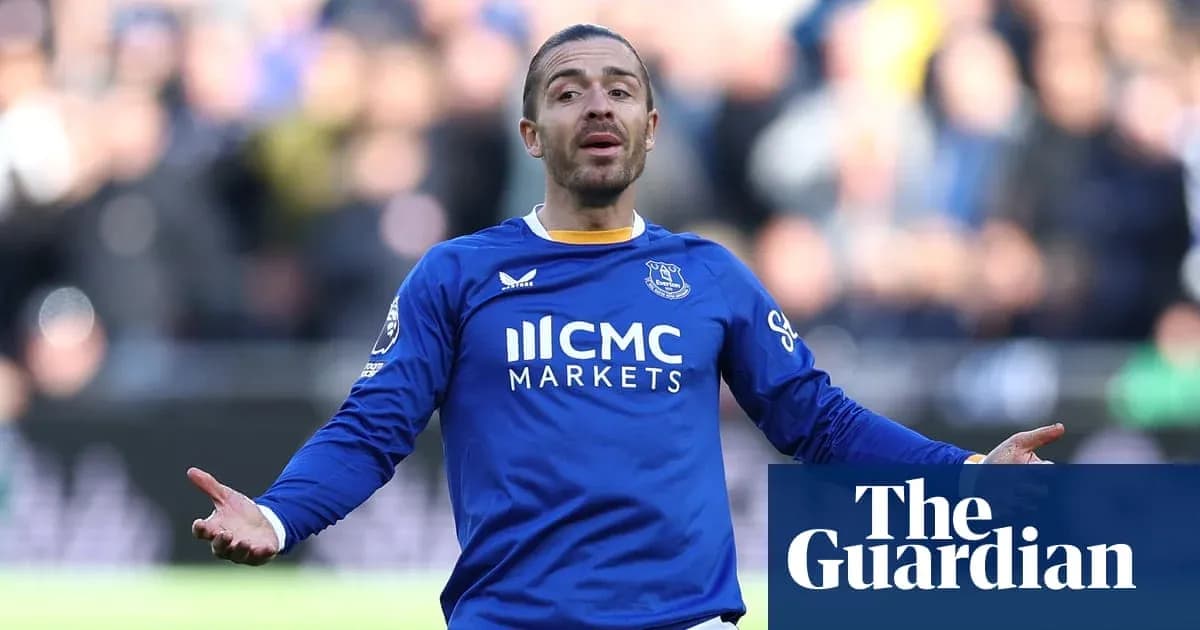
Jack Grealish: From £100m Star to Career Crossroads at Everton
On the biggest night in Manchester City’s history, Jack Grealish started while Phil Foden, Julián Álvarez and Riyad Mahrez watched from the bench. Ninety minutes in a Champions League final against Inter, entrusted by Pep Guardiola when it mattered most. That was supposed to be the beginning of his prime.
Three years on, it feels like the closing credits.
The trust that once made him a £100m cornerstone at City has eroded. Injuries chipped away at his rhythm, Guardiola’s faith followed. Across the next two league seasons after that Istanbul triumph, Grealish managed only 17 Premier League starts. City were ready to move him on in the summer of 2025. Everton stepped in, first on loan, then again this season, offering a stage and a lifeline.
Six appearances into this campaign, the old story has resurfaced.
On Thursday, as Everton beat Newcastle in the Carabao Cup, Grealish was nowhere to be seen. Not injured. Not rested. Omitted. The club went public, citing “a breach of club discipline” after he missed training on Monday. At 31, with 39 England caps and a decade in the spotlight, he is supposed to be one of the grown‑ups in the room. Instead, the same questions keep circling back.
This is not a single misstep. His career has been littered with them. Breaking lockdown rules. A driving ban. Repeated viral clips of him drunk in public, each one feeding into an image he has struggled to shake. Guardiola warned him years ago. In 2021, the City manager dropped him for a match against Newcastle after he and Foden turned up to training in no fit state to work. The message was clear then. It has had to be repeated too often since.
Grealish has never hidden from the perception. He has almost leaned into it. “People go: ‘He likes to go out, he likes to party,’ and I do,” he told Sky Sports last year. “I want to be able to live my life and enjoy myself but obviously there’s a time and a place to do that. Sometimes, I’ll be honest with you, I probably haven’t picked the right times.” Awareness, though, is not the same as change.
For a brief spell at Everton, it looked as if he might finally be turning the narrative. Early in his first season at Hill Dickinson Stadium he scored winners against Crystal Palace and Bournemouth. By mid-January he had six assists from 20 Premier League appearances. Not vintage, but productive, influential, involved.
Then came the foot injury that cut his campaign short. Another stop, another start. Another season without reaching 30 league games – he has not managed that since 2019‑20 at Aston Villa. For a player of his talent, that statistic should sting.
Even this summer, Everton hesitated. There were reservations about bringing him back, but Iliman Ndiaye’s sale to City opened up a hole in the squad and made Grealish a pragmatic solution. He reported for pre-season under Enzo Maresca, who gave him minutes in the Community Shield and on the opening day against Bournemouth. The Italian seemed ready to offer a clean slate, to see if there was one last twist in Grealish’s City story.
That notion did not last long. Whatever faint hope of a redemption arc in sky blue has faded. Maresca still spoke warmly on Friday. “I still think that he’s a good boy, big heart,” he said, a reminder that those who work with Grealish often like him as a person. But affection alone cannot carry a career.
Because when Grealish is right, when the head is clear and the body is sharp, he remains a rare sight. Socks rolled down, low centre of gravity, riding tackles, drawing fouls, dragging his team up the pitch. A carefree dribbler with a street‑footballer’s swagger. The kind of player who makes people leave their seats before he even beats his man.
Those glimpses have become too sporadic. That is the problem. The next seven months will decide whether they become memories or a platform for something more. His City contract expires at the end of the season. On paper, the incentives could not be stronger: prove he can still shine at Premier League level, lift Everton towards the cup success their supporters ache for, and force clubs to see more than a fading name and an old price tag.
Instead, his future is clouded. David Moyes cut a terse figure when asked about him on Thursday, giving little away but saying enough with his tone. Working with a small squad, the Everton manager can scarcely afford to lose senior players to self-inflicted absences. That kind of avoidable disruption does not tend to encourage managers to extend loans or push for permanent deals.
Away from the pitch, the story is more complicated. In an industry that increasingly keeps its stars at arm’s length, Grealish still walks towards the crowd. He signs autographs long after team‑mates have disappeared down the tunnel. He embraces the charity work that comes with playing for major clubs. At Hill Dickinson Stadium, he is routinely mobbed on arrival and departure, posing for selfies, sharing jokes, giving time. There is a warmth there that those around him feel and remember.
What he has not yet managed is to direct that same care towards his own career.
“With me, I’m a big confidence player – I want to feel loved,” he once said. Right now, that love will not be coming from Moyes unless something changes drastically, and fast. The question hanging over Grealish is no longer whether he can thrill a crowd. It is whether he is finally ready to respect his own talent as much as everyone else always has.