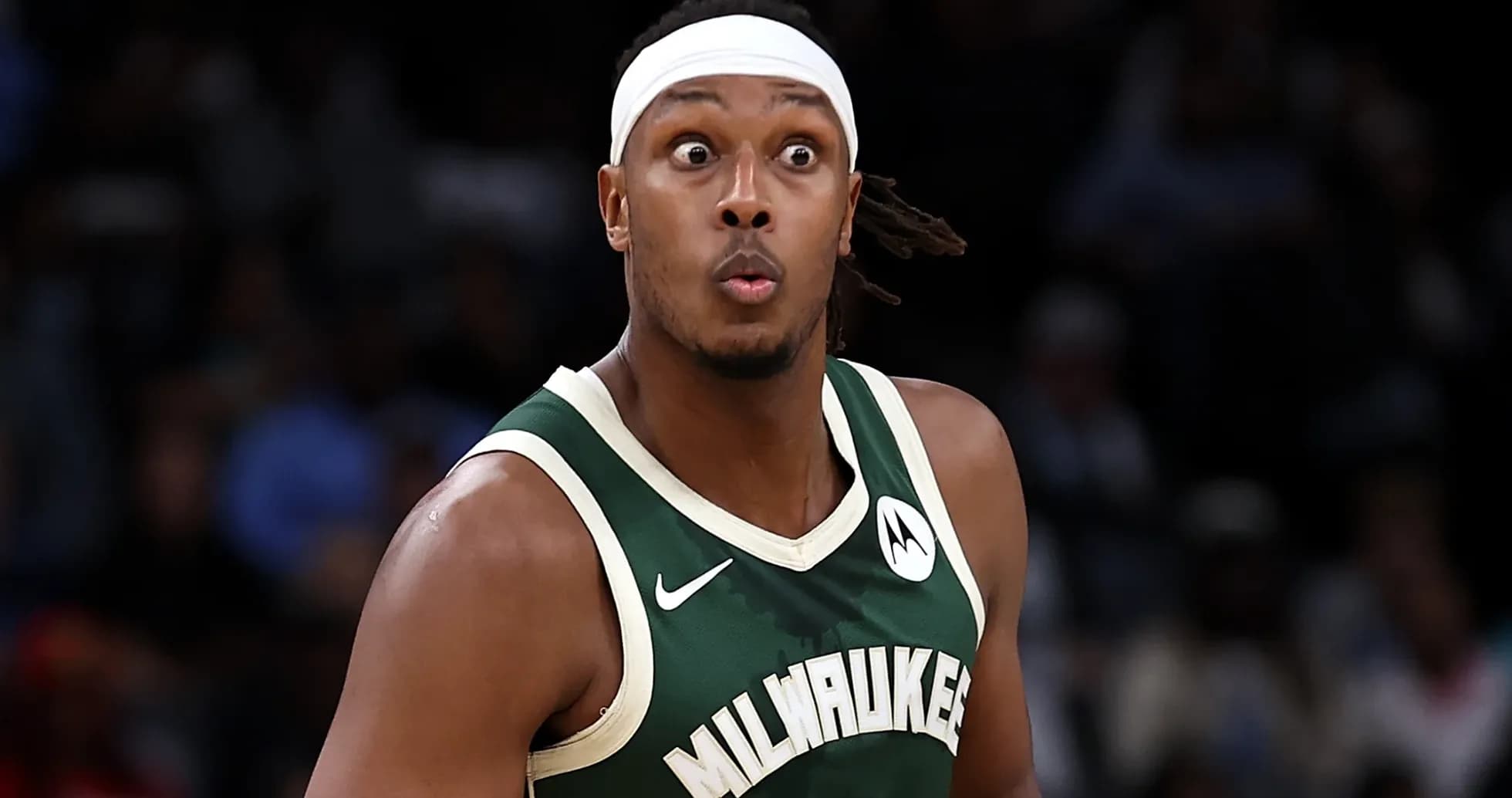
Hornets Seek Myles Turner to Build New Identity
The LaMelo Ball era is over in Charlotte. So is the uneasy, stop-start partnership with Miles Bridges. The Hornets ripped off the bandage this offseason, shipping Ball to the Minnesota Timberwolves and Bridges to the Phoenix Suns, and in doing so signaled something they haven’t truly embraced in a decade: a hard reset with a clear identity in mind.
That identity now belongs to Brandon Miller and Kon Knueppel.
Around them, the front office has started stacking adults in the room. Naz Reid, Grayson Allen and Dennis Schroder arrive as battle-tested role players, the sort of professionals who know how to navigate an 82-game grind and, crucially, how to stabilize young stars still learning what it takes to win. The goal is blunt. End a 10-year playoff drought that has hung over the franchise like a storm cloud.
The roster, on paper, looks more coherent. The frontcourt has been fleshed out, especially at power forward and center. There’s size, shooting, and a mix of skill sets. What there isn’t: a true defensive anchor.
Naz Reid can score and stretch. Hannes Steinbach brings length. Grant Williams offers toughness and switchability. Moussa Diabate and Ryan Kalkbrenner add energy and size. But none of them is a classic backline eraser, the kind of rim protector who can cover for mistakes and change the geometry of a game simply by being in the lane.
That’s where one intriguing name keeps circling around Charlotte’s long-term board.
Myles Turner on the radar
Myles Turner’s first year with the Milwaukee Bucks was, by any standard, a mess. The blockbuster swing that brought him to Wisconsin, like the Damian Lillard deal before it, has been labeled a misfire. His fit never quite clicked, his contract has proven difficult to move, and now the Bucks are staring at their first season without Giannis Antetokounmpo since 2013.
That context matters. It also opens a window.
Sean Devaney of Heavy Sports reported that Turner could become available at the trade deadline, provided he starts the year well enough to rebuild his value.
“The deal for Turner, like the deal for Damian Lillard, was a disaster for Milwaukee,” Devaney wrote. “His contract has been tough to move, but if he plays well to start the year, teams might bite on him by the trade deadline.”
Turner is no longer leading the league in blocks as he once did, but the résumé is still there: two-time NBA blocks leader, a long, mobile 6-foot-11 big who averaged 1.6 blocks per game last season despite the overall disappointment. For a team like Charlotte, desperate for a defensive backbone without sacrificing spacing, that profile is hard to ignore.
A framework that makes sense for both sides
The outlines of a deal are already easy to sketch.
- Hornets receive:
- Myles Turner
- Bucks receive:
- Grant Williams
- Ryan Kalkbrenner
For Charlotte, Turner walks straight into the starting center spot. He protects the rim, shoots the three, and gives new head coach Charles Lee a far more versatile palette to work with. With Turner on the floor, Lee can dial up a tall, shooting-heavy frontcourt, pairing him with Naz Reid without surrendering spacing. If the Hornets want to lean into chaos and length, Turner can share the floor with Moussa Diabate, turning the paint into a minefield for drivers.
This is the kind of move that doesn’t just tweak rotations; it rewires the defense.
Milwaukee’s angle is different. The Bucks, post-Giannis, are staring at a roster in flux and a cap sheet that needs oxygen. Grant Williams, on an expiring deal, is exactly the sort of contract a front office wants when flexibility becomes a priority. He can contribute immediately as a physical, playoff-tested forward, then either be re-signed on their terms or allowed to walk to create space.
Dorian Finney-Smith could fit a similar mold, but his three remaining years complicate matters. Williams is cleaner. Cheaper in the long run. Easier to flip again if Milwaukee decides to pivot.
Kalkbrenner, meanwhile, gives the Bucks a young, developmental big with real size and respectable defensive instincts. He can slot behind Kel’el Ware as a backup center, or at least compete for that role. There’s also the possibility Milwaukee pushes for Tidjane Salaun instead, betting on a higher ceiling and a longer runway.
Salaun, the former No. 6 pick, has yet to justify that status in Charlotte. The Hornets have been patient, but a team chasing a playoff berth rarely has time to nurture a long-term project if the production isn’t there. On a young, rebuilding roster like Milwaukee’s, his timeline makes more sense. Minutes would be easier to find. Mistakes would be easier to live with.
The cost of ambition
For the Hornets, this doesn’t happen without sweeteners. Milwaukee will not take on Turner’s contract and surrender a proven rotation piece like Williams for free. Draft picks will have to be attached, and that’s where Charlotte must decide how serious it is about accelerating this new era.
Is the franchise willing to burn assets to give Miller and Knueppel a genuine defensive star behind them? To give Lee a lineup that can both score and survive when games slow down in April?
Charlotte has already chosen its path by moving on from Ball and Bridges. The next step is deciding how aggressively it wants to walk it. A deal for Myles Turner would say plenty, not just about this season, but about how quickly the Hornets expect this new core to grow up.