Germany's Dominant Win Over Mali Secures Knockout Stage
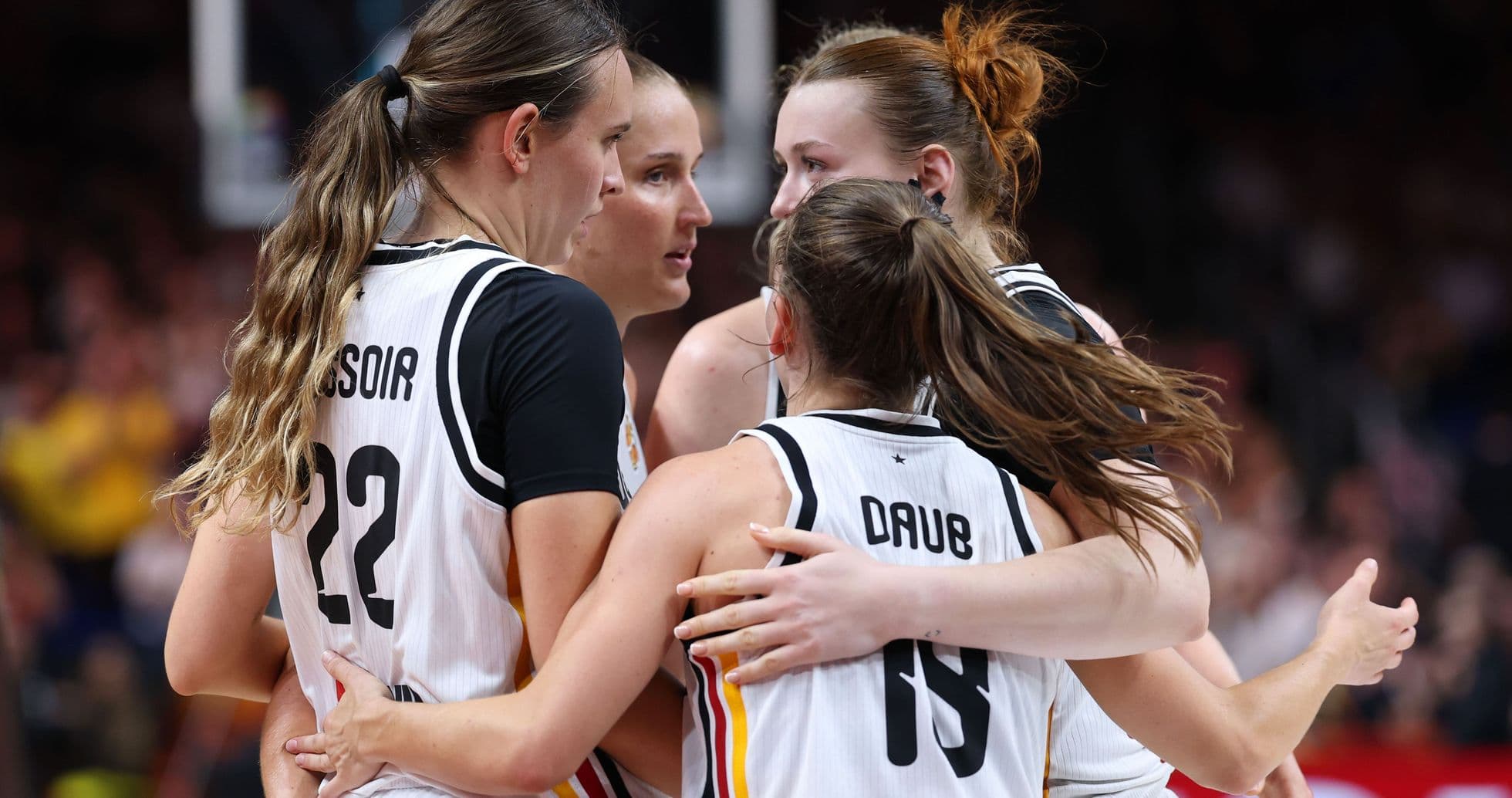
The lights dimmed, the bassline kicked in and “Through the Monsoon” rolled around the Uber Arena. Germany’s women were already bouncing, feeding off 12,550 voices before a ball had even left a hand. By the final buzzer, they had done far more than just enjoy their team song.
They had announced themselves.
Germany dismantled Mali 83-58, a statement win that locked up second place in Group A behind Spain and, just as importantly, a clear path into the knockout phase. South Korea await on Tuesday night in the qualification round, with a quarter-final against Belgium the prize. The task is simple now. Win or go home.
From chaos to control
The group had been a minefield. Four teams, all on three points before tip-off. One win, one loss each. First place still possible, last place lurking in the shadows. Germany knew the equation: beat Mali, stay alive, and avoid the nightmare scenario of crashing out on home soil.
They played like a team that had learned its lesson.
The heavy opening loss to Spain (53-83) had stung. The response against Japan (74-58) steadied the ship. Mali, though, were the wild card – the same Mali who had stunned Spain 82-73 on the second matchday and blown the group wide open.
Germany hit them early.
The defence snapped into place from the opening possessions, closing passing lanes and forcing Mali into rushed looks. Leonie Fiebich buried an early three, the hosts surged 15-7 ahead by the sixth minute and the crowd rose with them.
Then came the wobble.
Alexis Peterson, back in the lineup after missing the second half against Japan with an infection, twice turned the ball over in quick succession. The rhythm broke, the game grew scrappy, and for a brief spell Germany flirted with letting Mali back in.
They didn’t.
Bühner and Geiselsöder take charge
Where the opening game against Spain had exposed nerves, this one showcased growth. Luisa Geiselsöder, quiet until now in the tournament, finally imposed herself. She did not miss a single shot in the first half, punishing Mali inside and stretching the floor when needed.
Around her, the confidence spread.
Frieda Bühner, Germany’s standout against Japan, picked up right where she left off. Her second straight three-pointer pushed the lead to 40-29 in the 16th minute, Germany’s first double-digit cushion. Almost everything was dropping by then. Alexandra Wilke and Marie Gülich joined in from the perimeter, and Mali’s defence began to fray.
Bühner kept coming. She finished as top scorer with 21 points, the offensive heartbeat of a team that suddenly looked liberated.
On the sideline, the national team’s most famous face watched it all with approval. World champion and Germany captain Dennis Schröder, courtside in street clothes, rode every possession with them. At half-time he summed it up in plain terms: this was a group getting better game by game, carried by a “brilliant atmosphere” that turned the Uber Arena into a pressure chamber for the visitors.
Germany never released that grip.
Mali run out of answers
The second half could have invited doubt. Instead, it underlined authority.
This was only Germany’s second meeting with Mali after a friendly in Saarlouis back in 2007, but there was no sense of unfamiliarity now. Lange’s team knew exactly where to attack. They kept Mali at arm’s length, defended with energy, and refused to let the African side string together the kind of run that had undone Spain.
The key blow came early in the third quarter.
At 56-37 in the 25th minute, Geiselsöder stepped out and calmly dropped another three. It was the shot that broke whatever resistance Mali had left. The WNBA player called it “really good basketball” afterwards, and she was right – not just because of the scoreline, but because of the timing, the control, the sense of a team finally playing to its potential.
From there, Germany managed the game like a seasoned tournament side. No panic, no drama, just a steady march to the finish. The 83-58 final scoreline didn’t flatter them. It reflected a team that had been the aggressor, just as Bühner had demanded before tip-off.
South Korea next – and then?
Spain’s 79-59 win over Japan in the parallel game confirmed what Germany already suspected: top spot was gone. That hardly mattered by the end of the night. The interim target was clear and it had been hit. Second place in Group A, momentum restored, and a knockout tie in front of their own fans.
South Korea, third in Group B, now stand between Germany and a quarter-final against Belgium. That is no small hurdle. Belgium, European champions in 2023 and again in 2025, cruised through Group C unbeaten and wait like a measuring stick for any side with serious ambitions.
Olaf Lange didn’t linger on the celebrations. Even in the glow of a sold-out arena and a convincing win, his mind had already moved on.
“We have to reorganise again,” he said, reminding everyone that South Korea “are a good team.”
The music, the noise, the swagger – all of that will be back on Tuesday. The question now is simple: can this German team turn a rousing group-stage revival into a deep run against Europe’s elite?