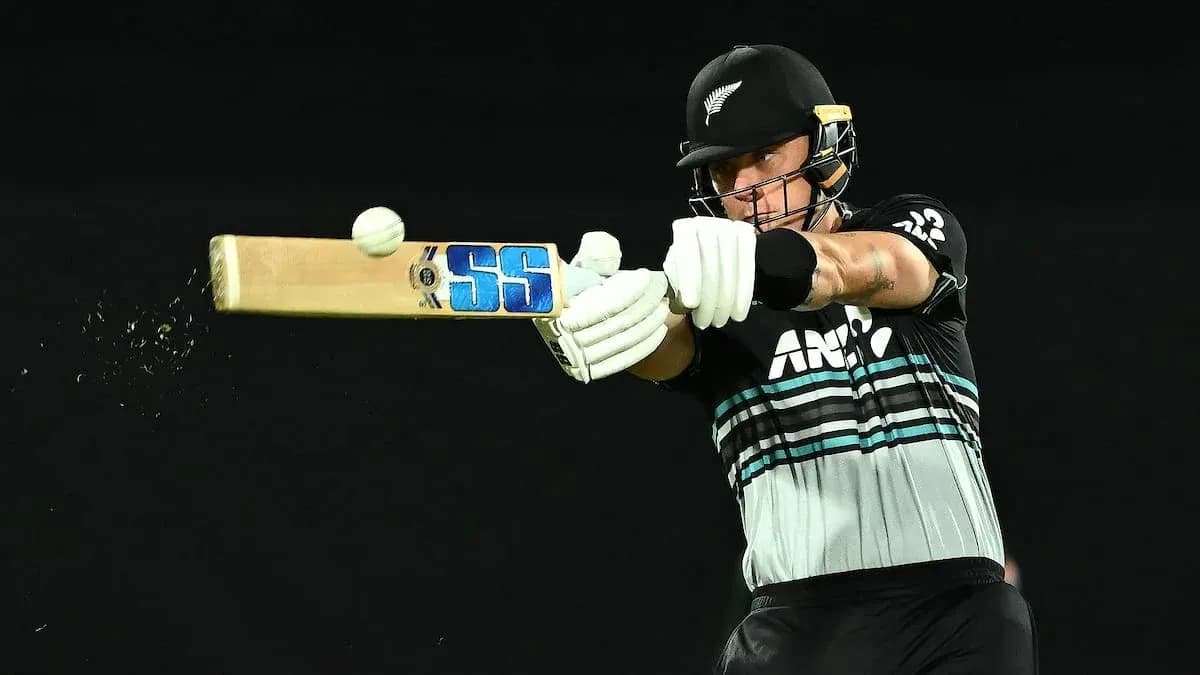
England's Bowlers Shatter Pakistan's Top Order in Historic Collapse
By the time the rain briefly swept across Edgbaston, Pakistan’s innings had already been drenched in ignominy.
On a pitch offering encouragement but hardly treachery, Pakistan’s top order collapsed in a way no side had ever managed in a Test in England: all of the top five dismissed for single figures in the first innings. It has happened 11 times before in Test history, always in a second innings. Never like this. Never this early, this comprehensively, this bleak.
At 60-5, the scoreline barely captured the scale of the crisis. The numbers did. This series has turned Pakistan’s starts into a grisly running joke: the second wicket has fallen at 6 and 13 at Leeds, 16 and 7 at Lord’s, and now 14 here. That’s 56 runs in total for the first two wickets across the series, an average stand of 5.6 and 11.2 for the fall of the second wicket. They are bearing down on a record that has stood since 1888, when Australia averaged just 16 for the fall of their second wicket in England. This is batting in freefall.
Tongue’s thunderbolt floors Babar
If there was a single delivery that summed up Pakistan’s torment, it came from Josh Tongue. Fast. Full. Ruthless.
Babar Azam, the captain and their best player, walked out with his side 48-4 and already tottering. Tongue, in his first over, went at him with pace and purpose. The ball that finished it was a brute: full and angling in, thudding into the top of off stump. Babar played back, late and beaten, his off stump cartwheeling as Tongue roared away in celebration.
Cleaned up for 7. Pakistan 48-5. The procession continued.
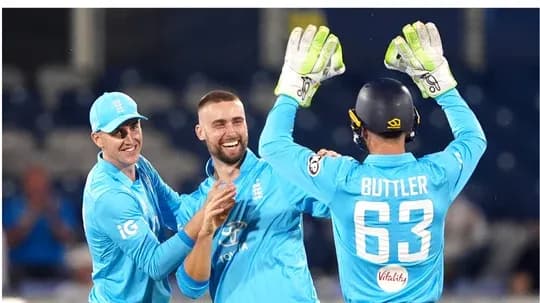
England’s seamers hunted as a pack. Tongue brought hostility, Jofra Archer menace, Ollie Robinson nagging precision, and Gus Atkinson a touch of hard-luck persistence that still hasn’t fully turned in his favour. Pakistan had no answers. They prodded, they groped, they nicked. And when they survived, it felt like a stay of execution rather than a turning of the tide.
Saud Shakeel stands alone
Amid the wreckage, Saud Shakeel played like a man determined not to be dragged under with everyone else.
His cover drives were a jarring contrast to the chaos around him. One, then another, then a third in quick succession – all timing, all grace, all the more damning for what they revealed about the surface. This was not a minefield. This was a decent Test pitch on which a top order had simply imploded.
Shakeel’s fluency only sharpened the indictment of those above him. He eased one through extra cover, then chanced his arm on the next ball, a looser stroke that produced an inside edge flashing just past leg stump for four more. Later in the over, he leaned into another, middling it through the covers with authority. For a few moments, it looked like a different game.
He wasn’t flawless. On 7, he flung his bat at a hint of width from Atkinson and nicked high and fast to first slip. Ben Duckett, already guilty of spilling an earlier chance, got a hand to it but couldn’t cling on. A second drop of the morning, this one tougher but still a chance that should have ended Pakistan’s last real resistance.
Shakeel punished England where he could. When Robinson banged in a rare short ball, Shakeel swivelled and pulled through square leg, only sharp work in the deep denying him a boundary. Robinson quickly abandoned the experiment and went back to the fuller, away-swinging lengths that had Pakistan groping outside off.
Records, rain and a race to the bottom
Even the weather seemed unsure how to treat this spectacle. During the drinks break, the rain thickened, the covers trundled halfway on, then stopped as the drizzle relented and the umpires waved them away. Play resumed. Pakistan’s problems did not.
Byes down the leg side off Robinson nudged the total along, a thick edge from Shakeel added a couple more as the rain returned in spits and starts. Each run edged Pakistan away from the humiliation of their lowest ever Test score, yet the spectre lingered. Every misjudgment, every play-and-miss, every strangled push only deepened the sense of a side trapped in a technical and mental spiral.
Atkinson, replacing Archer, continued his curious series. Just one wicket to his name at a cost of 125, but his figures have never quite reflected the quality of his spells. Again he found edges, again he beat the bat, again fortune looked the other way. On another day, Duckett’s hands would have stuck and Atkinson’s analysis would have told a very different story.
Instead, the story belonged to Pakistan’s top order and a statistical horror show now etched into the record books. A proud cricket nation, boasting some of the game’s finest stroke-makers, reduced to numbers that echo the sport’s Victorian era.
England’s bowlers will take the accolades, and rightly so. They were disciplined, relentless, and ruthless when the chances came. Yet the lingering question hangs over the tourists, not the hosts.
How long can a team with this much talent keep starting this badly?