Empowering Girls in Northern Nigeria Through Basketball
Abuja, Nigeria – For years, the only way Khamila Sani Ibrahim could get to a basketball court was by slipping through the gaps in everyone else’s expectations.
Growing up in Kano State in northern Nigeria, she rarely saw girls playing organised sport, let alone running full-court drills. Basketball courts were there, but they belonged to the boys. Her own route to the game often meant a quiet act of rebellion.
“It is very hard for me to train in basketball,” Ibrahim said. “I only go out to play when they are not around, or I tell them that I’m going to visit my friends, and from there I go to the court.”
In many northern Nigerian communities, sport is still coded male. Basketball and football are for sons, brothers, cousins. Girls who want in face a wall: few courts, little equipment, almost no coaching, no funding, and hardly any real competition. The desire is there; the pathway is not.
A new lane opens
That gap is what Grassroots To Greatness (G2G) is trying to close.
The initiative, built around female empowerment in sport, has started to carve out a space where girls can train, compete and be taken seriously as athletes. For players like Ibrahim, it feels like a door that should have existed years ago.
G2G was founded by youth sports advocate Jawahir Bello, who had seen up close how thin the opportunities were for girls in the region. She didn’t just want a token team or a one-off clinic. She wanted a system.
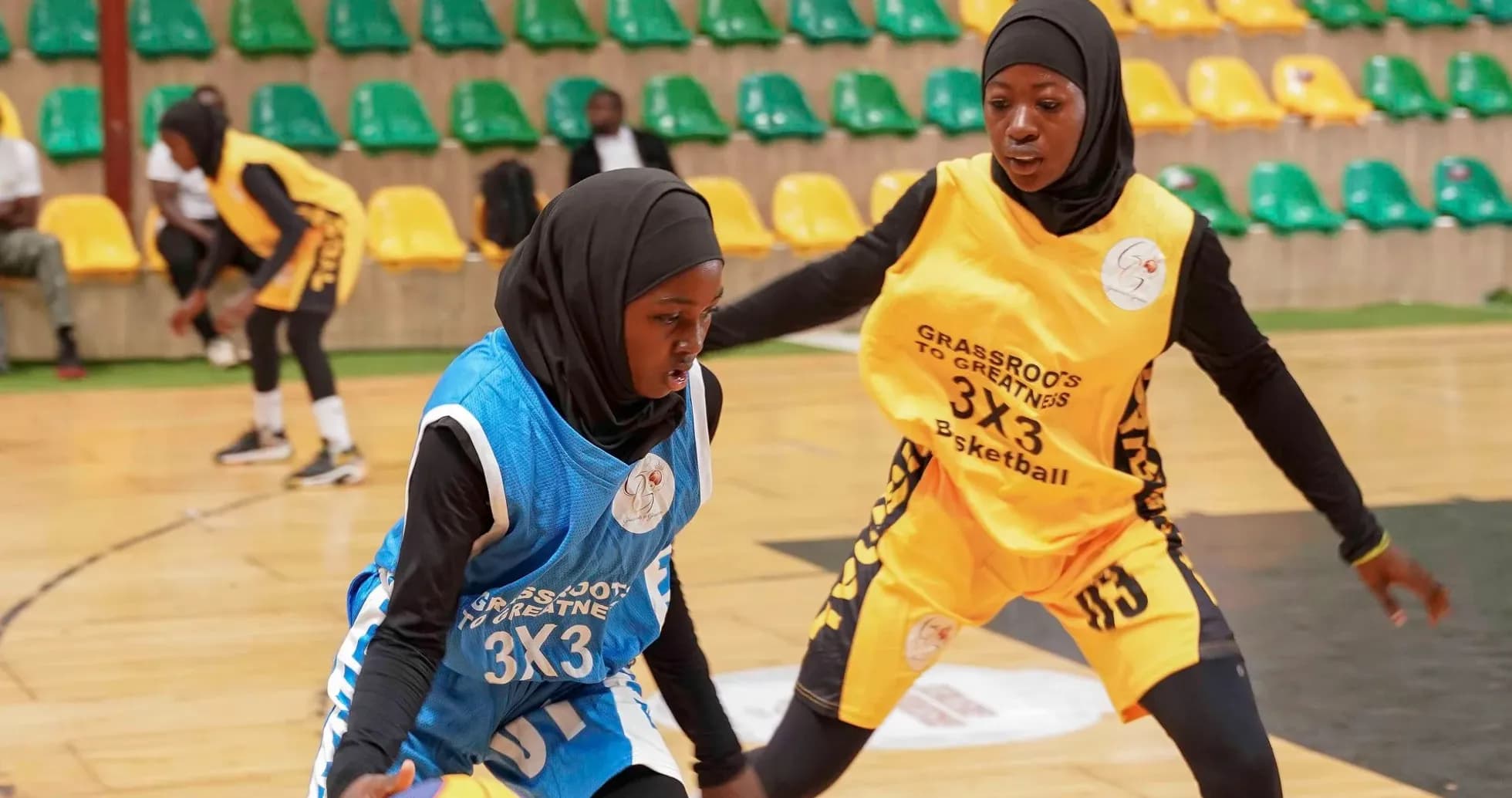
At G2G tournaments, the sight is striking. Players step onto the court in custom hijabs, long sports vests and athletic tights. The look is deliberate, a statement as much as a uniform.
“Our core value is about participating in sports without doing anything that goes against our cultural values or our identity as Muslims,” Bello told Al Jazeera. “Whether you put on a hijab or innerwear under your jersey, modesty is key. You come out modest, decent and fully covered.”
She expected pushback. Female-only tournaments, community training sessions, new routines that cut into long‑held traditions – all of it had the potential to unsettle families and local leaders. Instead, she found something else.
Community stakeholders began to welcome the initiative. G2G built from the ground up, partnering with grassroots coaches who already run community teams and know every street, every family, every unwritten rule. Those coaches became the bridge between ambition and acceptance.
A tournament that feels different
When Ibrahim pulled on a Kano State jersey for a multi-state G2G tournament, she stepped into a version of basketball she had never known.
No more being the lone girl squeezed into male-dominated local teams. No more sideways glances from boys who assumed she couldn’t keep up. This time, the court belonged to girls from as many as nine different states, all there for the same reason.
“What G2G did for us was incredible,” Ibrahim said. “They provided jerseys, custom hijabs, basketballs, cover for our transport and even financial stipends for all the teams, regardless of who won or lost. It made us feel seen and valued.”
That detail matters. In many youth tournaments, rewards are reserved for the winners. G2G’s decision to support every team underlined a different message: participation itself has value, and every girl who shows up deserves backing.
In Abuja, 11-year-old schoolyard games were the start of something bigger for another player, Fatima Diouf. She joined G2G to find out how her skills measured up beyond her school’s court and comfort zone. The answer came quickly.
Her team didn’t reach the finals. The lesson still landed.
“I have learned a lot beyond just basketball. I learned teamwork, confidence, discipline and how to keep improving,” Diouf told Al Jazeera.
The scoreboard didn’t define the experience. The environment did.
The fight outside the lines
The real struggle, though, often starts when the whistle stops.
For Ibrahim, court time is still a negotiation. She has had to push past her own doubts and the dismissive comments of male peers who insist girls can’t play at the same level. Every training session has to be balanced with schoolwork and domestic chores that don’t disappear just because she dreams of a scholarship.
That tension is familiar to coaches working at the base of the pyramid.
Mansur Abdullahi, assistant coach of Nigeria’s U-20 women’s national football team, the Falconets, sees the gap between official structures and everyday reality. The national programmes and federations have scale, budgets, and formal pathways. What they often lack is intimacy with the communities they want to serve.
“Official sports bodies have big structures, but local groups provide the actual trust and cultural understanding,” he said. “So it’s only through community-led initiatives that more professional teams will understand what’s acceptable for girls and boys and how to frame sports so it fits the existing values instead of clashing with them.”
That framing is crucial in northern Nigeria, where acceptance hinges not just on talent, but on whether sport can sit comfortably alongside faith, family and tradition.
Eyes on the next level
Inside that delicate balance, ambition is growing.
For many G2G participants, the tournaments are more than just a weekend of games. They are a test, a showcase, and a glimpse of what might lie beyond state borders. New opponents bring new standards. New standards bring new dreams.
Before G2G, Ibrahim’s father worried that competitive sport might pull his daughter away from the family’s standards. The idea of travel, competition and public performance raised questions. Then he went to her games.
He saw the hijabs, the long vests, the covered limbs. He saw structure and supervision. He saw an environment that respected the same values he wanted to protect. The doubts faded. Support took their place.
Now Ibrahim is thinking far beyond Kano.
“I want to secure a college sports scholarship in the United States and eventually turn professional. More than that, I want other Muslim girls across northern Nigeria to see that sports build your health, strength, and confidence, and that nothing should hold you back from chasing your dreams,” she said.
Diouf’s outlook shifted too. Watching the network of coaches, organisers and stakeholders at the tournament, she started to imagine herself not just playing in Abuja, but travelling across Africa with a ball in her hands and a team at her back.
Keeping identity, claiming space
For Bello and G2G, the mission is not simply to stage female-only tournaments and move on. The real target is deeper: to prove, day after day, that girls have a rightful place in sport and do not have to trade away who they are to earn it.
“You can keep your identity, stay covered and still achieve something in life,” Bello said.
On courts across northern Nigeria, that idea is no longer theoretical. It is visible in every custom hijab, every layup, every girl who tells her family she is going to visit a friend and comes back with a new skill, a new teammate, a new dream.
The question now is not whether they belong on the court. It’s how far, and how fast, they can go once the door has finally been opened.