Emilio Gay's Promising Start: A New Era for England's Opening Batters
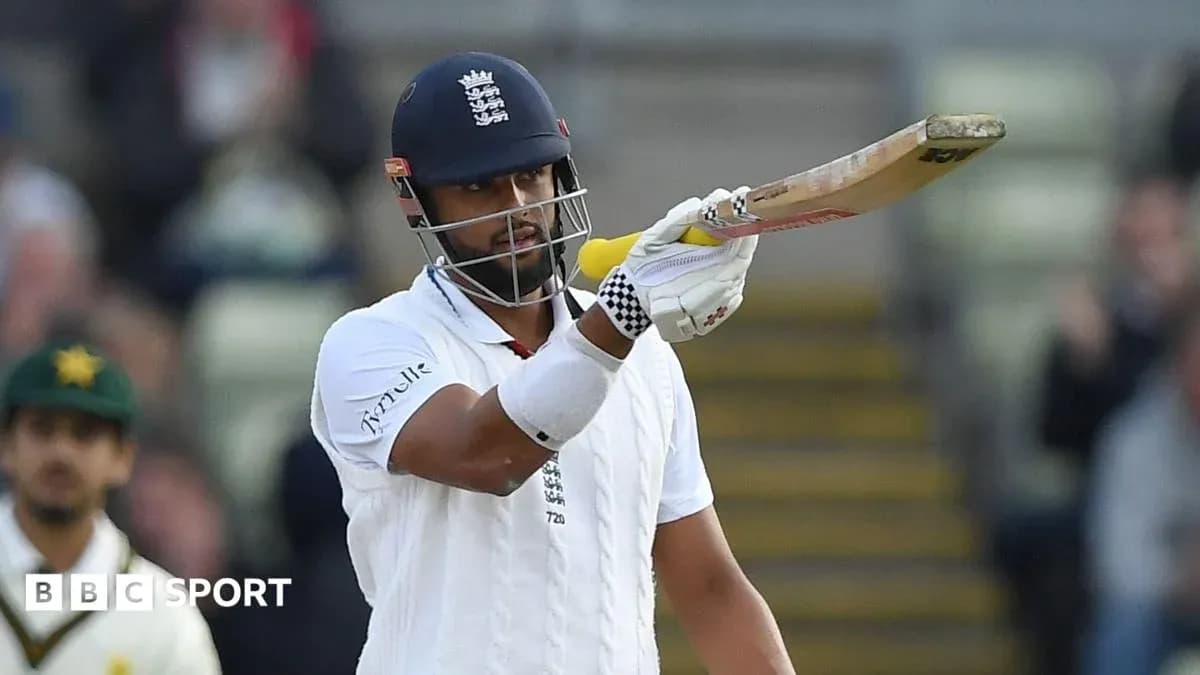
Emilio Gay walked off Edgbaston on 60, bat tucked under his arm, furious with himself. He knew it should have been more. But for those watching closely – and for one former England captain in particular – the innings felt like something else entirely.
It felt like a beginning.
Cook’s seal of approval
Sir Alastair Cook has seen enough opening batters come and go to be wary of early hype. He faced almost 12,000 Test deliveries at the top of the order himself. His judgement carries weight. And on Gay, he is clear.
"I think Emilio Gay's played really nicely. I would say he's confident and intense," Cook told Test Match Special, before going further. Gay, he said, has "done enough" to book his ticket for England’s winter tour of South Africa and should open the batting there.
This isn’t about one pretty half-century. On paper, Gay’s numbers do not leap off the page: 261 runs at 26.1. In most eras, that would barely stir a debate. But this has not been most eras.
In an English summer where the ball has bullied the bat, only Ben Duckett has managed a Test hundred in six home matches. Surviving the new ball has often felt like a minor miracle. In that context, a left-hander willing to soak up pressure and make “tough runs” at the top suddenly looks invaluable.
Technique built for trouble
Gay’s 60 from 114 balls against Pakistan was not a flourish, it was a statement of method. He left, he defended, he waited. Then he cashed in.
According to CricViz, since his debut against New Zealand in June he has either left or defended 61% of the pace deliveries he has faced. The last England opener to better that in a home summer was Dom Sibley in 2020, at 68%. On Wednesday, Gay went even more extreme: 65 balls either left alone or blocked.
Cook likes what that says about him.
He admires how late Gay defends, how he resists the drive until it truly presents itself. This is not a batter chasing the highlight reel. It is someone building an innings brick by brick, then swinging the hammer.
The numbers inside the knock tell the story. The first 12 runs of his fifty took 43 balls. Hard graft. Then the next 38 came off 52. Same player, different gear. Once set, he expanded, finishing with nine fours. Remarkably, 68% of his Test runs have come in boundaries – the joint-highest proportion of any England batter with at least 250 runs in the format.
He isn’t just a blocker. He’s a blocker who, once in, hurts you.
An all-court game
Cook sees a rounded player, not a one-trick grafter.
"If you take Gay's innings, and what I've seen of him, he's not hunting that drive too often. He waits for it to come into there," he said. Gay scores off the back foot through the off side, he works the leg side, he times the ball through mid-wicket. There is no obvious blind spot, no sense of a batter trapped on one side of the wicket.
On a tricky Edgbaston surface, that versatility mattered. Pakistan’s seamers kept asking questions. Gay kept answering them with discipline first, then with strokes that hinted at something more expansive lurking beneath the surface.
Opportunity missed, impression made
Not everyone saw the day as an unqualified success. Michael Vaughan, another former England captain, admired the innings but could not ignore the chance that slipped away when Gay dragged on Razaullah Khan.
"Emilio Gay found his balance early. He had it hard at the start and then he found his flow," Vaughan said. "He'll be really disappointed to get out for 60. He'll be desperate to get his first Test match century and I thought it was on today.
"That extra little bit of pace from Razaullah and a little lack of concentration at the end of the day has cost him."
That, in many ways, is the highest compliment. This was not a plucky 60. It was an innings that made a hundred feel inevitable until one lapse cut it short.
Built in the nets, revealed in the middle
Inside the England dressing room, none of this has come as a surprise. Seamer Josh Tongue has watched Gay’s preparation up close and sees a direct line from training ground to middle.
"The one thing I've seen in Emilio is he trains really hard in the nets. He'll bat for ages, putting a lot of hard work in, and it's shown on the pitch," Tongue said.
He pointed back to Lord’s the previous week, where Gay suffered two ugly dismissals. Many young openers wear those scars for weeks. Gay came back to Edgbaston, on a tougher pitch, and batted “unbelievable”, in Tongue’s words.
Yes, he was “really disappointed” to chop on. Yes, it is “not a nice feeling”. But he had already done the hard part: he had dragged England into a strong position for the following day.
South Africa calling
That, ultimately, is what Cook is responding to. Not just the shots, not just the leave percentage or the boundary ratio, but the temperament. The stubbornness. The ability to learn quickly and to front up again after failure.
For an England side still searching for long-term stability at the top of the order, those qualities matter as much as any average column. South African pitches should offer truer bounce and a touch more reward for batters willing to get in and stay in. Cook believes that is where Gay’s game can grow.
England have tried plenty of openers since Cook himself walked away. Some flashed briefly, some never quite convinced. Gay, with his hard edge and uncluttered technique, has now put his name firmly on the ticket list.
He has not reached three figures yet. He has not cemented anything. But he has done something that counts for just as much at this stage of a career.
He has made the right people believe he belongs.