Emiliano Martínez: The Price of Glory and Sacrifice
Emiliano “Dibu” Martínez has had his jaw smashed, his lights knocked out and his meals turned into baby food. None of that, he says, will ever hurt quite like the choice that changed his right hand forever.
The Argentina No. 1 broke his ring finger on May 20, in Aston Villa’s Europa League final win over Freiburg. The injury didn’t come from a heroic last-minute save or a reckless dive at a striker’s feet. It crept up on him in the aftermath, during the celebrations, a sharp pain that refused to fade.
He went for tests. The verdict was brutal.
Broken finger. Surgery recommended. World Cup in serious doubt.
“I said, ‘No! I’m not making to the World Cup!’ and started to cry. I was out,” Martínez told Argentine reporter Gastón Edul on the journalist’s podcast.
In that moment, the keeper who had stared down penalty takers on the biggest stages crumbled. Then his phone lit up.
Lionel Scaloni, the Argentina manager, sent a message that would anchor him through the weeks ahead: whether Martínez made it or not, he would stand by him.
Backed by Scaloni, goalkeeping coach Martín Tocalli and trainer Dani Martínez, Dibu made the call that would define his tournament and reshape his career. No surgery. No guaranteed recovery. Just pain, tape and faith.
The cost hit him immediately.
Training became a form of controlled suffering. He tried not to use his right hand to push himself up after saves, but instinct is hard to rewire. Each time he forgot, the finger screamed. He spoke of seeing stars on the pitch, of nights where the pain refused to let him sleep before midnight, of looking down at his hand and seeing a finger “like a blood sausage.”
Eventually, science and stubbornness met halfway. A custom cast was built to sit over the damaged digit. Adidas produced a specialized glove to protect it. It was enough to let him play, not enough to make him whole.
The World Cup demanded everything anyway.
Martínez started every match for Argentina. Eight games. Every minute. Twenty saves. Eight goals conceded. He carried that mangled finger through to the final, where Argentina fell 1-0 to Spain in extra time.
He never hid the impact. The finger changed his handling, his confidence in certain movements, the way he landed. But he refused to step aside. He had made his choice.
That choice didn’t just keep him in goal for his country. It altered the path of his club career.
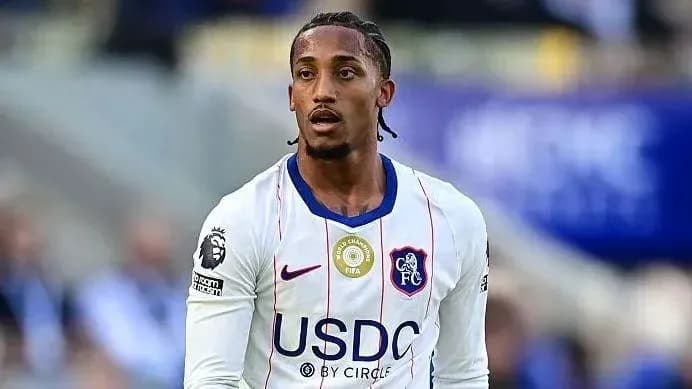
An Italian side – widely reported as Juventus – had been ready to take him from Aston Villa. The finger, and the complications around it, changed their mind. The move collapsed. The chain reaction nudged him instead toward Chelsea, where he now stands as the club’s No. 1, the crooked finger a permanent reminder of the road taken.
Right now, even Chelsea have had to cope without him.
A collision with Everton centre-back Jarrad Branthwaite left Martínez unconscious on the pitch, his head and neck strapped as he was carried off on a stretcher. He remembers the foul. Almost nothing after that.
The jaw was broken. Eating became an ordeal. At the time of the interview, solid food was out of the question. His usual meals had to be blended down to a soft, pale mush, the diet of an elite athlete reduced to something that looked and felt like baby food.
The jaw will heal. The doctors are confident about that.
The finger is different.
Any operation now, he’s been warned, will not restore it to what it could have been had he accepted surgery and missed the World Cup as initially advised. The damage is done. The deformity is permanent. The price is locked in.
Martínez doesn’t flinch.
Given the chance to rewind and choose the safer route, he says he would do it all again. Every shot, every grimace, every sleepless night.
“We represented the country as well as possible. At the end, what stays is what you represent to the country,” he said.
The aftermath of that World Cup cut deeper than many realised. He went back to Argentina reluctantly, still hurting from the final defeat, still wrestling with the sense that something had slipped away.
“I went back to Argentina, which I didn’t want to. I was really bad. My kid asked me to go back, and I went and felt a lot more love than when we won in Qatar.”
In the end, that is what he is left with: a twisted finger, a wired jaw, a fractured memory of a brutal collision – and a conviction that the scars were worth it.
For Martínez, the body will never quite be the same. The bond with his country, he believes, has never been stronger.