DeMar DeRozan's New Role as Sixth Man for the Nuggets
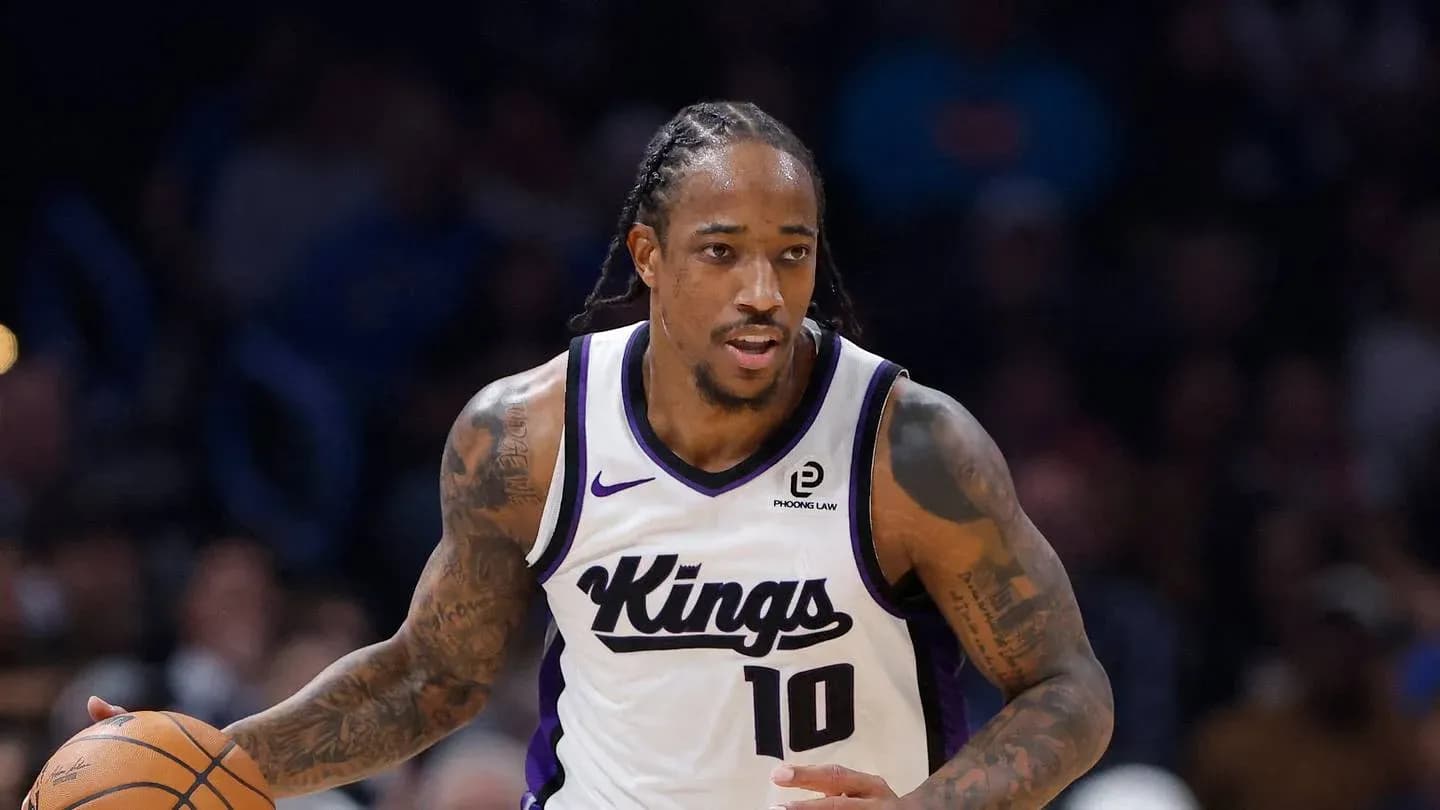
DeMar DeRozan has spent a career walking into arenas as a headliner. In Denver, he’ll walk in as something else entirely: the anchor of a contender’s second unit, and suddenly a serious threat for Sixth Man of the Year.
The Nuggets lost pieces this summer. Tim Hardaway Jr. is gone. So is Peyton Watson, whose move to Cleveland stripped Denver of youth, length, and energy off the bench. That kind of attrition usually forces a title hopeful to scramble.
Instead, the Nuggets landed a six-time All-Star.
A Star in a New Role
DeMar DeRozan, 37, has started 1,199 straight regular-season games. His last stint as a reserve came in his rookie year with the Toronto Raptors back in 2009-10. That’s not a streak; that’s an identity.
Denver is asking him to break it.
On paper, the fit is clear. The Nuggets don’t need another high-usage scorer in the starting five alongside Nikola Jokic and Jamal Murray. They do desperately need someone who can organize, steady, and punish opposing benches when those stars sit. DeRozan can do that in his sleep.
He’s not the perfect player. He doesn’t stretch the floor from deep, and he’s never been known for lockdown defense. But Denver isn’t signing him to chase guards over screens or bomb eight threes a night. They’re handing him the keys to the second unit and telling him to run the offense, get to his spots, and close when the game demands it.
That’s where his Sixth Man of the Year case starts.
The Odds Say He’s in the Fight
FanDuel Sportsbook has already framed the race for the 2026-27 Sixth Man of the Year award, and DeRozan sits firmly in the mix. He opens as the fifth choice at +1800 (18/1), behind a field led by Ajay Mitchell of the Oklahoma City Thunder at +500.
The early top five:
- Ajay Mitchell, OKC Thunder (+500)
- Dylan Harper, San Antonio Spurs (+700)
- Anfernee Simons, Philadelphia 76ers (+1500)
- Ayo Dosunmu, Minnesota Timberwolves (+1500)
- DeMar DeRozan, Denver Nuggets (+1800)
Mitchell and Harper bring youth and upside. Simons and Dosunmu offer scoring and versatility. DeRozan brings something else: a decade-plus of proven late-game shot-making and an offensive package that still bends defenses.
He’s not the favorite. He doesn’t need to be. He just needs minutes, touches, and a defined role. Denver is giving him all three.
Production That Still Plays
Last season with the Sacramento Kings, DeRozan averaged 18.4 points, 2.9 rebounds, and 4.1 assists in 31.2 minutes per game. Those aren’t nostalgia numbers. Those are winning numbers.
Historically, Sixth Man of the Year winners live in the 23–32 minute range. DeRozan will likely land near the lower end of that scale in Denver. Something in the 26–28 minute window feels realistic on a roster that expects to play deep into May and June.
Even with a trimmed workload, the role is perfect for him. He’ll be Denver’s primary ball-handler off the bench, their first option with the second unit, and a frequent closer when Michael Malone needs offense late. The Nuggets can stagger him with Jokic or Murray, let him cook against second units, and then lean on his mid-range craft in tight fourth quarters.
He’s been one of the league’s elite mid-range scorers for years, and that part of his game hasn’t faded. If anything, he’s become more efficient at getting to his spots, more deliberate in how he manipulates defenders, more comfortable living in that 15-foot space where analytics say not to shoot and DeRozan keeps proving they’re wrong.
Chasing History at 37
If DeRozan does win Sixth Man of the Year, he’ll do more than just add another line to an already rich résumé. He’d become the oldest winner of the award in NBA history, passing Jamal Crawford, who took it at 36 in the 2015-16 season.
That’s no small detail. DeRozan is not just changing roles; he’s doing it at a stage when most stars either cling to starting spots or slide quietly out of contention. He’s choosing to downshift into a bench role on a contender, accepting fewer minutes and fewer touches with the starters in exchange for clearer responsibility with the reserves.
The minutes might dip. The impact might not.
He’s also no stranger to big moments. DeRozan has finished top-three in Clutch Player of the Year voting in two of the last four seasons. That reputation doesn’t vanish because he checks in at the six-minute mark of the first quarter instead of hearing his name in the starting lineup.
When Denver needs a bucket late, Malone will still look down the bench and call his number.
The Perfect Late-Career Pivot?
There’s a version of this move where DeRozan fades into a quiet veteran presence, a third or fourth option buried in a starting lineup that already has enough mouths to feed. Denver chose the opposite path. By making him the engine of the second unit, the Nuggets have carved out a role that lets him stay a star in shorter bursts.
He won’t be the face of the franchise. He doesn’t have to be. He just has to punish backups, stabilize lineups without Jokic, and close the games that hang in the balance.
That’s why those +1800 odds feel very real. He’s not the shiny young guard on a rebuilding team hunting numbers. He’s the veteran scorer on a contender, armed with the ball, the green light, and a chance to rewrite the final chapter of his career.
If the Nuggets’ bench holds its ground and DeRozan owns that unit the way his résumé suggests he can, the question won’t be whether he belongs in the Sixth Man conversation.
It’ll be whether anyone else can keep up with him.