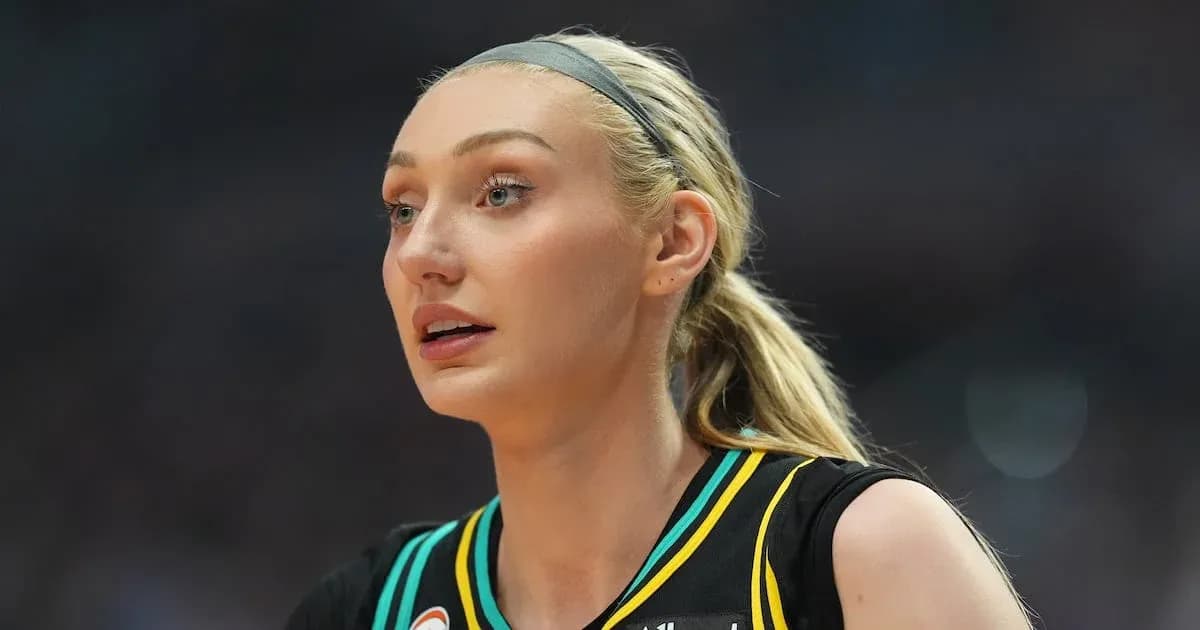
Cameron Brink on the WNBA and the Trans Issue: A Non-Issue
Cameron Brink has no interest in being quiet, and even less in being used.
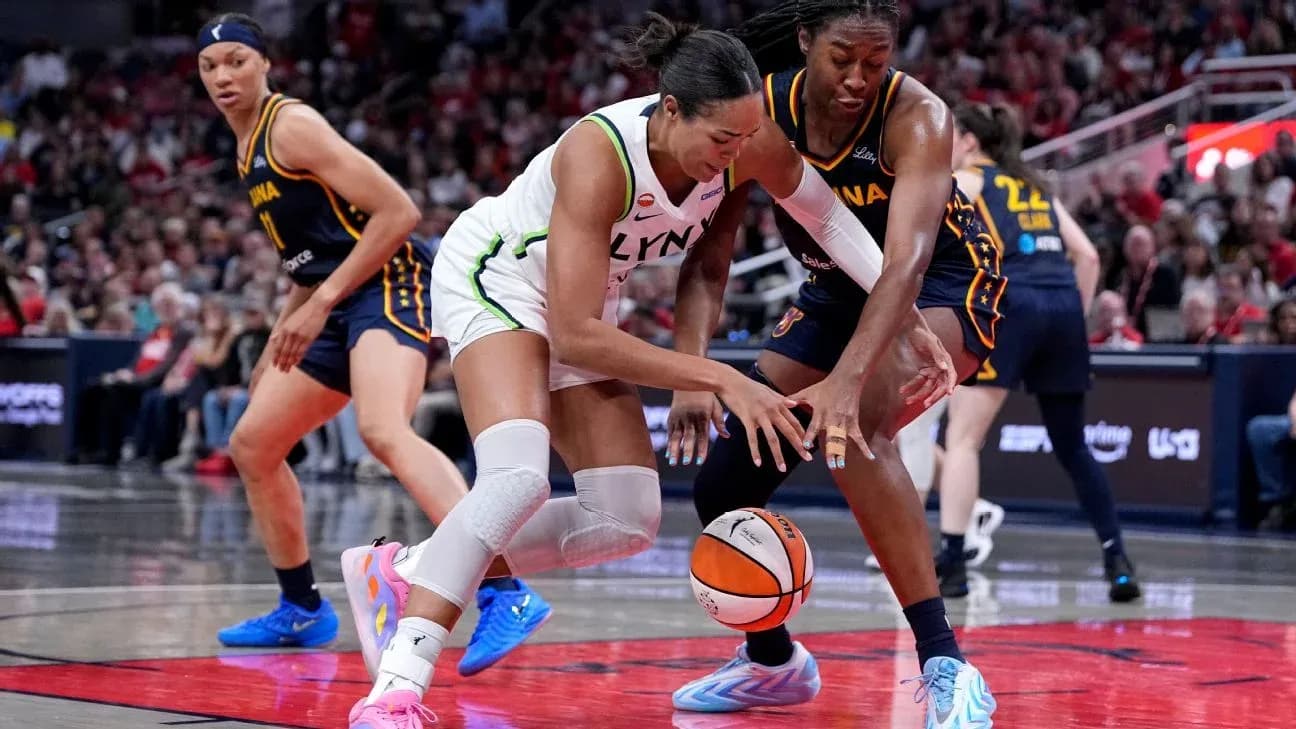
The Los Angeles Sparks forward has waded straight into one of the loudest culture-war debates circling the WNBA and swatted it away with the same conviction she shows at the rim.
To her, the “trans issue” in the league isn’t an issue at all. It’s noise. Manufactured, weaponized, and aimed at the wrong people.
Speaking to The Mirror’s Jarrod Castillo, the 24-year-old didn’t bother to soften her stance.
“When it comes to the trans issue...I think it’s a non-issue. I think it’s just people trying to come for the trans community and I just don’t stand for that,” Brink said, cutting through the talking points that have dominated social media far more than any box score.
The timing of her comments is no accident. The league has been dragged into the broader political storm in recent weeks, not by anything happening on the floor, but by a series of stunts and statements from outside figures.
Enes Kanter Freedom, the former NBA center who has reinvented himself as a right-wing media figure, was escorted out of a Chicago Sky game on Sunday after a confrontation with Natasha Cloud. Before that, he and fellow ex-NBA player Royce White — now a 2024 GOP Senate candidate in Minnesota — had mockingly declared themselves transgender and vowed to enter the WNBA Draft, turning a fraught subject into a punchline for their followers.
Brink wanted no part of that circus.
“I think what - I don’t even know what the f--k his name is - Enes Kanter, he’s a stupid piece of s--t,” she said. “And I think a lot of people think that and I think he’s just trying to stay relevant.”
That line lands with the force of someone who’s had enough of seeing her league turned into content.
“I think people are tuned in for the right reasons and it’s great that we can all talk about things that are important and hard and you can have your opinions on that,” Brink continued. “But taking something that’s a non-issue right now and just trying to use it for clickbait, for views, for likes and then targeting a vulnerable community is just really low.”
That’s the crux of it for her: intent. Not debate, not disagreement, but the deliberate choice to turn a marginalized group into a prop.
Right now, there are no trans players in the WNBA. In 30 seasons of league history, only one openly trans and non-binary player has taken the floor: Layshia Clarendon, who retired earlier this year after 11 seasons. The conversation, as Brink sees it, is less about reality and more about leverage — who can squeeze the most outrage, engagement, or relevance out of a topic that doesn’t even touch the current roster lists.
It’s a stark contrast to how Brink has gone about her own business.
A native of Princeton, N.J., and a star at Stanford before turning pro, she arrived in the WNBA with expectations heavy enough to bend a rookie. The Sparks took her second overall in the 2024 WNBA Draft, asking her to help anchor a franchise trying to claw its way back to the league’s top tier.
Three seasons in, she’s doing exactly that. In 28 games this year, Brink is averaging 9.4 points on 50 percent shooting, along with 5.0 rebounds and 1.7 assists in just 18.5 minutes a night — production that speaks to efficiency and impact more than empty volume. She plays hard, plays smart, and has quickly become one of the faces the league puts forward.
Now she’s making it clear what she stands for off the court as well.
The WNBA is in its 30th season, a landmark year in which attendance, visibility, and scrutiny have all risen. With that has come an inevitable flood of outside agendas. Brink’s message slices through that: talk hoops, talk real issues, but stop using her league and a vulnerable community as a backdrop for manufactured outrage.
If this is what the next generation of WNBA leadership sounds like, the conversation around the league — and who gets to define it — may be about to change.