Caitlin Clark and Angel Reese: From Rivals to Teammates
It lasted only a heartbeat, but it said everything.
Angel Reese was mid-answer, locked into a courtside TV interview, when Caitlin Clark drifted unknowingly into the frame, cutting between Reese and the camera. Clark realized it instantly.
“Sorry,” she blurted, veering out of the shot.
No eye roll. No glare. Reese simply slid out a hand. Clark slapped it with a quick, easy high five and kept moving.
Two of the most polarizing figures in basketball, once cast as enemies, now sharing a small, unforced moment of chemistry while chasing the same prize: gold with Team USA.
A rivalry built long before the cameras
Their story didn’t start with sold-out WNBA arenas or primetime debate shows dissecting every gesture. It started in half-empty gyms on the AAU circuit, where future pros learn how to carry teams and handle pressure.
In 2019, at the Nike EYBL championship game, Reese’s Team Takeover faced Clark’s All Iowa Attack. Reese bullied her way to 18 points and 11 rebounds. Clark answered with 22 points and seven assists. It was a youth title game, but the outlines of something bigger were already there: Reese controlling the paint, Clark bending the floor with her range and vision.
College only turned up the volume.
Reese at Maryland. Clark at Iowa. Two rising stars circling each other in the Big Ten orbit. Then came the night that changed everything.
The 2023 NCAA championship game turned their matchup into a national flashpoint. LSU 102, Iowa 85. Reese sealing the win, then trailing Clark in the final seconds, flashing the “you can’t see me” gesture and pointing to her ring finger.
One sequence. One image. It detonated.
Reese was painted as the villain. Clark became the wronged rival. A bit of on-court swagger between two ultra-competitive players morphed into an argument about race, respect, and what women’s basketball should look like.
Clark refused to play that part.
“I don’t think Angel should be criticized at all,” she said afterward, reminding everyone she’d used the same gesture earlier in the tournament. Trash talk, she argued, is part of the sport’s heartbeat.
The rivalry stayed, but the narrative people tried to paste on top of it never quite matched the way the players themselves spoke about each other.
One apiece on the biggest stage
A year later, the rematch came with everything on the line again: 2024 Elite Eight, Iowa vs. LSU, the game women’s basketball had been waiting for.
Clark detonated. Forty-one points, 12 assists, a barrage of deep threes and pinpoint passes as Iowa beat LSU 94-87. Reese fought back the only way she knows how: 17 points, 20 rebounds, relentless on the glass until the final horn.
Two epic showdowns on the sport’s grandest college stages. One championship ring for Reese. One revenge masterpiece for Clark. The rivalry, at that level, ended perfectly balanced.
Then they turned pro—and brought the storm with them.
From college chaos to WNBA spotlight
When the Indiana Fever made Clark the No. 1 pick in the 2024 WNBA Draft and the Chicago Sky took Reese at No. 7, the league didn’t just get two rookies. It got a ready-made storyline.
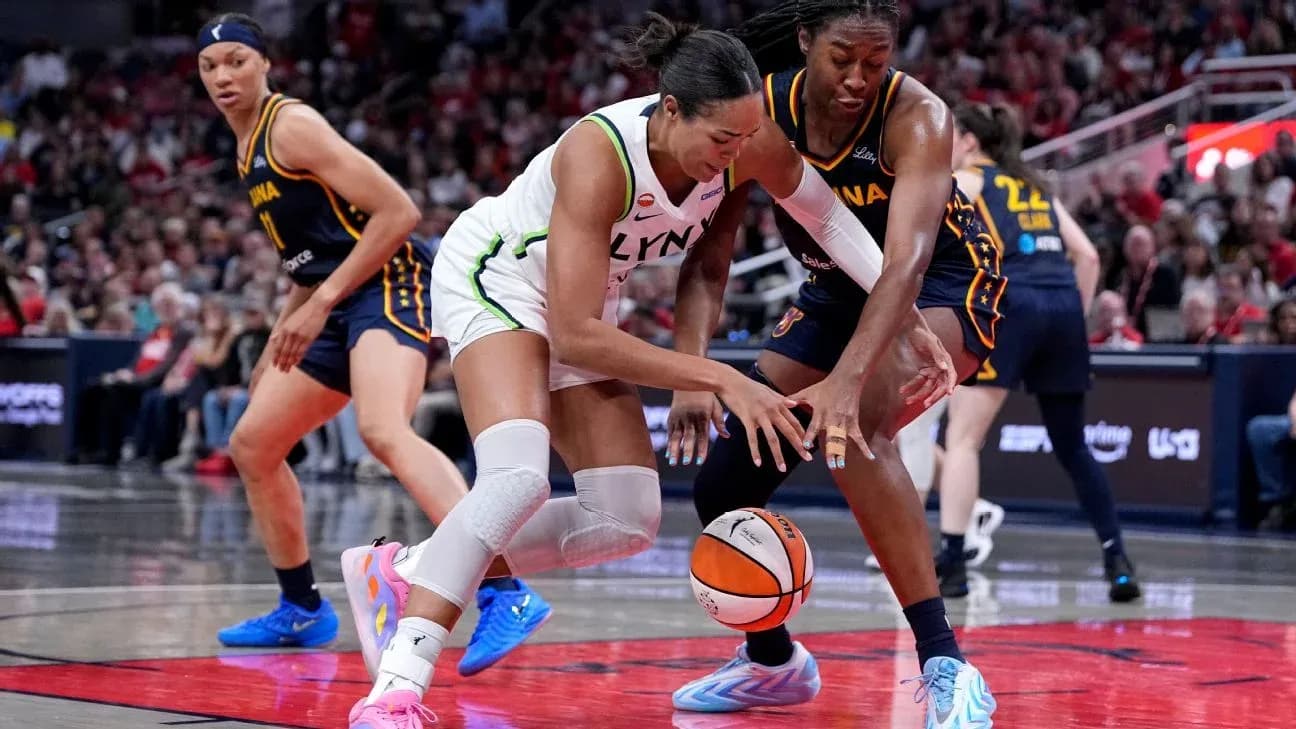
Every meeting between their teams became an event. Every foul was slowed down and studied. Every stare was clipped, posted, and argued over. People weren’t just watching games; they were searching for proof that these two really couldn’t stand each other.
Their second professional clash lit up the discourse again. Reese, chasing a block, caught Clark in the head and drew a flagrant foul. The replay looped for days.
Clark wouldn’t feed it.
“Just part of basketball,” she said, brushing aside any talk of intent.
Reese called it a basketball play as well, while correctly predicting that the clip would live online far longer than the box score.
The game kept delivering flashpoints. The narrative machine kept spinning.
Then, briefly, the script flipped.
A first look at what they can be together
The 2024 WNBA All-Star Game gave everyone a different angle: Clark and Reese, not as foils, but as teammates on Team WNBA against the U.S. Olympic squad.
They didn’t just share the floor. They clicked.
Clark finished with 10 assists, orchestrating the offense with the ease that made her a phenomenon at Iowa. Reese became the first rookie ever to post a double-double in an All-Star Game, piling up 12 points and 11 rebounds.
One of those assists found Reese cutting to the rim for a layup. The two met with a clean, emphatic high five. No drama. Just hoopers enjoying a play well executed.
The truce didn’t last long.
On opening night of the 2025 WNBA season, Clark delivered a hard foul on Reese that was upgraded to a flagrant 1. Reese stepped straight to her. Aliyah Boston slid in between them. The clip went viral in minutes.
Again, both tried to lower the temperature. Clark said there was nothing malicious. Reese repeated the same two words: “Basketball play.”
That’s the contradiction at the center of this thing. They compete like enemies, but keep insisting the rivalry isn’t personal. Reese has said she loves that they can go at each other and “still be cool after.” Clark has been just as blunt: they’re not best friends, but they respect each other.
Now, with USA across their chests, that respect has room to breathe.
Different games, same goal
Their arrival together on the senior national team has turned a long-running duel into an experiment in coexistence—and then into a weapon.
At the World Cup qualifying tournament in Puerto Rico, Clark threaded a pass inside for Reese at the rim. It was a small moment, but an important one: proof that their skill sets, so often pitted against each other, actually fit.
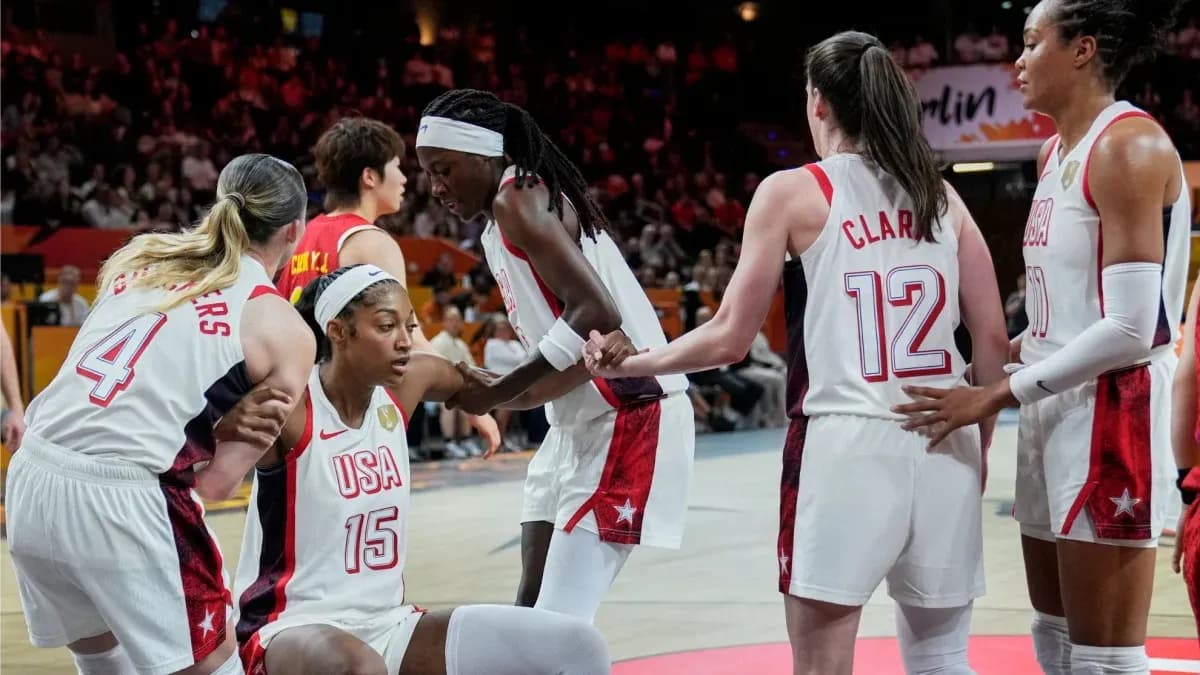
In Berlin at the World Cup, that fit has helped keep Team USA perfect.
Clark opened the tournament by carving up China with 14 points and 11 assists, dictating pace and spacing the floor. Reese, giving up size to a bigger frontcourt, went to work anyway, pulling down nine rebounds and battling on the interior.
Against Czechia, the roles shifted slightly, the impact did not. Reese poured in 13 points, Clark added nine points and seven assists, and the U.S. rolled 105-64.
One stretches defenses to the logo. The other punishes them at the rim. The tension that once defined them now gives Team USA a sharper edge.
The high fives are coming more often. The awkwardness is fading. The rivalry is still there—how could it not be, after everything they’ve shared?—but it’s being rewritten in real time, possession by possession, inside a jersey that belongs to both of them.
The question now isn’t whether Caitlin Clark and Angel Reese can coexist.
It’s how far they can take each other when the only scoreboard that matters is the one with their country’s name on it.