Barcelona's Centre-Back Dilemma: January Signings and Strategy
Hansi Flick has stopped hinting and started talking plainly. Barcelona’s coach has opened the door to signing a centre-back in January, accepting that injuries and uneven performances have left his back line too fragile for the demands of the season.
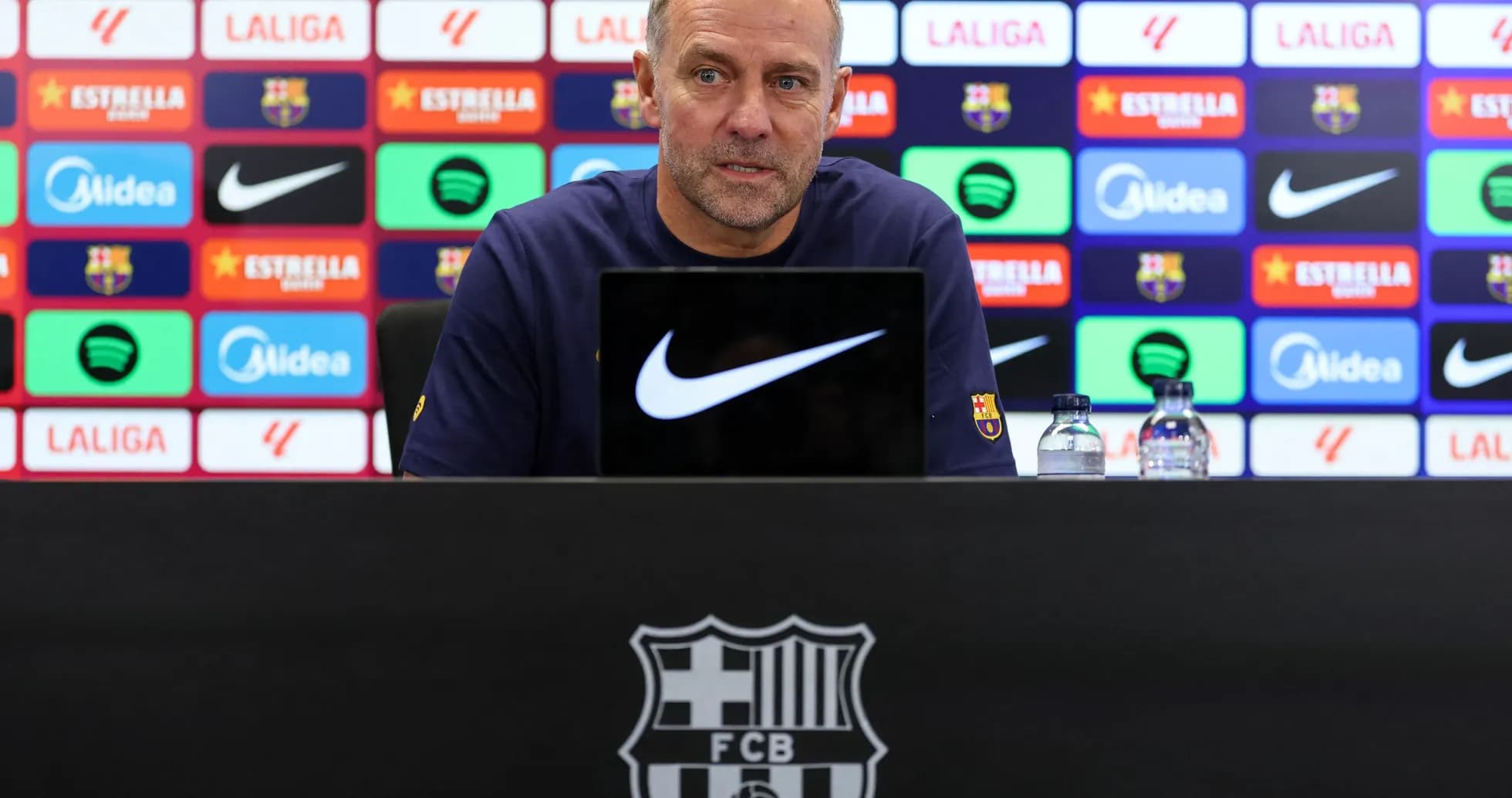
Speaking before the clash with Alavés, Flick made it clear this is no passing thought but an ongoing internal debate.
“We always talk about what is best for the team and how we can improve. We are working on that, and we have spoken with Deco, Bojan and my coaching staff. If it is possible, we will do it,” he said, outlining a club-wide conversation that now has a clear target: a defender who can lift the level immediately.
A shortlist with a headline act
According to Spanish outlet Mundo Deportivo, four names sit on Barcelona’s table.
At the top end of the market is Josko Gvardiol. The Croatian, under contract with Manchester City until 2031, represents the kind of elite, long-term solution any coach would crave. He is also, in practical terms, the most complicated operation. City hold all the cards, the contract is ironclad, and the fee would be enormous for a club still counting every euro.
Alessandro Bastoni is also on the list, pushed strongly by Deco. The Inter Milan defender fits the profile of a modern centre-back, but here Flick’s enthusiasm appears more measured. The sporting director may be keen, yet the coach’s backing is not total, and at Barcelona that tension matters. Any major investment in defence has to align tightly with Flick’s idea of how his team should build, press and recover.
That is where two other names come into sharper focus: Lisandro Martínez and Natan.
Pragmatists’ choices: Lisandro and Natan
On paper, Lisandro Martínez and Natan are the more realistic moves.
Natan, in particular, ticks several boxes. He knows La Liga, he is performing at a strong level for Real Betis, and he would come at what is described as a reasonable fee. For a club trying to balance sporting ambition with financial restraint, that combination is gold. You are not just buying talent; you are buying adaptation time, or rather, cutting it.
Martínez brings a different appeal. Proven at the highest level, aggressive, left-footed, comfortable on the ball – he fits the profile of a defender who can live with Barcelona’s demands both in possession and under pressure. In theory, he should be easier to prise away than Gvardiol, though any January move for a player of his stature is never straightforward.
Even so, within the current shortlist, Gvardiol remains the standout. The problem is not his quality. It is the feasibility of turning admiration into an actual deal.
Looking beyond January
Barcelona are not only thinking about the winter window. The club’s scouting department, aligned with Flick’s long-term project, has also flagged emerging talents for the future.
Among them are Stuttgart’s Finn Jeltsch and Leipzig defender Castello Lukeba. These are not headline-grabbing, immediate-fix names, but part of a broader strategy: identify young defenders early, track their development and be ready to move when the timing and price align.
For now, they sit in the “later” folder. The January debate is about the “now”.
The financial equation – and a big possible sacrifice
Every conversation about reinforcements at Barcelona eventually runs into the same wall: money.
Any signing must fit within the club’s strained finances. The fee, the wages, the amortisation – all of it has to be squared with La Liga’s regulations and the club’s own recovery plan. That is where the discussion turns uncomfortable.
To bring in a centre-back of real impact, Barcelona may have to sell. Alejandro Balde is one of the names who could leave if the club decide a significant outgoing is needed to unlock a major incoming. It would be a painful decision: sacrificing a homegrown full-back with huge upside to stabilise the heart of the defence.
Yet those are exactly the kind of trade-offs Flick and the hierarchy are weighing. How much is defensive security worth? And which piece of the current puzzle is expendable to achieve it?
A clear shift from summer thinking
This stance marks a notable change from the summer. Back then, Flick chose continuity at the back and pushed for attacking reinforcements instead. He backed the existing defensive group and opted to invest higher up the pitch.
The season has forced a rethink. Injuries have stripped depth. Performances have exposed gaps. What was once a secondary concern has moved to the front of the agenda.
Now, with the winter window approaching, Barcelona stand at a familiar crossroads: ambition on one side, reality on the other. Flick has made his position clear. If the club can find a centre-back who fits his project and the financial puzzle, they will move.
The question is no longer whether Barcelona want a defender.
It is how far they are willing to go, and who they are prepared to lose, to finally get one.