Babar Azam's Struggles and Pakistan's Fast Bowling Future
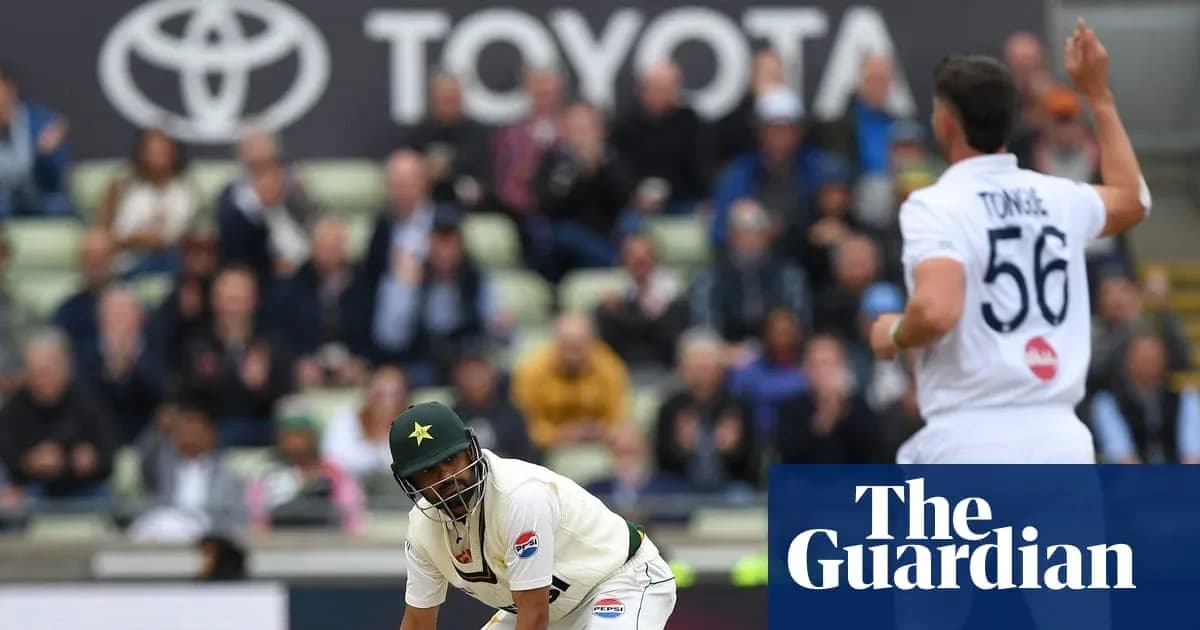
It was still morning when Babar Azam walked out at Edgbaston, but the day already felt old. Forty-five minutes into the Test and Pakistan were three down, the floodlights burning against a bruise of black cloud drifting over the ground. A few drops of rain hung in the air. Ollie Robinson operated from one end, keeper standing up, five slips fanned behind him like a trap. From the other, Jofra Archer was four overs into his spell and beginning to purr.
It was a miserable time to bat.
Lately, it always is.
Not so long ago, Babar stood among the finest batters in the world. In 2022 he peeled off 196 against Australia in Karachi, 119 in Galle, 136 against England in Rawalpindi, 161 against New Zealand back in Karachi. He closed that year with a Test average of 49, ranked third in the world, crowned ICC Men’s Cricketer of the Year. That version of Babar felt inevitable, immovable.
That Babar has not scored a Test hundred since.
Across his last 20 Tests, his top score is 88. His average in that stretch: 29. The numbers tell one story. The way he walked in at Edgbaston told another. You could shut your eyes and still picture him dragging Pakistan out of this, the way he once did almost by instinct. Then you opened them.
He set himself for Robinson’s first ball, half-committed, caught between stroke and leave, jerking the bat inside the line at the last instant. The next delivery beat his outside edge. The third he clipped through square leg, a couple of runs, a small, familiar release.
From Archer, he slashed at a short ball and missed. From Gus Atkinson, he was beaten twice before a squirting edge scuttled away for four. In the fourth over of his stay, Josh Tongue went straight through him. Seven runs. Eighteen balls. Off stump flattened.
There was a grim inevitability to it, another entry in a series that has become an exercise in collapse. Pakistan’s totals so far: 171, 135, 110, 194 and now 133. One more cheap dismissal in the second innings and they will become the first side since the 19th century to be bowled out for under 200 in every innings of a three-Test series in England.
This is a broken team. Captaining them looks like an impossible assignment.
Babar, notionally part of the selection panel, admitted he did not even know seven new players were being flown in for this Test. “It was news to me,” he said. “I found out after.” That line hung in the air almost as heavily as the cloud.
One of those seven late arrivals strode into the game from the City End later in the day. Razaullah. For most inside Edgbaston, the name meant nothing. To recognise it, you needed to live deep inside Pakistan’s domestic game.
He is 21. He played his first serious match only last November, debuting for Peshawar in the Quaid-e-Azam Trophy. Since then: seven first-class games, nine List A matches, seven T20s. Now, after a hurried call and a long flight, he was running in with a new ball in a Test match in England.
The first thing we learned: he hits the ball hard. The second: he is seriously quick. The third: there is real talent here.
His first three deliveries hurried Joe Root. The fourth was something else. It screamed in, Root dropped the bat late in defence, and the ball thudded into his front pad, flush in front of middle. Root, baffled, reviewed. The technology only confirmed what everyone in the ground had already worked out. Plumb. LBW. Again.
Razaullah had his first international wicket. In that moment he gave Edgbaston a flash of everything people romanticise about Pakistani cricket: raw speed, nerve, flair, and yes, immaculate hair. Later he came again, this time at Emilio Gay, and a 90mph ball took the inside edge as Gay drove, cannoning into the stumps.
Pakistan never runs out of fast bowlers. Even when the structure creaks and the batting crumbles, another quick emerges from somewhere, ball in hand, eyes bright, ready to hurl himself at the game.
But if your memory stretches back a few years, you might think of Naseem Shah and Shaheen Shah Afridi on their first tour of England in 2020, and wonder how neither of them is here now. You might ask what the system has done with the fast-bowling riches it has unearthed over the last decade. You might glance at Babar’s decline over the same period and see a pattern rather than a coincidence.
And you might look at Razaullah, charging in with all that pace and promise, and ask where this road usually leads for a Pakistani fast bowler in this era.
The troubling part is that, deep down, you probably already know.