Argentina Football Association Faces Crisis Amid World Cup Glory
The Argentine Football Association is living through the kind of crisis that usually follows a disastrous tournament, not a golden era. Yet here it is: World champions on the pitch, chaos in the corridors of power.
At the centre of it all stands Claudio Tapia. The AFA president is locked in a high-stakes legal battle over serious money-laundering allegations, a case that has dragged the federation into a storm that shows no sign of clearing. What began as an investigation into finances has bled into football’s daily reality, clogging up basic operations and exposing deep fractures between the dressing room and the boardroom.
The impact is already visible. Argentina’s next friendlies – against Burkina Faso, Bolivia and Benin – were only confirmed yesterday, after weeks of hesitation and administrative delay. For a world champion setup, used to meticulous planning and carefully curated calendars, the scramble to finalise such modest fixtures tells its own story.
Then comes the money. According to La Gazzetta dello Sport, the World Cup bonuses promised to the players remain unpaid. Nearly two years on from Qatar, the heroes who delivered the country’s greatest modern triumph are still waiting for the rewards they were guaranteed.
That failure has cut deep. Senior players, icons of this generation, feel disrespected by the delays and the silence. The trust that underpinned Argentina’s resurgence under Lionel Scaloni is eroding, replaced by frustration and a sense that the federation has failed to match the professionalism of the squad it represents.
Hovering over all of this is Lionel Messi. Retired from international duty, he sits slightly apart from the current tension yet remains central to the AFA’s plans. The federation is desperate to stage a grand farewell for the greatest player in its history, a final act worthy of his legacy. But reports indicate Messi has not been convinced by any of the proposals put forward so far. Nothing, in his eyes, has met the standard of authenticity and respect such a moment demands.
The mood around the national team has darkened. With financial disputes unresolved, administrative uncertainty ongoing, and Messi unconvinced about his own farewell, motivation among the established stars to fly back for low-key friendlies is dwindling fast. Within the camp, there is already talk that a sweeping squad refresh may be needed for the upcoming international break simply to get a group on the plane.
Yet the most seismic development may be on the touchline.
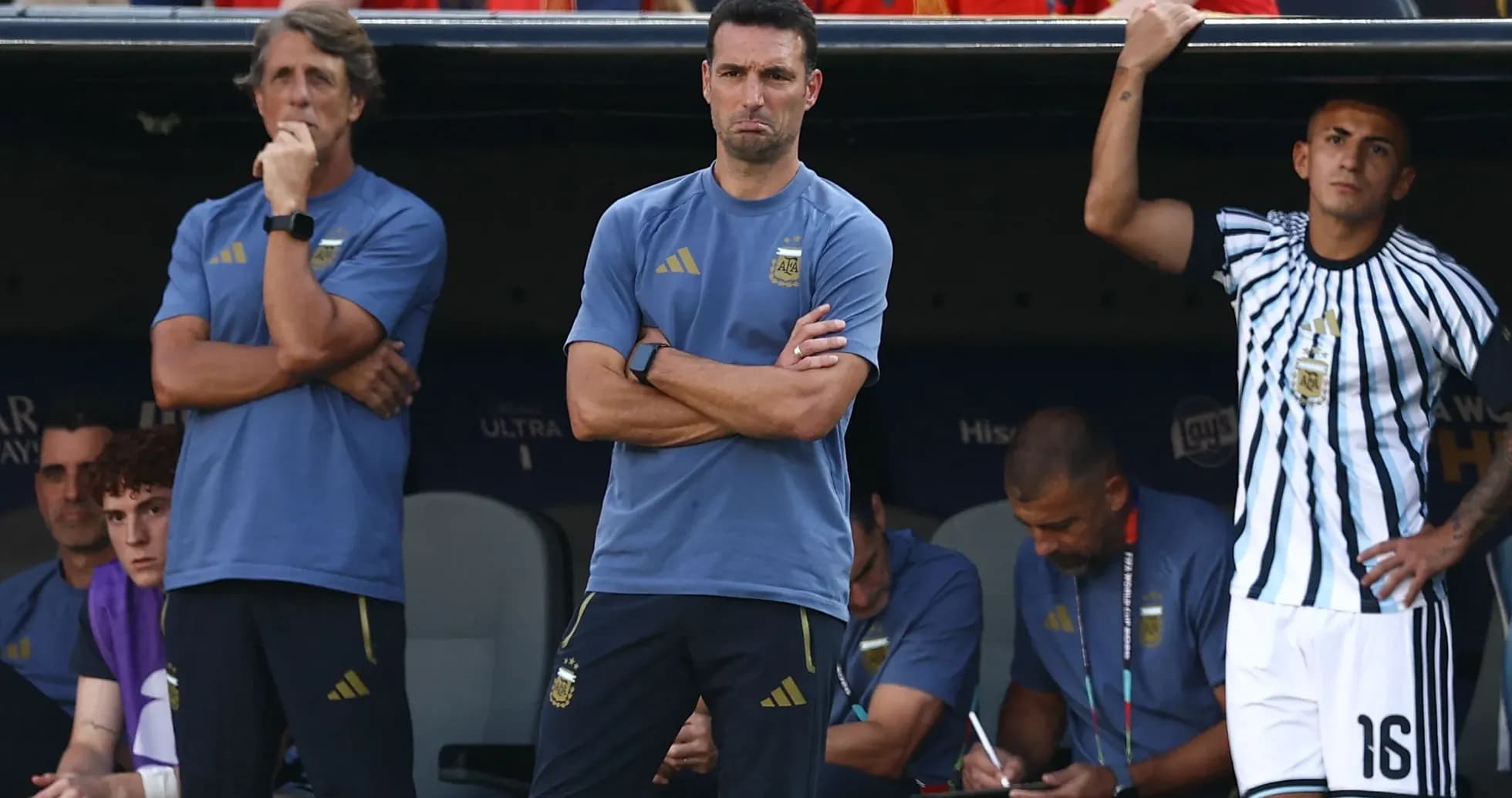
There is a growing conviction within the Argentine setup that Lionel Scaloni’s cycle is winding towards its end. The coach who rebuilt the team from the wreckage of 2018, who delivered back-to-back Copa America titles, the 2022 World Cup and a place in this summer’s World Cup final, is now understood to see his time with the Selección as effectively over once his current deal runs out.
Scaloni is reported to have no intention of extending his contract beyond December 2026. That date suddenly looms like a hard stop: a fixed endpoint for the most successful era in Argentina’s modern football history. The man who turned a fragile, Messi-dependent side into a ruthless, united machine appears ready to close the book on his tenure.
He is not alone. Much of his trusted backroom staff share the same outlook. Figures such as Walter Samuel, the former Inter and Roma defender who has become a key voice on the training ground and in the dugout, are also believed to be preparing their exits alongside the head coach. The staff that built this era together may walk away together.
All of this feeds back into the immediate problem: the next international window. The marquee names in the squad are, by all accounts, far from enthusiastic about travelling to South America to face Burkina Faso, Bolivia and Benin in the current climate. The opponents are modest, the atmosphere around the federation is tense, and the sense of drift is unmistakable.
Scaloni now faces a stark choice. Persist with his core group and drag them into a camp overshadowed by legal battles, unpaid bonuses and uncertainty about the future, or cut against the grain and leave several of his biggest stars at home. The second option is gaining traction. There is a real possibility he will use these friendlies to hand opportunities to fringe players while the federation fights to regain control of its own house.
Argentina once spent years searching for stability and identity. Now, with trophies stacked high and a generation of legends in place, the question is no longer whether they can win. It is whether the institution behind them can hold itself together long enough to protect everything they have built.