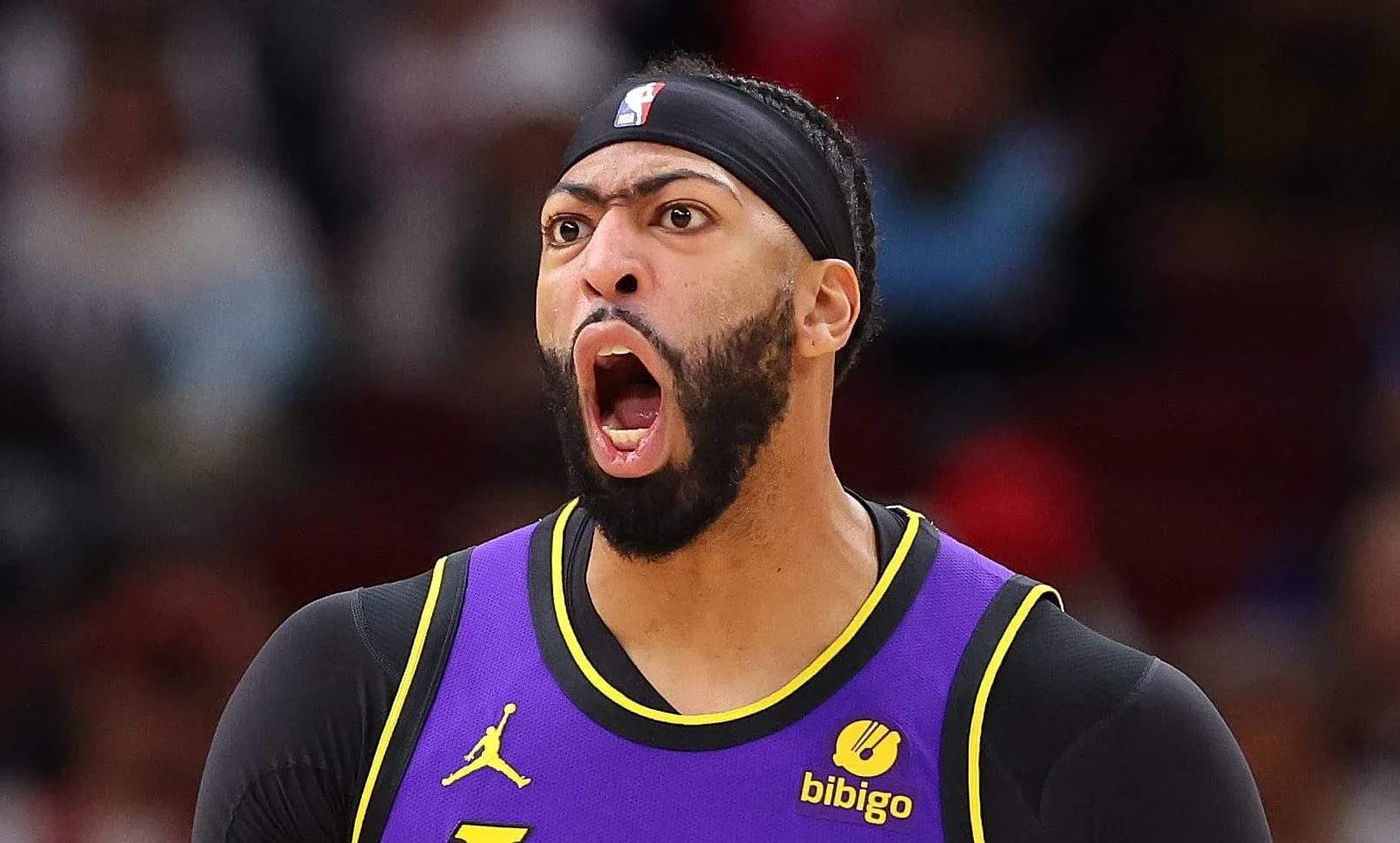
Anthony Davis: From Lakers Legacy to Potential Celtics Star
Seven years ago, the script felt written in ink.
Anthony Davis was supposed to be the bridge. The heir to LeBron James, the next towering figure in the Los Angeles Lakers’ lineage, the 26-year-old big man destined to carry the franchise through the next decade and wedge his name into the top 10 all time in both points and rebounds. The future, wrapped in purple and gold.
Roughly 2,600 days later, that prophecy feels like something from another league, another lifetime.
Davis hasn’t been central to the conversation in Laker land for nearly 19 months now. The fanbase has long since loosened its grip on the idea that the No. 1 pick in the 2012 NBA Draft might finish as one of the five greatest players ever to wear that uniform. The torch they imagined never quite burned the way it was supposed to.
He’s in Washington now, of all places, his NBA reality reshaped after the shockwave of February 2025, when the Lakers sent him to the Dallas Mavericks in the blockbuster that delivered Luka Doncic to Los Angeles. That deal detonated the old order. It also turned Davis from franchise cornerstone into high-priced asset.
And his suitcase might not be fully unpacked yet.
A Blockbuster on Paper: Davis in Celtic Green?
The Wizards are rebuilding. That much is clear. What they’re not doing is racing to hand a 33-year-old, injury-prone big man a contract flirting with $300 million. Davis, a 10-time All-Star, still carries star wattage, but Washington’s timeline and his salary demands live on opposite ends of the map.
Boston, on the other hand, has a very different problem.
The Celtics are light up front. They’ve lost Jaylen Brown in a move that left much of the league scratching its head as he headed to the rival Philadelphia 76ers. Scoring, size, and defensive bite walked out the door with him. Jayson Tatum remains the face of the franchise, but the cast around him suddenly looks thinner, especially in the frontcourt.
So the puzzle pieces start to align, at least on the whiteboard.
A hypothetical deal:
- Wizards receive: Paul George, Jordan Walsh, Baylor Scheierman and a 2030 second-round pick (via CHA)
- Celtics receive: Anthony Davis
On Washington’s side, the logic is cold but clean. Move off the risk. Avoid tying up years and hundreds of millions in a 33-year-old whose medical file is almost as thick as his résumé. In return, land two emerging talents in Scheierman and Walsh and a short-term star in George.
George’s contract becomes a countdown clock. In two years, once his deal expires, the Wizards could clear more than $100 million from their books. Cap space, two young contributors, and the freedom to shape a roster without a massive long-term deal hanging over everything — that’s the kind of flexibility a rebuilding franchise craves.
For Boston, the calculation is sharper, more daring.
Davis is a franchise-changer when his body holds up. A five-time All-NBA selection. Three times the league’s single-season blocks leader. A defender who can erase mistakes and an offensive hub who can tilt a playoff series. The kind of mega frontcourt star Tatum has never truly had beside him.
The gamble is obvious. So is the upside.
If Davis can string together a couple of healthy seasons, the Celtics don’t just plug a hole — they detonate the Eastern Conference hierarchy. They’d be adding one of the league’s top players at what could be considered a relative bargain, given the escalating salary landscape and his ceiling when he’s right.
That’s the bet: that Boston’s infrastructure, medical staff, and championship expectations can coax the best version of Davis out for one more run.
The Laker Years: Apex and Aftermath
Any rewrite of Davis’ story in Los Angeles needs nuance, not nostalgia.
When news first broke that the Lakers were moving him, plenty of fans bristled. Trading the man who helped deliver a title felt like tearing down a statue. Then they saw who was coming back in the deal. Sentiment met reality, and reality won.
Still, those 5½ seasons alongside LeBron James were hardly forgettable.
Across his Lakers tenure, Davis averaged 24.8 points, 11 rebounds, 3.2 assists and 2.2 blocks per game. Those aren’t just strong numbers; they’re the profile of a two-way force. He made four All-Star teams in that span, earned two All-NBA nods, and twice landed on the All-Defensive First Team.
And there’s the banner.
In 2020, inside the bubble and under unprecedented circumstances, Davis was a driving force behind the Lakers’ championship run. His scoring, his rim protection, his ability to warp game plans on both ends — that was the version of Davis everyone thought would define a decade in Los Angeles.
You can argue about longevity. You can question durability. What’s harder to argue is this: the Lakers likely squeezed the very best of Anthony Davis’ prime. They got the apex — the nightmare matchup, the two-way terror, the star who, for a stretch, looked every bit like the future they once imagined.
Now the question shifts.
Is there another peak left to climb, this time in green, with Tatum at his side and a different coast watching? Or has the league already seen the last truly dominant version of Anthony Davis, frozen in purple and gold under the 2020 confetti?