Alan Shearer Reflects on Premier League Goals Record and Haaland's Rise
Alan Shearer laughs when he says it, but he is only half‑joking. If he wants to keep hold of his Premier League goals record, it would help if Erling Haaland packed his bags and left England.
The numbers explain why. Shearer’s 260 Premier League goals, amassed over 14 seasons, have stood untouched for nearly two decades. Haaland has already thundered in 120 in just over four seasons. If the Norwegian stays at Manchester City – and City keep rolling through the division as they do – the maths is merciless.
Shearer knows it.
"I'm sure it will be broken one day, but I'll enjoy it while it lasts," he told The Football Interview. Then came the punchline only a great goalscorer could deliver with a straight face: "If we can get Haaland out to Real Madrid or somewhere like that in the next couple of years then it should be alright."
He means it, but only up to a point. Because if it is not Haaland, someone else will come. Harry Kane looked destined to hunt him down before he left Tottenham Hotspur for Bayern Munich in 2023, his total frozen at 213. The chase paused, not ended.
Leaving home, finding Newcastle
The record is only one strand of a life that has always looped back to the North East.
Shearer and Newcastle United are now inseparable in the football imagination, but his story began with a wrench. At 15, he left his home city for Southampton, living in digs with another family and wondering if he would ever truly come back.
"I wouldn't change anything - one of the best things I did was move away from home at 15," he said. Then he catches himself with the perspective of a father. "But when my kids got to 15 I thought 'how on earth did my parents let me leave home at that age?'
"There's no way I could have let my two girls and my son walk away from their home at 15 years of age.
"I remember getting on the train at Newcastle Central station, looking at my mum and dad and the tears rolling down my mum's face when I was pulling out of the station and waving thinking, 'is this the last time I'm ever going to live back home?'"
The answer, eventually, was no. First came a step nearer in 1992, when he joined Blackburn Rovers to work under Sir Kenny Dalglish. There he climbed English football’s highest domestic peak, winning the Premier League title in 1995. The goals flowed, the medals came, but the pull of Tyneside never faded.
By 1996, the return to Newcastle felt inevitable, less a transfer than a homecoming. Boyhood dreams met adult reality when he walked back into St James’ Park.
He had stood on the Gallowgate End as a kid, one face in a sea of black and white, watching Kevin Keegan electrify a city.
"I saw the adulation that he [Keegan] had. He was like the pied piper in Newcastle, everyone followed him everywhere," Shearer said. "I was one of those little kids that went to the training ground, to the ground - and I wanted a piece of that."
He got more than a piece. Across 10 years in the shirt, Shearer scored 206 goals in 405 games in all competitions, becoming the club’s record scorer and its permanent reference point. The trophies did not follow as many expected. Two FA Cup finals ended in defeat. That Premier League title with Blackburn would be his last as a player.
Yet his bond with Newcastle only deepened. Silverware or not, he became the figure every supporter could hang their hopes on.
The legend in a cap
That status has not faded in retirement. It has, in some ways, made the simple act of going to a game an operation.
On the rare occasions he can attend as a fan, he has to do what any Newcastle centre-back in the late 1990s could never manage: stay unnoticed.
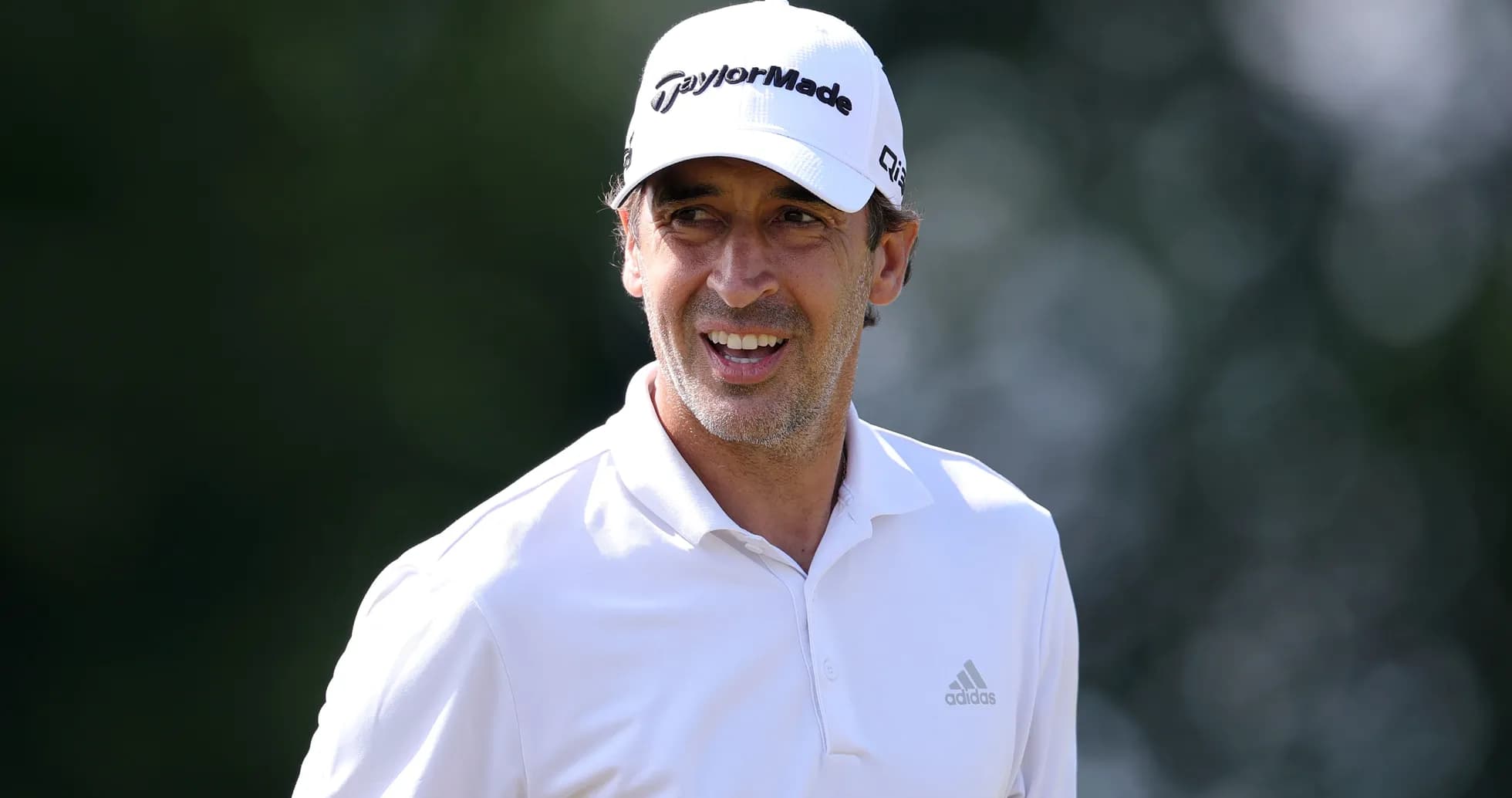
"My friend owns a pub in Newcastle called Harry's and I get dropped off outside the pub and then I walk up from the ground," he said. "I've got a cap on and I very rarely look up because it would take me forever to get from the pub to the ground. But I often do it.
"They've [friends] done that all their life and I'm able to do that now and I love it."
The image is striking: the Premier League’s greatest marksman, head down, cap pulled low, shuffling up towards the stadium he once shook to its foundations.
Eight games in the dugout
For a while, it looked as though Shearer’s post-playing life would be spent on the touchline rather than in the studio.
In 2009, with Newcastle in freefall, he answered the call to become interim manager for the final eight games of the season. The club were bottom, the mood was bleak, and the risk to his reputation obvious. He went in anyway.
"Newcastle were in desperate trouble and I could never say no - we were bottom of the league, fighting for our lives," he said. "I should have known that when I signed the contract on April Fool's Day that it wasn't going to work out!"
It didn’t. Newcastle went down and Shearer never returned to the dugout. He still thought, for a time, that management would be his future. There were interviews, serious conversations, even an offer.
"I always felt that I was going to go into it again and I wanted to. I had a couple of interviews and got offered the job at Cardiff. And then things changed ... and I thought, 'what am I doing here?'"
That was the moment the door closed. The headset, not the tracksuit, would define his second act.
The long road to the studio
Two decades on from his last competitive goal, Shearer’s weekends are still consumed by the game. Only now, the miles are on the motorway, not the pitch.
He is a fixture on Match of the Day, a regular voice on England commentary, and part of the trio with Gary Lineker and Micah Richards on The Rest Is Football podcast. The former centre-forward has become one of the sharpest, most trusted analysts in the sport.
The work is glamorous from the sofa. It is less so from the driver’s seat.
"It is such a long day. For me travelling from Newcastle, it's a probably 19-20 hour day," he said. "What people don't realise is that you're meant to be at your brightest and your liveliest when you go on live at 10:30, whereas if you're watching football all day on the settee, you're ready to nod off at that time."
Instead of bullying centre-halves, he now dissects them. Instead of timing runs, he times his lines. The competitive edge has simply found a different arena.
And as he sits under the studio lights, watching game after game, he keeps an eye on one thing above all: that goals record.
Haaland is coming. Others will follow. The number 260 glows on the horizon of every elite striker in the league.
Shearer knows the clock is ticking. For now, though, the record is his, and he intends to savour every last minute of it.