Transfer Window Myths: Free Agents and Late Signings
Transfer window closed? Not if the headlines can help it. Two days on from the shutters coming down, the market has supposedly moved on to its next great phase: the scramble for free agents. Or at least, the scramble for clicks about free agents.
The game now is simple. If a player’s contract expires at any point before the sun explodes, he is apparently “available” and your club can “sign him for free” – with one tiny, carefully buried detail.
The Dimarco ‘deal’ that isn’t
Step forward the Daily Express with a contender for the most shameless headline of the week:
“Man Utd can sign one of best left-backs in the world for free – but there’s a catch.”
You already know where this is going. United’s left-back situation is fragile, the window is shut, the free-agent market is the only remaining lifeline. So this sounds urgent. It sounds like a solution.
Then you read on.
More than 200 words into the piece, the “catch” finally appears:
“While United cannot sign the player immediately, the Red Devils can begin laying the groundwork. With his contract currently due to expire in 2027, Inter defender Federico Dimarco stands to become available on a free transfer next summer.”
That’s not a catch. That’s the entire story falling apart in your hands.
There is no suggestion Manchester United are in for Dimarco. No hint of talks. No links. No whispers. Nothing. Just the entirely unremarkable notion that, like every other club on the planet, United could sign him if his deal ran down and he walked away for nothing.
Next year.
Yet that thin hypothetical – a contract that expires in 2027 and a free transfer in 2028 – gets dressed up as a live, post-deadline opportunity. A fix for a current problem. A “late deal” in all but name.
The trick is obvious. United’s lack of defensive cover is real. The free-agent pool is real. The reader’s anxiety is real. So the headline leans hard into that reality and hopes you won’t stick around long enough to discover the story is essentially, as the original piece put it, “pure, distilled bumgravy”.
There are genuinely intriguing free agents out there right now. Paul Pogba’s name still carries weight. Tanguy Ndombele is on the carousel again. But left-backs? Not so much. Even the Express didn’t go as far as floating an injured Oleksandr Zinchenko as a short-term fix.
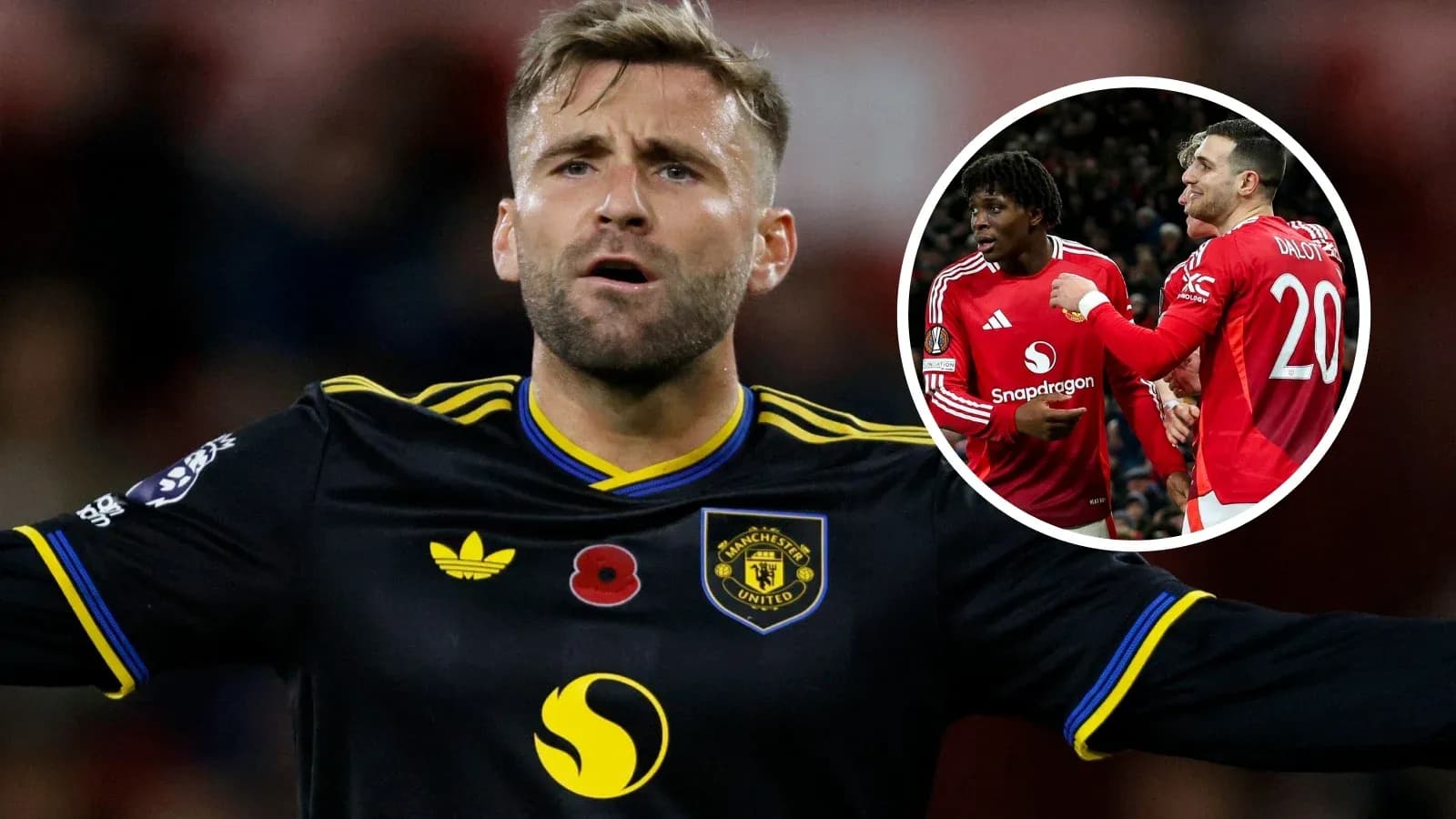
So a workaround was needed. Don’t find a free left-back now; find the best left-back whose deal ends at some point in the future and reverse-engineer a headline. The present-day problem, the four-month reliance on Luke Shaw’s fitness, becomes a hook for a story about a hypothetical scenario a year or more down the line.
That’s the game. And it’s being played hard.
Arsenal’s ‘late signing’ that isn’t late at all
Across the tabloids, the post-window contortions continue. The Daily Star delivers a classic of the genre with:
“Arsenal news: Late signing jets in for medical as £60m transfer set to be confirmed.”
It sounds like a dramatic double swoop. One player on a plane, another deal about to drop for serious money. Panic over, business booming.
The reality? The “late signing” is 17-year-old Georgian winger Andria Bartishvili, predictably dubbed “the next Khvicha Kvaratskhelia” because that’s how this works. He will not join Arsenal’s first-team squad now. He will not even link up with the club until he turns 18 next year.
He is not the £60m man.
That figure belongs to Gabriel Martinelli, whose protracted move to Al-Hilal has become a gift to headline writers trying to squeeze one more hit out of a deal that has been “set to be confirmed” for what feels like an eternity.
The structure is neat. One teenager “jets in” for a medical, a big-money star “set to be confirmed” elsewhere. Two stories welded together, one big, breathless banner. The sense of urgency is everything. The actual timelines are almost incidental.
Chelsea’s ‘savings’ that cost them Enzo
Then there is Chelsea, who have turned the transfer market into a kind of performance art. Having sold Enzo Fernandez, a World Cup winner, for £125m, they now face the obvious question: what next in midfield?
Football.london offers this:
“Chelsea can save millions on Enzo Fernandez replacement after Lamine Camara transfer blunder.”
It sounds like smart business. A clever workaround. A way to turn a “blunder” into a financial win.
The plan? Promote from within. Push a couple of academy players into the first-team squad and call it a saving.
On one level, it’s true. If you sell a £125m midfielder and don’t immediately spend £80m on another one, you have, technically, “saved millions”. On another, it’s a linguistic pirouette. Chelsea have not discovered a hidden market inefficiency. They have sold a proven international and are contemplating filling the void with kids.
There’s a romance to that idea. Cobham has produced serious talent for years. But dressed up as a neat financial hack, it becomes another example of how the narrative bends around the need for a hook. A “blunder” becomes a pathway. A sale becomes a “saving”. The gap between rhetoric and reality widens again.
The season after the window
This is the post-deadline landscape. The window has shut, but the traffic targets haven’t. So every contract expiry becomes a “free transfer chance”, every teenager on a plane becomes a “late signing”, every cost-cutting measure becomes a “masterstroke”.
The football will return soon enough and reclaim the stage. Until then, the headlines will keep stretching the meaning of “deal”, “replacement”, and “solution” to breaking point.
The question is simple: when the games start exposing the gaps these stories try to paper over, who will be left believing the spin?