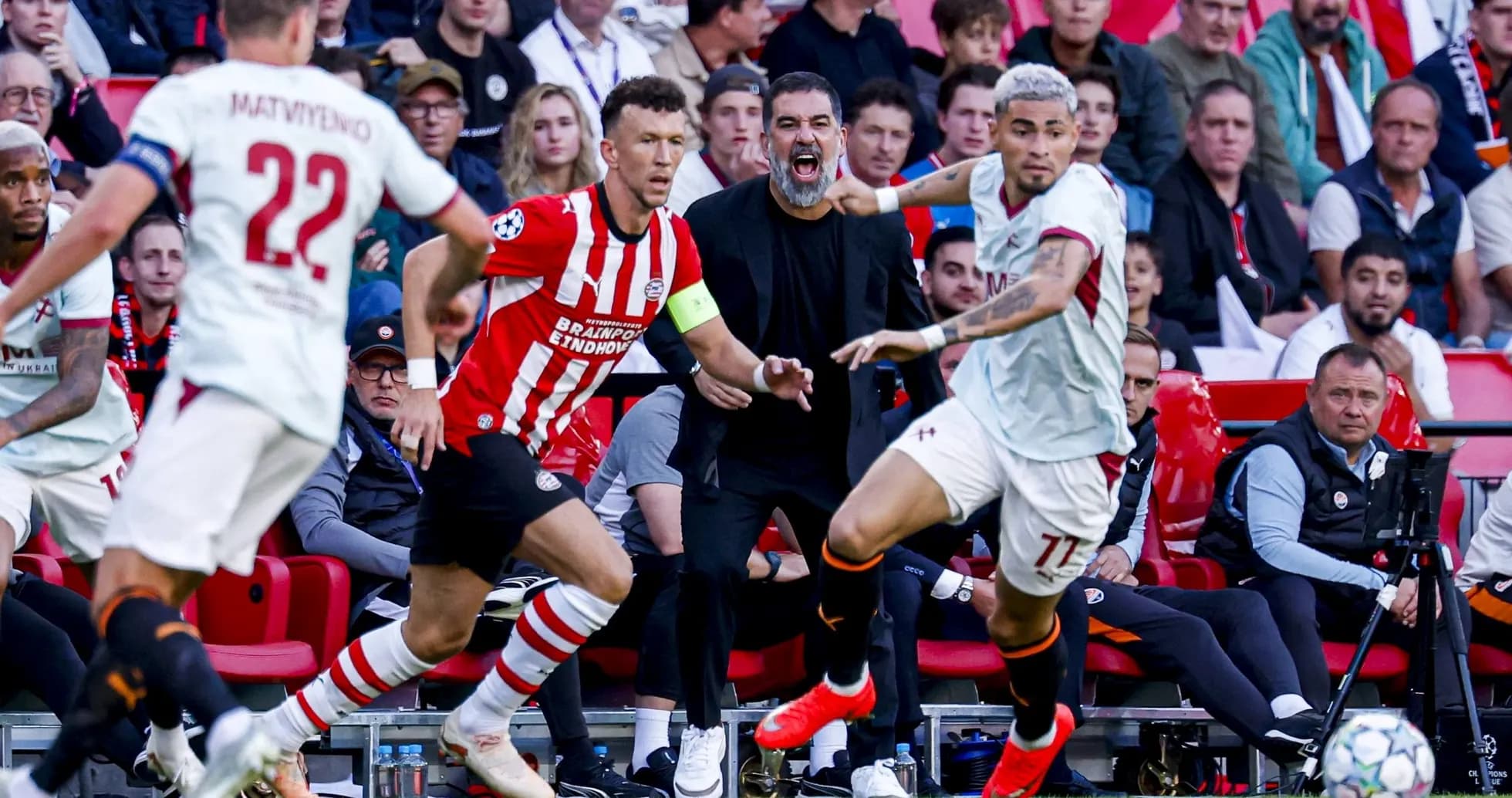
Shakhtar Defies PSV in Eindhoven for Valuable Draw
Shakhtar Donetsk walked into the Philips Stadion with questions hanging over them and walked out with something far more valuable than just a 1-1 draw. They left with proof that, even against one of Europe’s most ferocious pressing machines, they can bend a game to their own rhythm.
On the scoreboard, it was simple enough. Gleiker Mendoza, on his UEFA Champions League debut, bent in a gorgeous curling strike in first-half stoppage time. Sergiño Dest wiped that lead out soon after the interval. PSV Eindhoven then threw everything at the Ukrainian champions, who dug in and survived a frantic finale to take a precious point on the road.
The story behind it was anything but simple.
Turan refuses to imitate PSV’s chaos
Arda Turan knew exactly what he was walking into. PSV at home, pressing high, hunting in ones and twos, turning every loose touch into a trigger. Many visiting coaches try to match that fire with their own. Turan went the other way.
“I told them: if we play like PSV, we will not win,” he said afterwards. That line framed the entire night.
Instead of mirroring the Dutch champions’ intensity, Shakhtar tried to unpick it. Turan drilled his players on angles, not adrenaline: diagonal movements to drag markers away, body positioning to receive under pressure, small shifts to escape the first wave of one-on-one duels. It was detail over chaos, thought over frenzy.
The plan didn’t silence PSV’s press – few teams manage that in Eindhoven – but it gave Shakhtar just enough clarity in possession to survive the storm and occasionally land punches of their own.
Mendoza hits the half-space, and PSV pay
The breakthrough arrived right on the edge of the interval, the kind of moment that turns a tactical idea into belief.
Mendoza, the 23-year-old Venezuelan midfielder, had listened closely to Turan’s instructions about attacking the half-spaces between PSV’s defensive lines. When the chance came, he stepped into exactly that pocket, where the press is at its most vulnerable and the defenders are caught between stepping out and dropping off.
One touch, a glance, and then that curling finish – a stunning debut goal on Europe’s biggest club stage.
“I can’t put my emotions into words,” he admitted later, still processing the scale of it. He again pointed back to Turan’s emphasis on those half-spaces, on finding the cracks in PSV’s shape rather than running straight into it. The goal was not a lucky swing; it was the execution of a clear, rehearsed idea.
PSV, stung, responded after the break. Dest’s equaliser arrived early in the second half and flipped the momentum. The Philips Stadion roared, the press tightened, and Shakhtar suddenly had to live on their nerve.
Under fire, Shakhtar lean on something deeper
From there, the match became a test of resolve. PSV poured forward, the waves of pressure growing taller with every minute. Shakhtar’s defenders scrambled, blocked, and cleared. Midfielders dropped ten yards deeper. The away side stopped looking like the team that had just crafted a beautiful opener and started to look like one trying to cling on.
They held.
Turan later spoke of “tactical discipline and bravery,” and neither word felt misplaced. His side stuck to their shape, refused to panic on the ball when they did get it, and absorbed the noise and the stress without folding. For a club that has lived through far more than loud stadiums and high lines, it felt like a performance drawn from a deeper well.
That sense of perspective came sharply into focus when Turan talked about 19-year-old midfielder Isaque, who made his Champions League debut on the night. The coach didn’t just see a promising teenager on the pitch; he saw a memory burned into his phone.
“When I think about Isaque, I remember a photograph on my phone,” Turan said. “It was taken on the night when we were being bombed and I covered him with a blanket in the hotel lobby. I told him he has to be ready for the fight.”
It was a jarring image set against the bright lights of Eindhoven: a coach and a teenager sheltering from bombs in a hotel lobby, then, months later, sharing a Champions League touchline. Turan made it clear that those nights of fear and uncertainty have shaped the resilience required for evenings like this one.
Isaque’s debut, then, was not just another academy milestone. It was a symbol of how far this group has travelled, literally and emotionally, to stand toe-to-toe with the Dutch champions.
A point, and a statement
By the final whistle, Shakhtar were exhausted but unbroken. PSV had dominated the latter stages, but they had not found a winner. For Turan, the draw was a reward for sticking to his principles in the face of one of the continent’s most suffocating game plans.
Mendoza, still buzzing from his goal, looked ahead with a mix of awe and determination. The intensity of the Champions League had hit him hard, yet he was already talking about maintaining the pace, about keeping the points ticking over.
“The most important thing is that we continue at this pace and keep picking up points,” he said. It sounded less like a celebration and more like a promise.
Shakhtar will face sterner tactical puzzles and fiercer atmospheres as this campaign unfolds. But in Eindhoven, they showed something that cannot be coached on a whiteboard: the ability to carry scars into a stadium and turn them into steel.