PSG Faces Kvaratskhelia Injury Setback and Transfer Market Challenge
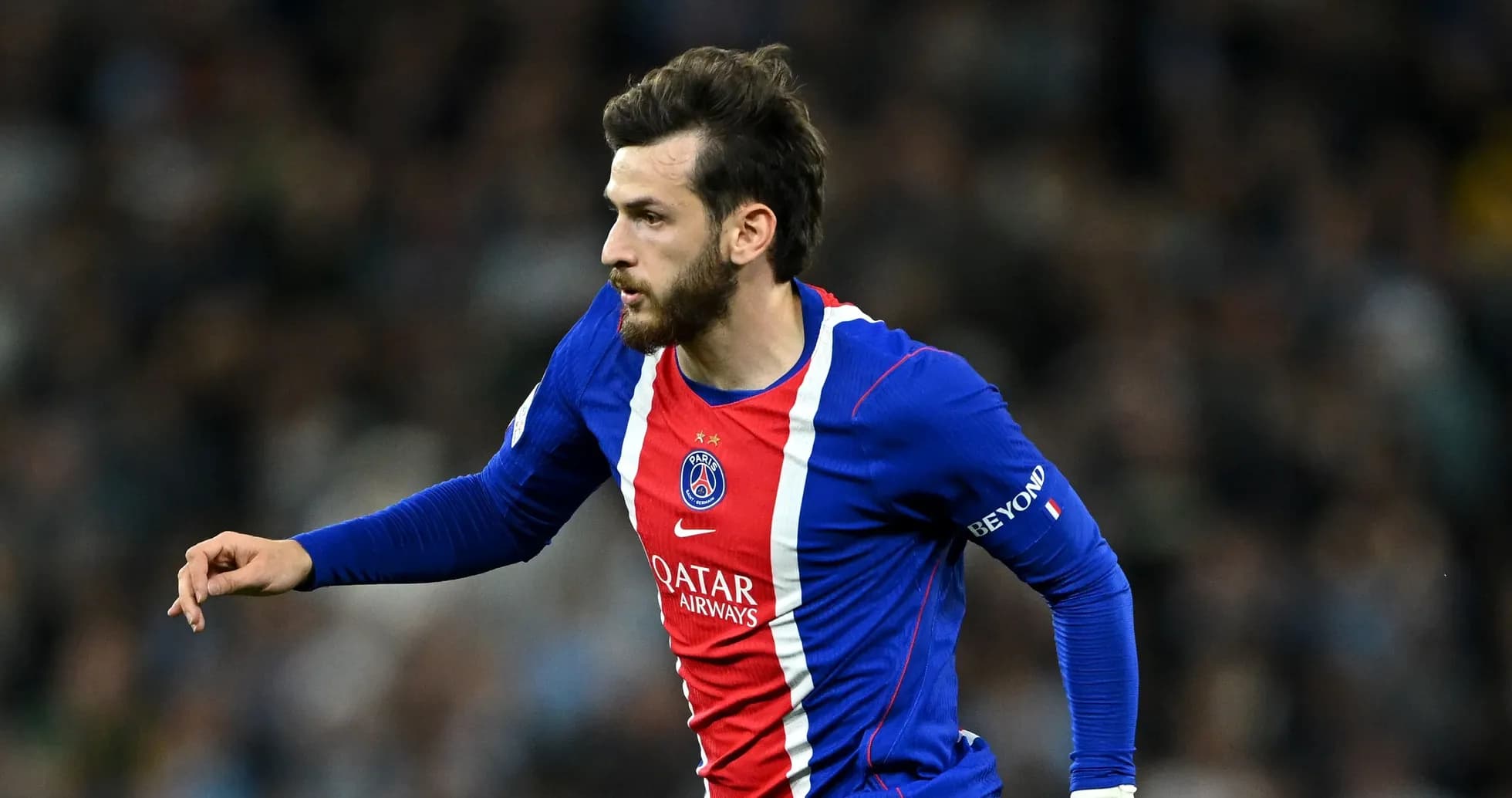
The images from the Barcelona match told the story before the scans did. Khvicha Kvaratskhelia crumpled, clutched his right knee, and the expressions on the faces around him said everything. The diagnosis has now confirmed the worst: a torn anterior cruciate ligament. For Paris Saint-Germain’s new star, the season is almost certainly over.
For a club that built so much of its attacking evolution around the Georgian’s flair on the left, this is more than a routine injury setback. It rips a hole in Luis Enrique’s carefully constructed front line and drags PSG straight back into a market they had navigated almost perfectly in the summer.
A stacked attack suddenly looks thin
On paper, Luis Enrique still has weapons. Plenty of them.
Ousmane Dembélé, when fit, stretches defences and breaks lines. Yet he, too, picked up an injury against Barcelona, adding another layer of concern. Ferran Torres offers intelligence and movement, Mika Godts and Désiré Doué bring youthful unpredictability, while Akliouche and Quentin Ndjantou add further depth and energy in the final third.
That list sounds reassuring. It is not the same as having Kvaratskhelia.
The Georgian’s ability to break games open from the left, to draw two defenders and still find a way out, gave PSG a unique outlet. Losing that profile, just as the season’s decisive months approach, forces a rethink.
Money in the bank – and a clear profile in mind
If there is one area where PSG are well positioned, it is the balance sheet. The club handled the last summer window with rare discipline and precision. Player sales brought in 333.4 million euros, giving the French champions a comfortable financial cushion.
Bradley Barcola’s move to Liverpool alone generated 125 million euros, a figure that transformed the Parisian coffers and gave sporting decision-makers room to manoeuvre without breaching any financial red lines.
That is why the club had already been eyeing the winter window for a left winger even before Kvaratskhelia’s injury. French reports, relayed by Sport, indicated that the recruitment department had quietly set the parameters: young, high ceiling, capable of growing into a long-term solution rather than a short-term patch.
L'Équipe summed it up clearly: PSG are searching for “a new player to strengthen the wing positions during the winter transfer period, provided he is a young player with great potential.”
This is not about panic. It is about opportunity – one created by good sales and now accelerated by misfortune.
A long list of candidates
Once a club of PSG’s size starts looking, the market reacts. Names surface quickly.
Eurosport point to Nico Williams as a serious option. It is no passing fancy: PSG have tracked him closely for several years, aware of his pace, directness and growing maturity on the flank. He fits the age profile, the style, and the long-term vision.
Other sources widen the field. The fichajes site links Algeria’s Ibrahim Maza, one of Bayer Leverkusen’s most exciting emerging talents, with the Parisian radar. Sky, for their part, highlight Matías Albert, a standout among the next generation at Borussia Dortmund, as another player admired in Paris.
None of these names come with a guarantee. All of them, though, underline where PSG are looking: dynamic, young, technically sharp wingers who can be shaped by Luis Enrique rather than merely rented for a season.
The “joker” card on the table
There is, however, another route. A peculiarly French one.
At the start of the 2000s, French football introduced a special mechanism: the “joker”. It allows clubs to sign one player outside the traditional transfer windows, as long as he comes from another team in Ligue 1 or Ligue 2.
Kvaratskhelia’s serious injury makes PSG eligible to use this exception right now. If they want immediate cover, they do not have to wait until January. They can dip into the domestic market and pull out a reinforcement before the winter window even opens.
That possibility changes the rhythm of the decision. Do PSG move quickly, accept that the very highest-end talents are unlikely to be prised away mid-season from abroad, and find a Ligue 1 solution? Or do they hold their nerve, trust their current depth for a few months, and wait for a broader, more ambitious sweep of the international market in January?
For the moment, the indications are clear: the decisive move will come in the winter window. The “joker” sits on the table, unused but tempting.
A pivotal call for Luis Enrique’s project
Kvaratskhelia’s injury is cruel on the player and brutal for a team that had begun to lean heavily on his creativity. Yet it also strips away any ambiguity about PSG’s next step. They must act.
They have the money. They have the profile in mind. They have a coach who knows exactly what he wants from his wingers.
Now comes the real test: can Paris turn a devastating blow into the signing that shapes the next phase of this project, or will this be the moment when a season that promised so much starts to fray at the edges?