Premier League Transfer Window: Who Fixed What?
Two days on from the window slamming shut, the Premier League still feels like it’s waking up from a fever dream. Numbers stopped meaning anything weeks ago. Logic left the chat around the time clubs started trading £80m mistakes like they were Panini stickers.
Who won? Who lost? Does anyone even care? This was the summer the Chelseafication of the market felt complete: spend colossal money, shrug if it goes wrong, assume someone else will bail you out with another colossal fee.
Chelsea paid £60m for Mykhailo Mudryk, watched him misfire, then miss time through a ban, and still found a way to agree a deal that might turn a profit on him within a year. How do you apply reason to that? You don’t. You just try to make sense of the wreckage.
So let’s go back three weeks, to a calmer time before the football started and ruined everything, when we picked out 10 glaring problems around the league. The question now: did anyone actually fix anything? Or did they just throw more money at the noise?
Tottenham’s missing No 9
This is where the story has to start, because the answer at Spurs is a shrug in human form.
They wanted a striker. They didn’t quite buy one. Instead, they assembled a front line by committee. Savio arrived. Omar Marmoush arrived. Mudryk arrived. Dominic Solanke and Richarlison did not depart, despite their increasingly frosty coexistence with Roberto De Zerbi.
De Zerbi has already set Savio a double-figure goal target, a clear hint that he sees the Brazilian as part of a shared burden rather than a classic focal point. Marmoush looks a smart pick-up, a player who decided that sitting behind Erling Haaland at Manchester City was a career cul-de-sac and got out in time. He presses, he runs, he links. But he’s not a pure No 9 either.
The deals that didn’t happen tell you as much as the ones that did. Cody Gakpo and Iliman Ndiaye were the other big attacking targets. Both fell away. The total absence of a traditional centre-forward in those conversations suggests De Zerbi simply doesn’t want one. He asked for a certain type of attacker. He got them.
The problem? Two games in, Spurs have yet to score. They haven’t really looked like scoring. The new attack needs to click quickly, or this long-awaited flexing of financial muscle risks becoming another season of dark humour and darker moods.
Manchester City’s midfield panic
The alarm bells started ringing in Cardiff after the Community Shield, which is always a dangerous time to draw conclusions. But it was hard to ignore the sight of a City midfield built around Elliott Anderson and Mateo Kovacic looking flimsy and oddly flat.
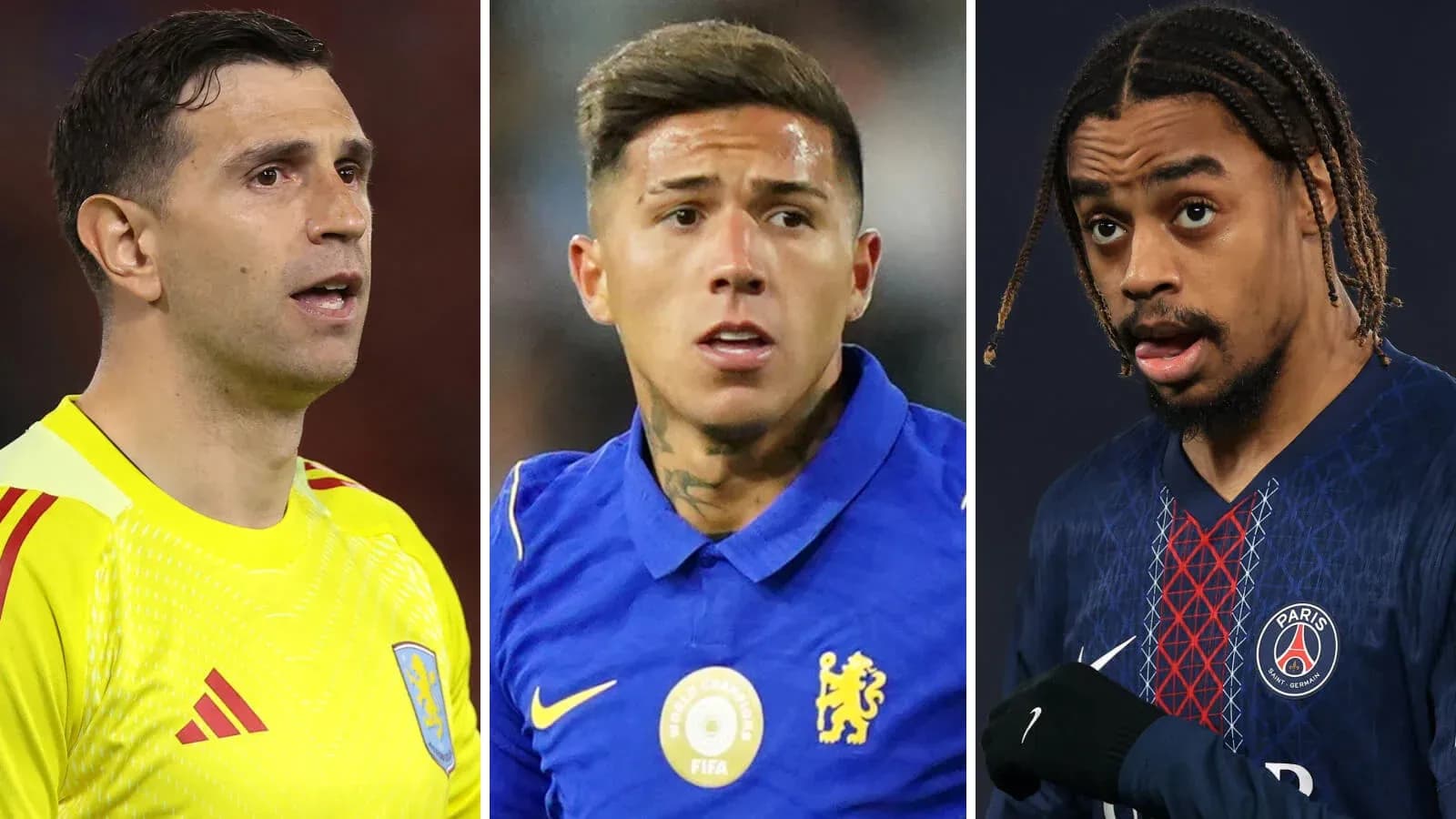
City reacted in the way City do now: by writing another nine-figure cheque. Enzo Fernandez arrived from Chelsea, an extravagant answer to a problem that might or might not have existed, but one that certainly fits the mood of the summer.
Fernandez was already cast as the pantomime villain of the Premier League after his World Cup antics. Moving from one of the division’s great financial outliers to the other only amplifies that role. He is now the face of this window’s excess, a lightning rod for anyone who wants this whole edifice to fall over.
If he thrives, City simply roll on. If he doesn’t, there will be a queue ready to point and laugh, with Anderson reduced to collateral damage in someone else’s morality tale.
Manchester United’s creaking back line
United did what they had to in midfield. That surgery was overdue and finally completed. But they left the defence largely untouched, and the early evidence is not flattering.
Two games. Two promoted opponents. Four goals conceded. It all has an echo of that 4-0 at Brentford four years ago, a reminder that this back line has been on the brink before.
The real test comes when the schedule tightens. Two games a week, travel, rotation, fatigue. United are banking heavily on Luke Shaw staying fit and reliable for four relentless months. It is a huge gamble on a player whose body has rarely been a willing partner over a full campaign.
If it goes wrong, the summer’s midfield work might end up looking like a very expensive sticking plaster.
Liverpool’s fitness and the bill they ran up
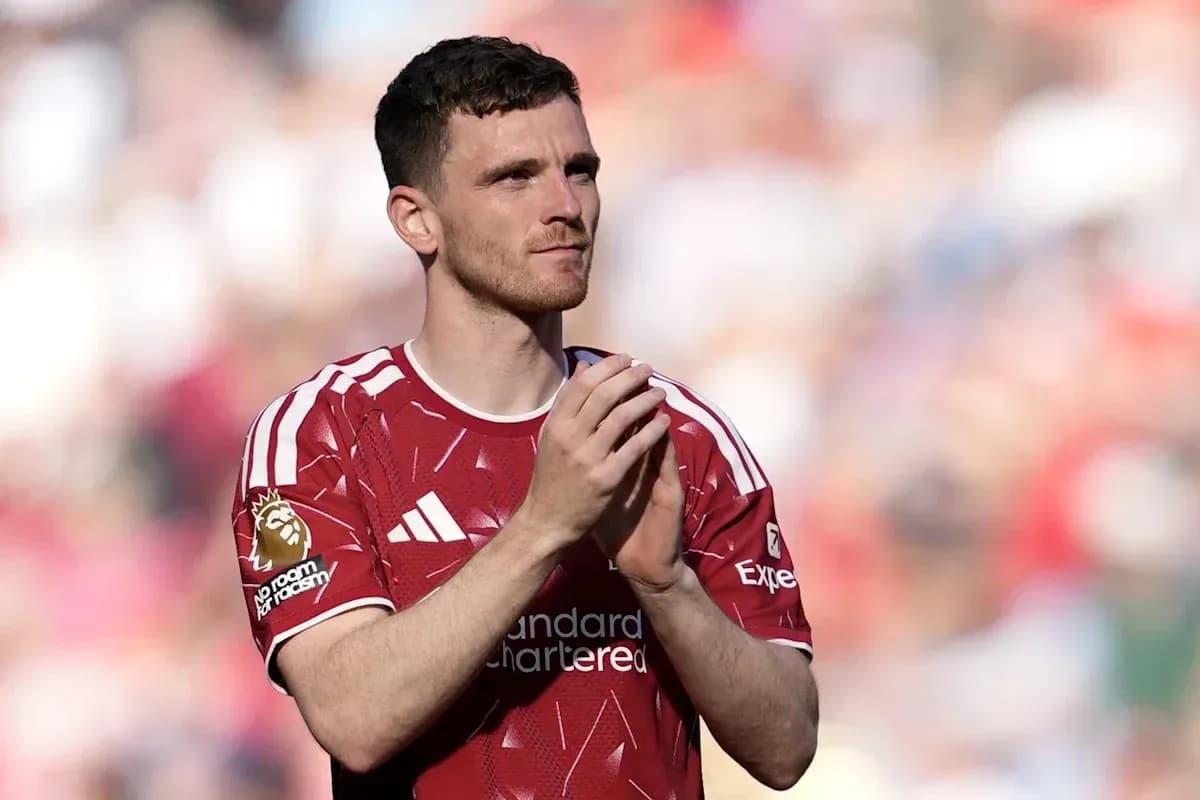
While everyone gawked at Chelsea, City and Spurs, Liverpool quietly finished with the biggest net spend of the lot. When the music stopped, they were the ones holding the fattest invoice.
And yet, the squad doesn’t feel dramatically improved.
Bradley Barcola is an exhilarating, high-ceiling signing, and also an extremely costly one. Liverpool already had a collection of thrilling, expensive forwards who have yet to deliver consistently. Now they need last summer’s big buys to ignite at the same time as this summer’s.
The specific question around fitness remains unanswered. Two games, two 2-2 draws, two late equalisers. On one hand, that hints at stamina and resilience. On the other, this time last year Liverpool were snatching late winners that ended up disguising deeper problems.
Is this a team still working through an underlying physical issue? Or is it just football chaos, a few mad minutes here and there? Right now, it could be anything. Or nothing.
Chelsea’s goalkeeper – at last, a clean decision
Amid the chaos, Chelsea did at least solve one glaring problem with rare clarity.
Goalkeeper was an obvious weakness before a ball was kicked. It became an even bigger one after the opening game. Then came Emi Martinez. Problem solved, at least in relative terms. Whatever else people argue about, everyone can agree Martinez is an upgrade on Robert Sanchez.
That’s about as close as this window gets to consensus.
Of course, this is Chelsea 2026, so one fire out means another one starts. Enzo Fernandez has gone, no like-for-like replacement has arrived, and suddenly midfield looks light. The lack of European football gives them breathing space; they can probably limp through to January with Moises Caicedo carrying the load and a revolving cast of Romeo Lavia, Valentin Barco and Reece James alongside him.
If that doesn’t work, there’s always the January fix: another £80m solution, or a spin on the free-agent carousel.
And if they really want to lean into the absurdity, there’s the possibility of a short-term punt on a familiar Spurs face. Yves Bissouma? Tanguy Ndombele? The banter writes itself.
Aston Villa’s ripped-out spine
Villa’s summer has been a study in controlled chaos. So much of the core that drove their recent rise – Emi Martinez, Ezri Konsa, Youri Tielemans, Morgan Rogers, Ollie Watkins – has been removed or disrupted that the whole project has felt unsteady.
Yet beneath that turbulence, there is method. The late arrival of Leon Goretzka as a free agent after his Bayern Munich exit was the kind of understated deal that barely registers on deadline day, but could look inspired in a few months’ time. Experience, presence, a grown-up in the middle of the pitch.
Villa have changed more than they would ideally like, but the recruitment has been smart across the pitch. Their goalless, pointless start to the season looks more like teething problems than a full-blown crisis.
There are other clubs whose empty points column feels far more ominous.
Newcastle being Newcastle again
This one can be parked for now. The concern was that Newcastle might drift, that the project might stall. Instead, Matthias Jaissle has walked in and looked like he’s been there for years.
Four points from Liverpool and Tottenham is a serious haul on paper. The nagging doubt is what those results actually say about Liverpool and Spurs rather than Newcastle. We will learn more once they face a less chaotic, less self-destructive opponent.
Bournemouth this weekend should be a better barometer. If Newcastle swat them aside with the same authority, then the early-season narrative shifts sharply in their favour.
Fulham’s bench gamble
Alvaro Arbeloa has already been installed as favourite in the sack race. That tells its own story.
Fulham and Marco Silva felt like one of those rare perfect fits: club, manager, moment, all aligned. Both parties decided it was time to move on, but the sense of something delicate being broken lingers.
Arbeloa arrives with a reputation, a name, a certain aura. But among this season’s crop of new Premier League managers, he always looked like the flimsiest appointment. The early pressure only reinforces that impression.
If results don’t turn quickly, Fulham’s decision to break a working partnership could define their season in all the wrong ways.
Coventry’s stubborn Sky Bet smell
Coventry still reek of the Sky Bet era, and that’s not a compliment.
The defeat to Hull has already put a worrying tint on their fixture list. Next up: Manchester City, Brighton, Nottingham Forest, Newcastle. By the time the calendar offers the traditional relief of a trip to Dr Tottenham in late October, they could be staring at a serious gap.
The most damning detail? They’ve spent £150m simply to assemble what looks, at best, like Championship Deluxe. The cost of “de-Championshiping” a promoted side has become absurd. You can throw that kind of money at the problem now and still end up with a squad that feels half a division short.
If Coventry don’t start punching above their weight soon, the numbers will catch up with them.
Crystal Palace and the Chelsea carousel
Crystal Palace remain firmly in the danger zone. Two defeats, including a humbling at the hands of a Manchester City side still clearly under construction, have exposed a defence that looks brittle and confused.
The response? Axel Disasi on loan from Chelsea, because apparently every Premier League club is contractually obliged to borrow him at some point. There’s a rota. There’s also Honest Ahanor, technically on loan from Atalanta but in reality a Chelsea signing parked in south London for a year. The name alone feels like a punchline. The deal itself looks like a two-finger salute to the rulebook.
To complete the Chelsea flavour, Ben Chilwell is back, having previously spent time on loan at Selhurst Park and now arriving via Strasbourg. Injured, naturally.
Clubs only sign an injured Ben Chilwell on deadline day when they are deeply, unmistakably distressed. Palace’s back line still looks like a problem waiting to become a crisis.
So did the window fix anything? A few clubs patched holes. A few created new ones. Most just spent extraordinary sums to stand roughly where they were before.
The money keeps flowing, the values keep rising, and the logic keeps evaporating. The only real question now is simple: when the football settles and the adrenaline fades, who’s going to be left holding the most expensive mistake?