Pochettino's Vision for US Soccer's Future
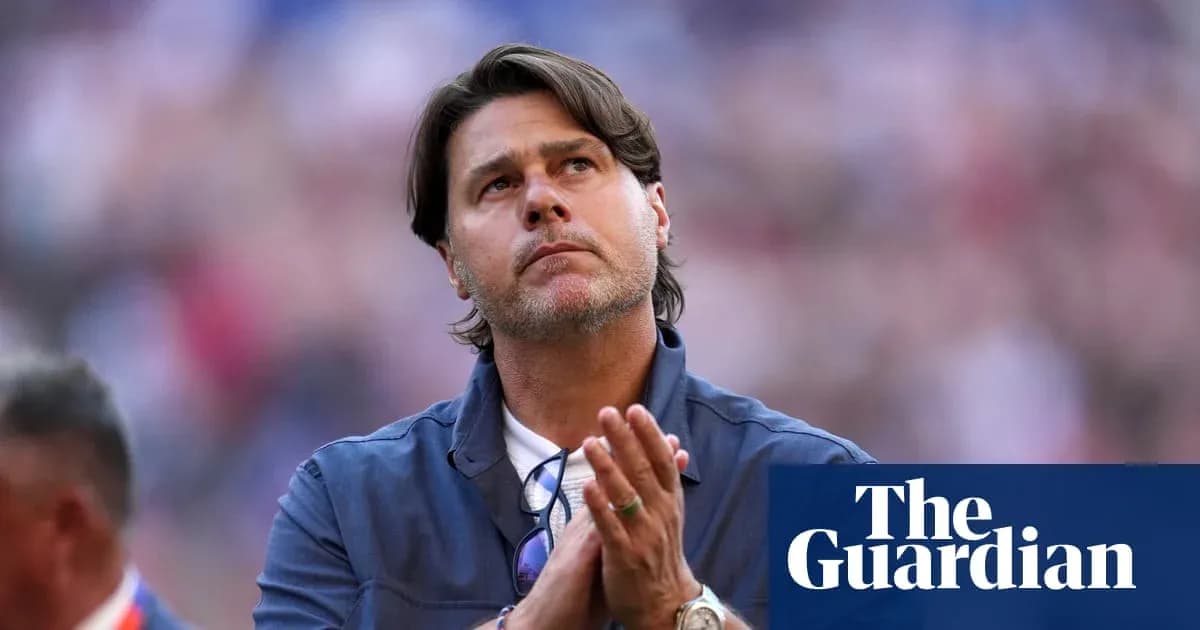
Two months after the World Cup ended in a familiar, hollow way for the US men’s national team, Mauricio Pochettino is back in front of microphones, not to pick over the wreckage, but to outline something far bigger than a new tactical tweak or a fresh call-up list.
The World Cup was supposed to be the crescendo of his short stay. Instead, it has become the overture.
From stopgap to architect
When Pochettino took the US job in 2024, most inside the game viewed it as a pragmatic, time-bound marriage of convenience: a proven club manager brought in to squeeze the most out of a rare home World Cup. He was the elite firefighter, not the long-term city planner.
That changed this summer.
US Soccer’s decision to extend his contract in August came with a striking add-on: Pochettino would no longer be just the head coach. He would be one of the main architects of the sport’s next phase in the country.
The federation announced that the Argentinian will now play a prominent role in youth development, coaching education and collaboration with the professional game. In a landscape where national team managers often dabble in broader policy, this is something else entirely. No US coach has ever been handed this much influence over the direction of the entire program.
He steps into that role at a moment of flux. US Soccer is restructuring its technical side and is hiring new directors for both the men’s and women’s senior and youth setups. Pochettino has made it clear he wants to be part of that conversation — but not the only voice in the room.
“He’s made it clear he’s happy to help with that process – ‘but it can’t [just] be my guy,’ he said, laughing,” as he met a small group of reporters on Monday. The line drew a smile, but the message was serious: he wants a shared project, not a personal fiefdom.
For Pochettino, the appeal is obvious. He has spoken of staying on for another World Cup cycle as a chance to “have a lasting impact on the sport in the country that has welcomed us so warmly – and for that impact to extend beyond results on the field.” On Monday, he pushed the idea further.
“This is the future of the USA,” he said. “We want to try to perform in the World Cup and to create something special with the fans. And now it’s about being a part of the legacy that the federation wants to create – becoming one of the most powerful countries in soccer. That is a dream, no? It’s amazing. If we can be part of that, we are so excited and so happy.”
The words are lofty. The calendar is brutal. The US must navigate World Cup qualification for 2030, build towards the Los Angeles Olympics in 2028 and potentially take on a Copa América in that same crowded summer. The upcoming friendlies against Peru, Chile, Mexico and Canada in late September and early October feel almost modest by comparison, a light warm-up before the real climb begins.
Balogun’s missed move and a manager’s support
If the long-term vision is grand, the short-term realities remain stubbornly human.
Take Folarin Balogun. The Monaco forward looked destined for a big-money transfer after a breakout World Cup. Instead, he became one of deadline day’s most frustrated figures.
A move to Everton collapsed at the last moment, with the Premier League club pointing to a potential fitness concern. Monaco disagreed. So did Balogun. The deal died anyway.
For a 25-year-old riding the high of a strong tournament, the comedown was sharp. Pochettino, who has seen enough transfer sagas to know the emotional toll, made it clear he intends to reach out.
“Yes, it’s difficult because you cannot influence that decision,” he said. “You need to support what they are doing with the people making the decisions. In some special cases, like Flo’s, I will call in the next few days. I wanted to give him a little bit of space after that situation in Everton. I want to know from him what happened. But we are always offering our support, and that’s it. I think he’s an important player for us, he was an important player in the World Cup and I hope that he can find being in Monaco, or in another place, his best place to perform in the best way.”
No grand speech there. Just a coach who understands that for the US to grow into the powerhouse he describes, its stars need stability, confidence and the feeling that the national team is a constant, not a cameo.
The dual-national tug-of-war
Pochettino kept his cards close to his chest on the 26-man squad he’ll name for this month’s camp. One absence is already confirmed.
Noahkai Banks will not be there.
The Augsburg center-back, 19 and still weighing up whether to commit to the US or Germany, remains in limbo. He has said he wants to make a decision by “the next international break, or at the latest by the international break after next.” In Germany, the stakes are clear enough that new national team head coach Jürgen Klopp has reportedly gone to watch him in person.
This is the modern US landscape: a deepening pool of dual nationals, each one a small recruitment battle with major competitive implications.
“We are in contact with all the potential dual nationals,” Pochettino said. “I think it’s important for us, of course, because that is the human connection that is so important. Even if they, like in that case, Noki, didn’t change his mind and is waiting still, no decision, and of course we cannot consider him for the next camp … But the organization is working with all the dual nationals and players with the possibility to make a decision. That human connection is important because if one day they feel that they can defend and they want to fight and to be part of our national team … Of course, if they deserve it, and we consider that they deserve to be involved, of course we are going to call [them up].”
There it is again: “human connection.” For a coach often associated with high pressing and vertical football, his language around this US project keeps drifting back to relationships, legacy, identity. The tactics will matter. The talent pipeline will matter more.
A decade to define a country
The next few weeks will bring friendlies, roster debates and the usual noise. The real story sits above it.
Pochettino is not just preparing a team for the next window. He is helping to sketch out what US Soccer wants to be when the lights go up in Los Angeles in 2028 and when the 2030 World Cup comes into view.
The question now is not whether he can win the next match.
It’s whether he can help turn a sporadic World Cup presence into the “powerful country in soccer” he keeps talking about — and how much of that transformation can be crammed into one coach’s second cycle in charge.