Pierre Sage's Challenge at Crystal Palace: Navigating a Turbulent Start
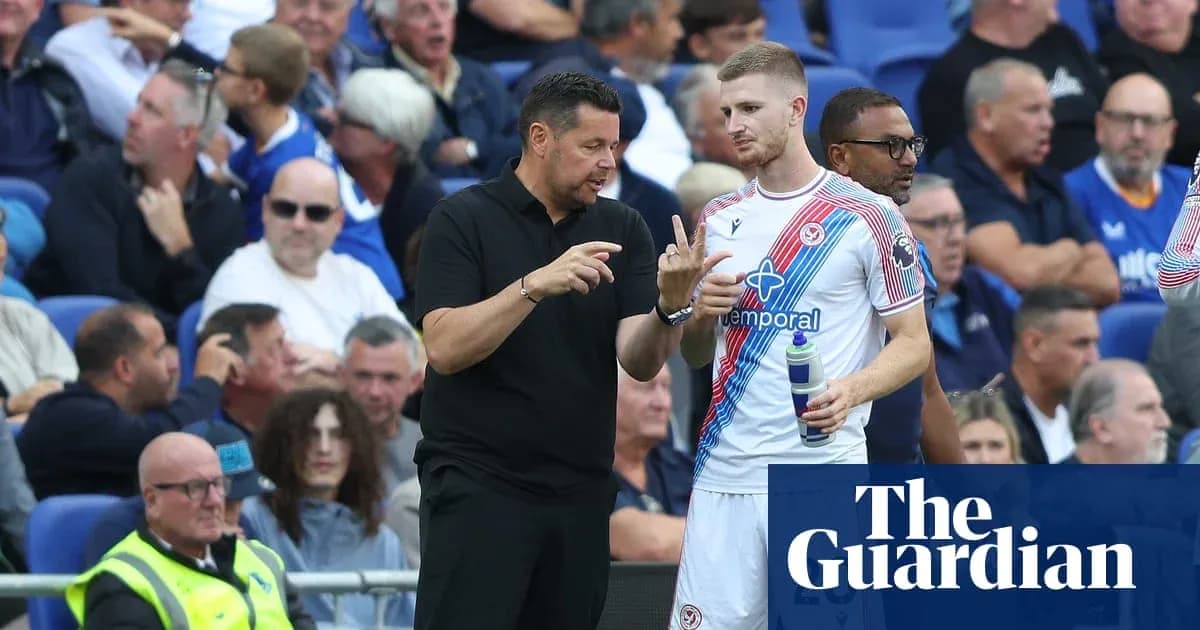
Pierre Sage knew exactly what he was walking into.
When Crystal Palace came calling in June, he wasn’t just inheriting Oliver Glasner’s job. He was stepping into the afterglow of the most successful period in the club’s history, into a dressing room reshaped by a European run, and into a boardroom that treats deadline day like a contact sport.
Two defeats – at Everton and at home to Manchester City – have made for a bruising start. Questions swirl over the futures of key members of the side that won the Conference League. Yet Sage, calm and clipped in his answers, looks like a man who has already accepted the chaos as part of the deal.
He had to. At Selhurst Park, the window rarely closes quietly.
Late deals, familiar tension
Ismaïla Sarr and Jean-Philippe Mateta both stayed in south London despite serious interest from Liverpool and Aston Villa. Palace, meanwhile, pushed through four new signings after missing out on Malick Fofana in one of deadline day’s more dramatic sagas, the forward instead ending up at Sunderland.
For a coach trying to stabilise a squad and a style, that sort of turbulence can grate. Sage shrugs it off.
“I knew that and I had to deal and adapt to that,” he said of Palace’s habit of leaving business late, a trend that has seen them sign 10 players on deadline day across the past three summer windows. The key, he insisted, was that the right profiles eventually arrived. “I think we are in line with what we need.”
Glasner never hid his irritation at having to wait so long for reinforcements. He left for Nottingham Forest this summer, taking Daniel Muñoz with him, after a tenure in which Palace still moved slowly even while giving him four signings in his first window. Sage, by contrast, has chosen not to wage that battle in public, even if those close to the process say he pushed hard for more decisive action in one key area.
The Lacroix void
When Maxence Lacroix was sold to Chelsea in July, Palace lost more than a defender. They lost a leader. Replacing him became Sage’s priority – and his biggest frustration.
His first choice was clear: Ismaëlo Ganiou, the 21‑year‑old centre-back who had been central to Lens’s Coupe de France win and second-place finish in Ligue 1 under Sage last season. Ganiou knew the system, the demands, the standards. Lens knew his value. They refused to budge, tied him down to a new contract at the start of August and closed the door.
Palace moved on. A deal for Joel Ordóñez at Club Brugge collapsed when the Ecuadorian’s recovery from a broken foot complicated matters. Approaches for Augsburg’s Chrislain Matsima and Brest’s Raphaël Le Guen also went nowhere.
So the club turned to Axel Disasi and teenage prospect Honest Ahanor, the latter arriving on loan. Both will help. Neither, at this stage, can guarantee what Lacroix brought: authority, organisation, a presence that stitched the back line together. That question will hang over Palace until the defence answers it on the pitch.
Targets missed, battles fought
The search for steel in midfield produced another near miss. Mamadou Sangaré, another Lens player, chose Brentford over Palace. For a coach trying to build a spine, that one stung.
Sage then drove the pursuit of Fofana, the Belgium forward he knew from Lyon. Deadline day turned into a marathon of calls and persuasion. It wasn’t enough. Fofana stayed out of reach.
“I’m really proud and happy with what the club did for that,” Sage said. “We fight a lot and sometimes you cannot give more than this, but we give our best in this situation. At the end, the player chooses.”
Palace pivoted to Dario Osorio, the Chile forward signed from Midtjylland on an initial loan with an obligation to buy next summer for £26m. He operates mainly from the right, so he does not fill the exact Fofana-shaped hole, but he adds another sharp edge to a front line already packed with options.
Dwight McNeil arrived. Evann Guessand came in, though he has been left out of the Europa League squad. Sarr stayed put. On paper, Palace are heavy with attacking talent.
Behind them, the return of Ben Chilwell and the late move for Quinten Timber offer Sage more depth in midfield. The club also turned away bids from unnamed sides for Adam Wharton, with Manchester City and Chelsea among those believed to have tested Palace’s resolve. “The club was strong with the situation, and I think the player is completely in line with that,” Sage said.
Money in the bank, questions in the stands
Look at the balance sheet and a different story emerges. Palace broke their transfer record twice in January to land Jørgen Strand Larsen and Brennan Johnson, the latter then swapped with Everton for McNeil. This summer told a more restrained tale.
A net profit of almost £40m made them the second-most frugal side in the division, behind Aston Villa. Over the past five seasons, Hull and Coventry – both in the Championship – have outspent Palace’s total of around £90m.
Sage refuses to bite on the suggestion that this window has left him short-changed. Instead, he reaches back to Belley, in eastern France, and the brasserie his parents ran.
“I’m not frustrated – we are not a bank,” he said. “We do with what we have. My parents had a restaurant and I prefer every day there’s a lot of clients but it was not the case sometimes and we have to deal with that every day. In football it’s the same.”
He knows what he has. He knows what he doesn’t. Complaining will not bring Ganiou or Fofana through the door.
Fulham next, with key men missing
What he could do without is the timing of his absentees.
Sarr and Mateta will both miss Saturday’s trip to Fulham. Mateta’s hopes of leaving were ended by a hamstring injury that now keeps him out for another three weeks. Sarr, sidelined by a groin problem, is expected back for the Ipswich game next Saturday, but Sage admitted the Liverpool interest had left its mark, not least after the forward’s agent publicly criticised the way his client had been handled.
“Sarr needs time,” Sage said. Time to recover, time to reset, time to move on from a move that never materialised.
Palace, too, need time – to bed in Disasi, to find out whether Ahanor is ready, to see if Osorio can carry the weight of a £26m obligation. Time is the one commodity the Premier League rarely offers.
The Frenchman did his homework before he took this job. Now comes the real test: can he turn a window of near misses, late scrambles and financial prudence into a team that still punches above its weight?