Newcastle United's Managerial Change: Eddie Howe's Departure and Its Impact
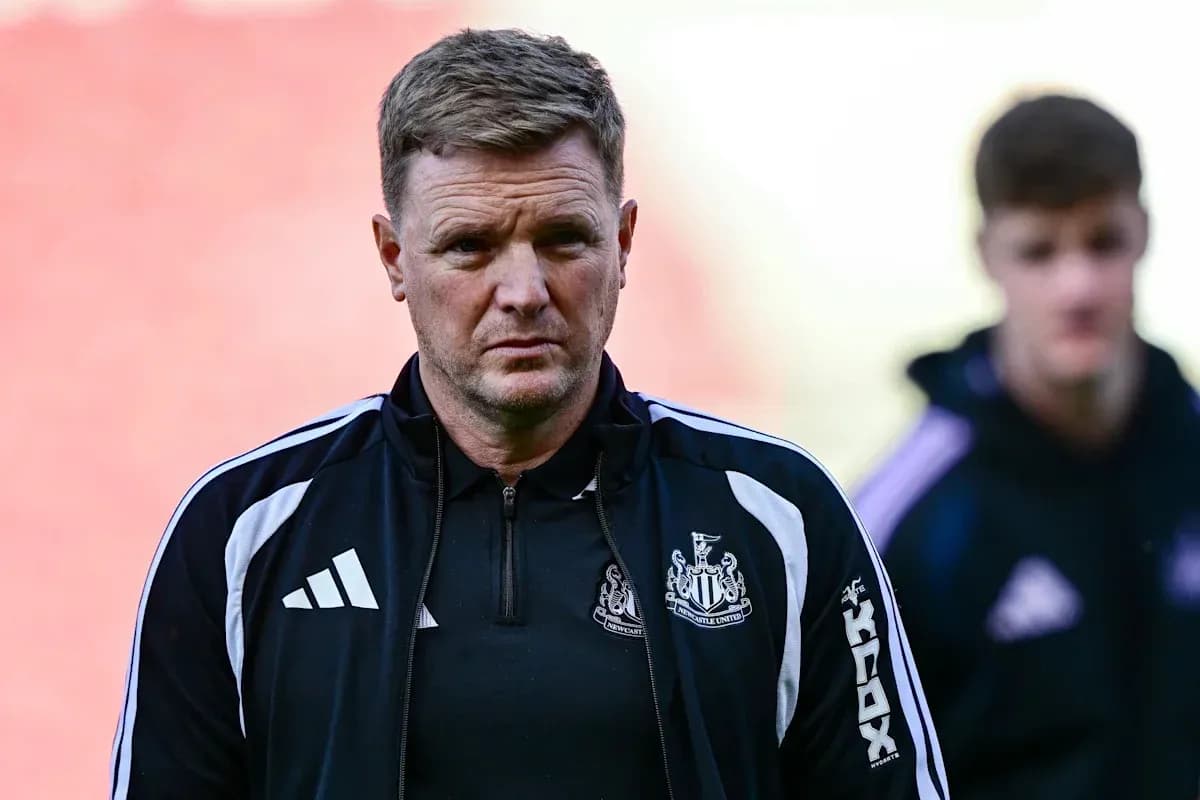
Newcastle United expected upheaval this summer. It did not expect Eddie Howe to walk away.
His exit, early in pre-season and right in the teeth of the transfer window, ripped through the club’s carefully drawn plans. Training schedules, tactical work, recruitment meetings – all of it suddenly had to coexist with the search for a new head coach. From the outside, it looked like the perfect recipe for chaos.
Inside, Ross Wilson insists, it was anything but.
The sporting director had already been working on what he called “almost like running two transfer windows” – one for players, one in the shadows for a potential managerial change. That quiet contingency work meant that when Howe stunned the club by going, Newcastle were not starting from zero. They already knew where to turn.
They went straight for Matthias Jaissle.
Planning for a storm that hadn’t yet arrived
Wilson’s arrival at Newcastle came with a clear brief: modernise the football operation and hard-wire long-term thinking into a club trying to live in the Champions League conversation. That, in his view, included being ready for the day when Howe would no longer be in the dugout.
“Eddie would tell you, since I came to the club, I’ve been planning in the background for a managerial change,” Wilson told staff. For him, that was not disloyalty. It was leadership. “Part of our responsibility as leaders of the club is to be prepared.”
So while Howe publicly committed to another season at the end of the last campaign, Wilson and his team quietly built dossiers, ran interviews, and mapped out scenarios. The work ran in parallel with the club’s aggressive recruitment drive, which would eventually see up to £300 million invested in eight new signings.
Two tracks. One summer. One of them completely hidden.
A brutal moment, a rapid response
The timing of Howe’s departure could hardly have been worse. Pre-season is when a manager imprints his ideas, shapes fitness, tests new signings, sets the tone. Newcastle were trying to overhaul a squad and integrate major investment; suddenly, they were also replacing the man who had delivered their first trophy in decades.
Howe’s status inside the club remains intact. Wilson called him a “club legend” and pointed straight at that trophy as proof. “Big respect to Eddie for the job he did for us over a long period of time. Bringing that trophy here means we would all describe him as a club legend,” he said.
Respect, though, did not mean paralysis. Because the succession planning was already in place, Newcastle could move quickly. Jaissle, identified as a coach whose ideas could mesh with both the existing squad and the club’s broader vision, became the target. The search that had been conducted in secrecy for two weeks burst into public view with a decisive appointment.
“Clearly the timing was not (what) we had planned for,” Wilson admitted. “But we had a plan in place, which is why we could execute it as quickly as we did.”
Two windows, one direction
Wilson’s description to Newcastle’s scouting department captured the scale of the operation. The club were chasing an extensive list of transfer targets while simultaneously lining up a successor to Howe, all under the radar. The key, from their perspective, was alignment: players who could work under Howe but also fit Jaissle’s preferences if the change came.
That dual-track approach allowed continuity where there might have been rupture. Instead of tearing up recruitment plans when Howe left, Newcastle could keep moving, confident that the profile of player still made sense for the new man.
No, it never felt chaotic inside at all,” Wilson said. The outside noise, the speculation, the shock – all of it met a club that believed it had already done the hard thinking.
Howe’s exit still marks a fault line in Newcastle’s modern history. A popular manager gone, a new voice in Jaissle stepping into a dressing room reshaped by massive spending and rising expectations. The disruption was real. The question now is whether that quiet, meticulous succession planning turns a potential crisis into a launchpad for the next phase of the project.