Mourinho Returns: The Clásico Rivalry Rekindled
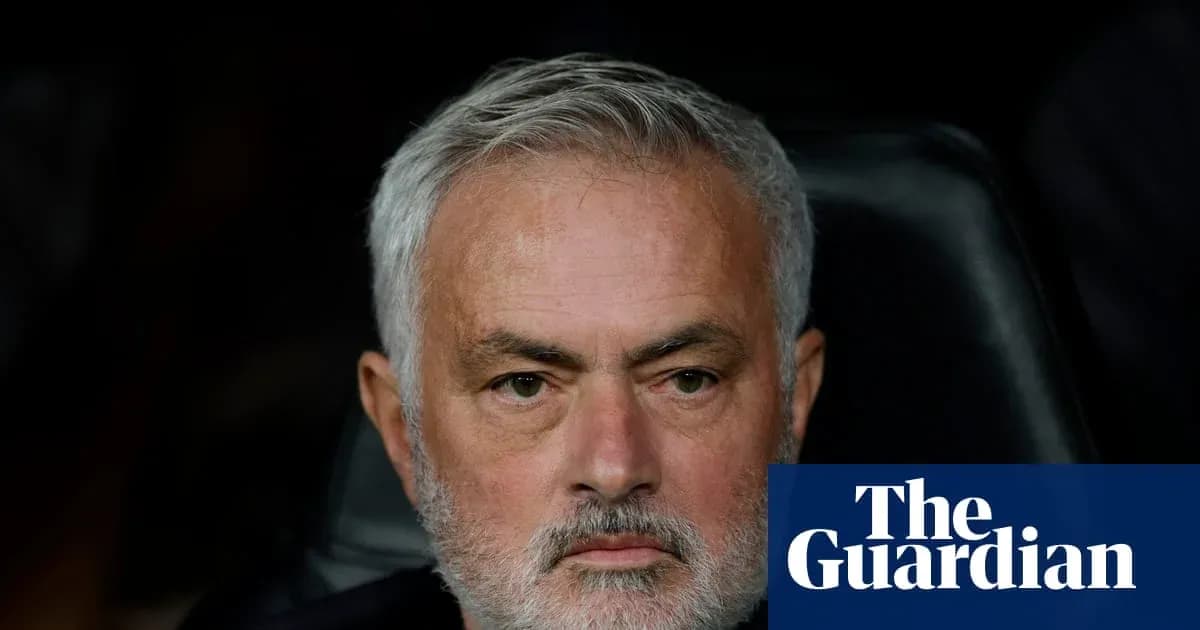
José Mourinho has already done the por qué?, waved the printout and skipped the press conference – and he has only been back at Real Madrid for three months. The old routines are back, the theatre fully restocked, and he has not even reached a clásico yet.
That changes on Sunday night.
He returns to the stadium where he first walked in as Bobby Robson’s bright young translator 30 years ago, and where he last appeared in 2013 as the most polarising, most famous manager in the game. Back then he was the outsider who once said “today, tomorrow and always, Barcelona in my heart,” and swore he would only join Madrid to destroy them. Now he has been hired to do exactly that.
Nostalgia? Of course. But in Mourinho’s story, Barcelona are never just the backdrop. They are the other main character.
Mourinho, the needle and the return of a rivalry
“The clásico is just another game in the championship but to say it’s a game like any other would be to lie, totally unreal,” Mourinho said on Wednesday. Few people understand that better than him.
On the other side, Barcelona’s new phenomenon can barely hide his excitement. Lamine Yamal, who grew up on grainy YouTube clips of the Mourinho-Guardiola wars, wants the chaos back. “I love the needle,” he said. “The Mourinho-Guardiola era, I loved all that. That’s football. Sport is serious but I want a show and we have more fun.”
The Champions League has grown into Madrid’s private kingdom since Mourinho last left: La Décima, then the 11th, 12th, 13th, 14th and 15th titles in a decade. All of it without Barcelona. There has not been a European clásico since that ferocious 2011 semi-final, when Pep Guardiola called Mourinho the puto amo and Mourinho responded with his famous por qué monologue, accusing UEFA and the referees of bending the game towards Barça.
Yet this week, the domestic rivalry has swallowed everything again. Even Barcelona’s trip to Paris has felt like a prelude. Every European tie has been viewed through one lens: what does it mean for Sunday?
For Mourinho, it always comes back to this. The night he effectively got the Madrid job in 2010, he was still drenched in Inter’s champagne, having just won the Champions League. The real turning point had come in the semi-final: that wild sprint across the Camp Nou pitch, finger in the air, Inter having survived with 10 men. Madrid executives watched from their own stadium, spared the nightmare of Barcelona lifting the European Cup on their turf and handed a blueprint for how to stop a team that looked untouchable.
As Mourinho left the Bernabéu that night in Florentino Pérez’s car, his players flying back to Milan without him, the request was simple: do that here.
Pérez’s chosen galáctico
Pérez had returned to the presidency in 2009 after the original galáctico project fizzled out. He came back with Cristiano Ronaldo, Kaká, Karim Benzema. He did not come back with trophies. Barcelona had taken control of Spain and Europe, powered by the core of the 2010 World Cup winners – six of Spain’s starting XI in the final came from the Camp Nou.
Madrid needed more than signings. They needed a shock to the system, someone to rip up the hierarchy in the dressing room and drag the club into a street fight. “This year’s galáctico is José Mourinho,” Pérez declared.
It worked, and it burned.
By the time Mourinho left, the club had been through what he later described as “three intense, almost violent years”. The conflict was not just with Barcelona and Guardiola; it was internal. Yet Pérez never really fell out of love with him. If anything, the president seemed magnetised by the belligerence. Mourinho, he insisted, had put Madrid back where they belonged. After every Champions League triumph that followed, Pérez called to tell him: you started this.
The record books say Guardiola won twice as many trophies in Spain. They also say that of the four competitions Guardiola failed to win at Barcelona, Mourinho took three from him. They say his first clásico ended in a 5-0 humiliation and his last season brought no trophies. They do not capture the sense that he had re-armed Madrid for the decade that followed.
A familiar crisis, a familiar solution
Fast forward. Madrid have gone two seasons without a trophy. In the first, Barcelona clinched the league with two games to spare and swept a domestic treble. They beat Madrid four times, scoring 16 goals. Last season, Barça wrapped up the title with three weeks left, sealing it with a clásico win that underlined the gap. Madrid’s fractures were played out in public.
Spain then won the World Cup with eight Barcelona players in the squad. Madrid’s only representative, Marc Cucurella, did not even join the club until after the tournament had started.
If this is not a crisis in the classic Madrid sense, it looks a lot like one. The club’s answer was instinctive: when the walls shake, call Mourinho.
Time has softened his edges in the public imagination. The rows, the meltdowns, the scorched-earth departures have faded under a layer of nostalgia. What remains is the image Pérez wanted again: a man with the authority to dominate a dressing room, the personality to turn every touchline into a trench and every microphone into a weapon. Against anyone. Especially Barcelona.
Listen to Pérez’s extraordinary outburst in May – the conspiracies, the campaign talk, the paranoia said out loud – and Mourinho’s return starts to sound inevitable.
Negreira, grievance and the old Mourinho voice
On the Negreira case, Madrid feel they have ammunition. Between 2001 and 2018, Barcelona paid more than €7m to José María Enríquez Negreira, then vice‑president of the referees’ committee. Barcelona deny corruption, insisting he worked as an adviser. The investigation rumbles on. For Madrid, it has become the centrepiece of their narrative, far more than when the two clubs briefly stood together on the Super League barricades.
La Liga’s president comparing Madrid’s TV channel to Joseph Goebbels’ propaganda machine has not exactly cooled things down.
Whether every current complaint has substance is one debate. Whether the leap to full-blown conspiracy holds up is another. Every error, every 50-50, even decisions that are clearly correct, are now presented as part of a grand design. The insinuations never stop.
Mourinho arrived this summer insisting he was older and calmer. The evidence since has not entirely backed that up.
After defeat to Betis, he went back to the old word: por qué? The answer, in that case, was simple – the law, applied correctly. After losing to Atlético, he marched into the press room with a printout to make his case. Then came the Villarreal game: Mourinho sprinting on to the pitch to embrace Vinícius Júnior after the Brazilian scored, the goal ruled out, Vinícius sent off for pulling Nathan Saliba’s hair and hit with a four-game ban. That suspension rules him out of the clásico.
Mourinho skipped the press conference that night. The club line was that he did not trust himself to speak without saying something that would bring a ban of his own. Whatever the calculation, the outcome was the same: the clásico ring-fenced, protected at all costs.
A team takes shape, late but just in time
A week ago, the mood felt very different. Barcelona had opened the league with 11 wins from 11, scoring at will – more than four a game on average – and most of Spain had quietly pencilled in a clásico win and an early title procession. Lamine Yamal was tearing through defences, Hansi Flick’s side looked ruthless. Madrid had already lost twice and seemed stuck in neutral. Mourinho’s team did not convince; the same old structural problems hung over them. There was not much football to cling to.
Then, almost out of nowhere, Madrid did the thing they do in Europe. In Rome, they were 3-1 down to Roma and drifting. In seven frantic minutes they scored three times and walked away 4-3 winners. At first glance, it looked like another of those inexplicable Madrid comebacks, a surge of shirt and history.
Look closer and there was a pattern. In those decisive minutes, Arda Güler was on the pitch. Yan Diomande was on. Fede Valverde was at right-back. Vinícius was off.
It looked obvious. It looked repeatable. Mourinho agreed.
He went back to that formula. Madrid scored four against Sevilla on Sunday, three of them superb. They followed it with four more against Leipzig on Wednesday, Diomande thundering in a volley after Vinícius had gone off. While Madrid were rediscovering their bite, Barcelona were conceding four at the Parc des Princes.
Flick admitted he had one eye on Sunday. He rested Rodri, took off Pedri and Raphinha early, and gambled on the clásico as the game that can tilt a season. The problem is at the back: too many injuries, too many gaps. Fifteen goals conceded already, a number he has not tried to hide from his players.
Mourinho, predictably, could not resist a complaint of his own. Madrid, he pointed out, have one day less rest than Barcelona. Any mitigation – like playing at home to Leipzig while Barça travelled to Paris – did not make the speech. The grievance went on the record. Another small brick in the wall of “they” are against us.
Six points, one clásico, and a manager still learning
“We need to cut the gap and we can only do that by winning,” Thibaut Courtois said of the six-point difference at the top. “We’re going with confidence.” For the first time in weeks, it feels plausible. Barcelona no longer look untouchable. Madrid no longer look resigned.
A title is back on the table, not yet drifting out of reach. A team is starting, just starting, to look like Mourinho’s.
“I had to get to know them,” he said on Wednesday night. “I’ve only been here 105 days; it’s not long.”
It is long enough to light the fuse. The rest, as ever with him, will be decided where he has always wanted to be: in a clásico, with everything on the line.