Mikel Arteta Addresses Gabriel Jesus Exit Narrative
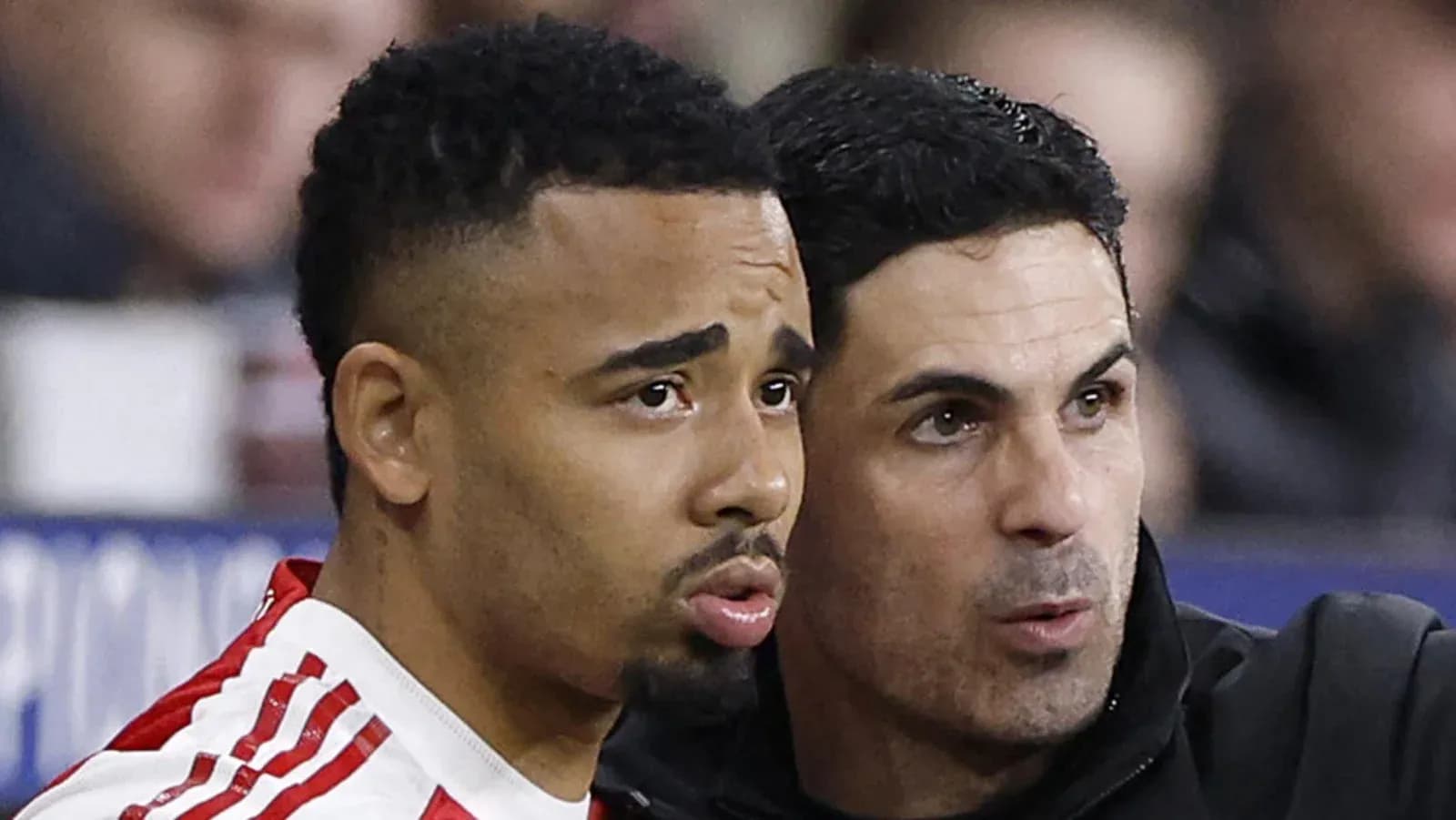
Mikel Arteta walked into his press conference this week knowing exactly what awaited him. Questions about tactics, injuries, title ambitions? Of course. But at the front of the queue stood something far more combustible: Gabriel Jesus and the narrative of a “bitter” Arsenal exit.
The headlines had already done their work. Arteta “fires back”. Arteta “hits back”. Arteta “shocked” by his former striker’s accusations. It sounded like a feud. It read like a feud. It wasn’t one.
Faced with claims that Jesus felt poorly treated as he moved on, Arteta did not swing. He steadied.
“Very surprised, to be fair,” he admitted. Then came the context that stripped the drama of its sting. “Especially because with Gabriel I had an individual talk in the dressing room. I don’t know what the words were said, it’s fine.
“And the words that we used for each other, it was all about gratitude. So, I don’t know, it’s okay. Sometimes I understand when you have to deliver bad news or news that people don’t expect. Those things are reactive. Somebody has to be there to be bad cop. If I have to be, I have to be. And I understand.”
That was the supposed eruption. No character assassination. No public dressing-down. Just a manager calmly explaining the reality of a difficult conversation that comes with elite football.
Arteta even pushed the story forward, away from the heat of the moment and into the longer view.
“What is important is normally what happens three months later, six months later, when Trossard comes in, he’s in the dressing room with all of us, the atmosphere and the relation you have. And thank God so far, with all the players that they left, at some point their relationship has been really good. I hope that’s the same case.”
This was not a man tearing into a former player. This was a manager protecting the fabric of his dressing room, reminding everyone that exits are rarely clean but relationships do not have to be scorched.
The contrast with the headlines was stark. “Fires back.” “Hits back.” “Blasts.” The language of outrage bolted onto the language of gratitude. Arteta spoke about understanding, about the role of the “bad cop,” about players reacting in the raw hours after bad news. The coverage spoke about a row escalating.
The same inflation of drama played out elsewhere across the week’s football narrative.
Mauricio Pochettino’s musings on the 2016/17 Premier League title – and whether Chelsea should be stripped of it and Spurs retrospectively crowned – inevitably triggered another round of noise. The Daily Mirror’s headline promised a big development: “Premier League responds after Mauricio Pochettino calls for Chelsea to be stripped of title.”
There was no mystery about how that would go. No governing body is about to rip up a decade-old title because a former manager feels his side were wronged. The “response” amounted to Premier League chiefs insisting they had not gone soft on Chelsea in the first place. Anything else would have been the real story.
Even that response, though, was not new. The quotes had been doing the rounds for weeks, dusted off and repackaged as fresh reaction. The illusion of escalation again.
On another back page, Boxing Day football made a return of sorts. Or, more accurately, the calendar did the heavy lifting. With December 26 falling on a Saturday, the schedule looks more like the traditional festive programme that many claimed had been “lost” when the fixtures drifted away from that date in recent years.
A familiar question reappeared with it. Was the “erosion” of an English football tradition ever permanent, or was it simply a convenient stick to beat the modern game with? When the dates line up, the old rituals tend to fall back into place without much help.
The week’s language stayed loud. On the Chelsea front, Christopher Nkunku was said to have “slammed” former Milan boss Ruben Amorim over his time in Italy. His actual words told a different story.
“Milan’s decision? It’s a choice that should be respected, but I don’t know why they acted that way. I was surprised. In any case, I wish them a good season. At Milan I didn’t have any injuries, but the vision of football was different from mine. So, as soon as the opportunity arose to come back here and play my football, I seized it.”
Respect. Surprise. A parting of footballing visions. Not exactly a verbal two-footed tackle.
Even Manchester City’s record at Old Trafford has been dragged into the theatre. Talk of a “hoodoo” sits awkwardly with the facts. City have not scored there since 2023, but they have only visited twice in that period. One of those games ended 0-0. The other was a defeat. Before that, they dismantled Manchester United 3-0.
Frustration? Certainly. A psychological block? Hardly.
Across all of it runs the same thread: a game built on fine details, wrapped in headlines that demand chaos. Arteta’s handling of Jesus, the Premier League’s stance on old titles, Nkunku’s reflections on Milan, City’s trips to Old Trafford – each story has its own nuance, its own temperature.
Arteta, for his part, chose to lower the temperature. He spoke about gratitude, about the long-term relationships that outlast the noise around transfers, about the reality that someone in his position sometimes has to deliver the news no player wants to hear.
If there is a battle here, it is not between manager and former striker. It is between the reality inside the dressing room and the version of events that plays better on a headline. As the season wears on and more big names move on, that gap will only get tested again.