Mike Dean Defends Refereeing Legacy Amid Controversy
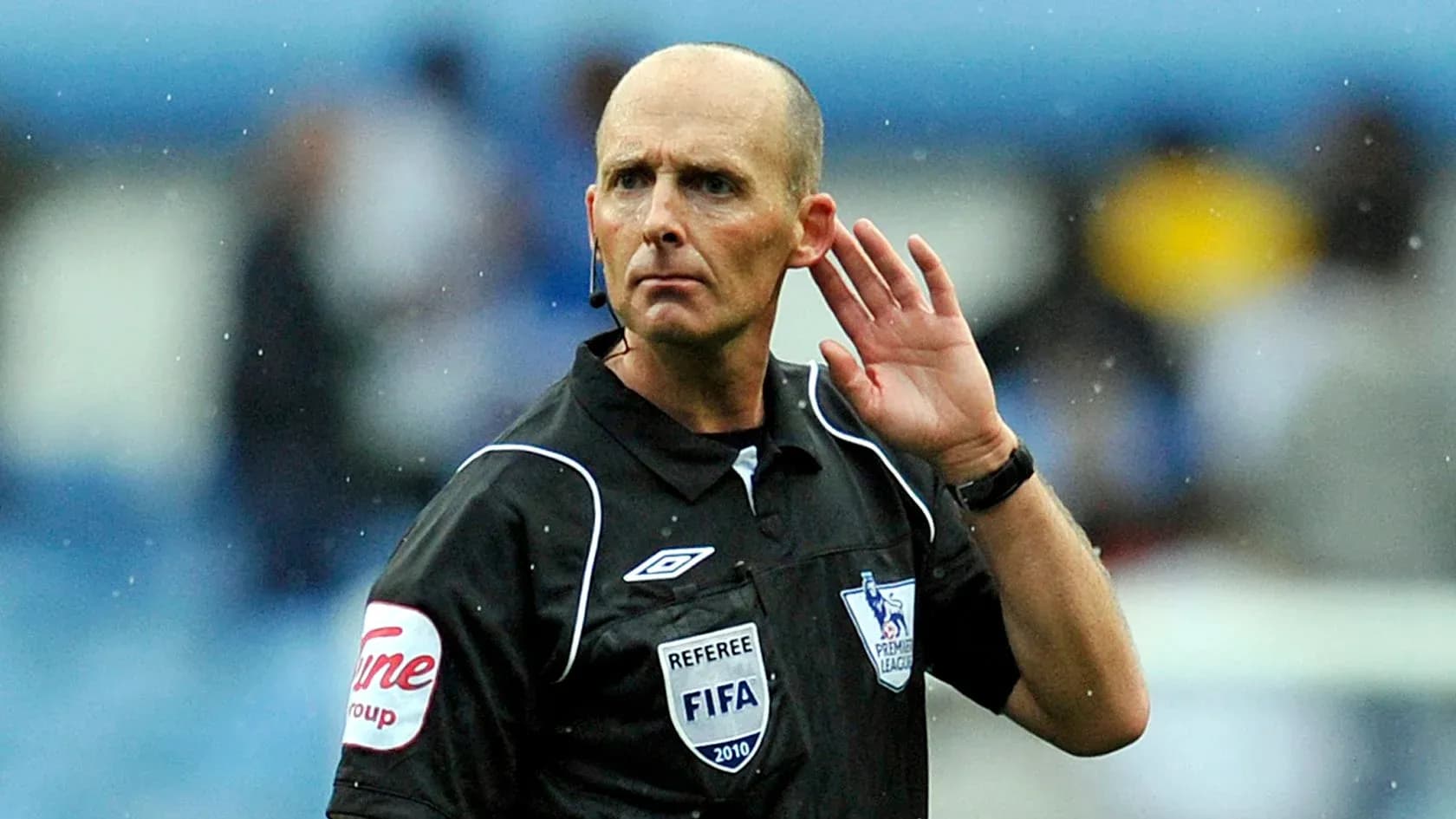
Mike Dean has attempted to steady the storm around his refereeing legacy after a week in which a throwaway podcast anecdote detonated into a full-blown Premier League controversy.
The former top-flight official, one of the most recognisable referees of the modern era, came under heavy fire after admitting on the Jamie Vardy's Having a Party podcast that he used to set himself private “challenges” during matches to keep himself entertained.
Those challenges, described by Dean as “a laugh”, included seeing how long he could go without blowing his whistle and testing how long he could stay inside the centre circle during play. The reaction was instant and fierce, with critics accusing him of treating elite fixtures as a personal game.
Stung by the backlash, the 56-year-old moved to clarify his comments with a statement on Instagram, insisting the remarks did not reflect how he actually officiated.
“Throughout my 25 years as a professional referee, I have always applied the Laws of the Game to the best of my ability,” Dean wrote. “My approach as a referee was always to allow the game to flow and whenever possible I preferred to apply a high threshold for contact which the players liked. However, if I saw a foul challenge that needed me to take the appropriate action I would give it from the correct position.”
It was a pointed attempt to draw a line between the caricature of a showman referee playing internal games and the reality of an official trusted with some of the biggest matches in English football.
The original podcast appearance painted a very different, far more casual picture. Dean openly described how he and his team would spice up long afternoons in the middle with private targets.
“There used to be games that we used to have, as a laugh,” he said on the show. “We used to say, ‘Right, we’ll kick off now, right? See how long we can go without blowing a whistle.’ Done that a few times in the Premier, before VAR obviously. Went 20–25 minutes without blowing a whistle a few times. Let it go, let it go, let it go.”
For many supporters, that was the line that jarred. Twenty minutes without a whistle in a league where every point is priceless? The idea alone was enough to ignite talk shows and phone-ins.
Dean then went further, revealing another of his on-pitch games: a self-imposed restriction on his movement.
“I used to do another thing in the Premier League,” he added. “I used to stand in the centre circle and see how long I could stay in the centre circle before I had to leave. That was just me joking about. The lads used to be on the line saying ‘you can’t’. I said ‘I’ll try it’. I just used to run around but don’t come out of it. Got about 15 minutes once in one game, without leaving the centre circle.”
Those quotes lit the fuse. In an era of microscopic scrutiny on referees, when a single missed call can dominate a news cycle and officials live under constant pressure, the idea that a referee might be indulging in personal dares during live Premier League matches struck a nerve.
Dean’s defence rests on context and tone. He insists the podcast stories were light-hearted, exaggerated reflections of a philosophy that prioritised flow, not a confession that he abandoned his duties.
The timing of his clarification underlines how quickly a nostalgic anecdote can turn toxic once it leaves the safety of a studio. For a figure who spent a quarter of a century enforcing the Laws of the Game, the battle now is not over a single decision or a controversial red card, but over how that long career will be remembered.