Mauricio Pochettino Reflects on World Cup Journey and Future Ambitions
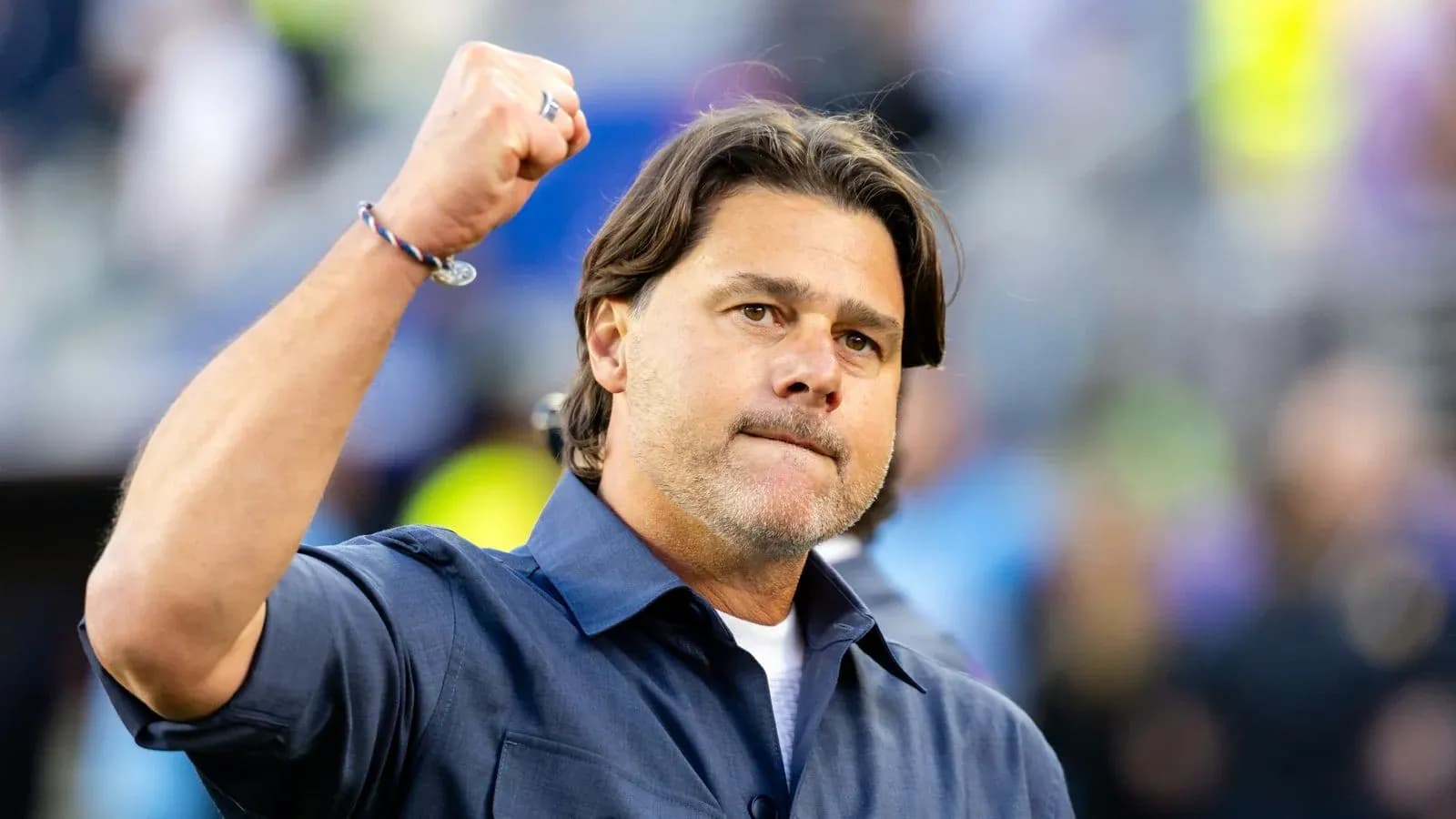
Mauricio Pochettino walks into the room like a man who has finally taken a breath. The hugs are genuine, the smile familiar, the stories flowing. Only his summer has not looked much like anyone else’s.
He has just taken the USA to the last 16 of a home World Cup, watched the dream shatter against Belgium and somehow found himself at the centre of politics, fashion, FIFA bureaucracy and transfer intrigue. Even by Pochettino’s standards, it has been a wild few weeks.
A World Cup that changed the coach
Ask him what he takes from the tournament and he doesn’t talk about tactics first, or pressure, or the chaos around him. He talks about learning.
“We are much better coaches now,” he says, and he means it. The World Cup has sharpened him. It has reminded him that in international football, with players drifting in and out of camp, the margins are even finer, the time even shorter, the details even more brutal.
He obsesses over those details. How to transmit complex ideas to a squad that does not live with him every day. How every decision, every selection, every tweak of shape can tilt a nation’s mood. “Everything needs to be perfect,” he says, and you sense that the pursuit of that perfection still drives him as hard as it did in his early days at Espanyol.
Now layer on the rest. Managing at a World Cup is one thing. Managing at a home World Cup with Donald Trump in the White House is another entirely.
Pochettino treads carefully when the subject of the former President comes up, choosing to highlight the support and backing Trump gave the team. The circus around it all, though, was unavoidable.
The Folarin Balogun saga is the clearest example. A suspension, then a suspension of that suspension. FIFA letters. Political noise. Accusations of manipulation. A storm building on the eve of a knockout tie.
Pochettino strips his own role back to something very simple. “If you pay attention to the noise, you become crazy,” he says. When FIFA’s confirmation finally arrived the day before the Belgium game, Balogun’s selection became, in his words, “straightforward”. The rest of it, the anger and the headlines, raged around him.
Balogun, a collapsed move and a careful distance
Balogun has not drifted far from the news since. His proposed Deadline Day move from Monaco to Everton collapsed late, leaving him stuck where he started and facing an uncertain club season.
Pochettino has not called. Deliberately. He knows how hard that kind of disappointment hits a player, how raw the days after a failed transfer can feel. He wants to give him space, even as he admits he would have liked to see the forward testing himself in the Premier League. For now, Balogun stays in Monaco, and Pochettino can only hope he finds the right rhythm again.
The touchline suit and an unlikely style icon
Then there was the suit.
Pochettino has always dressed with care, but even he could not have predicted what his navy touchline ensemble would trigger. Social media loved it. The fashion pages picked it up. Wayne Rooney went out and bought the exact look.
“I saw him,” Pochettino grins. “He looked good on him, like a top coach.” The laugh is loud, the pride barely disguised. In a summer of high tension, it was a lighter subplot, but it added to the sense that Pochettino had become one of the defining faces of the tournament.
Four more years with the USA
When the World Cup dust settled, the speculation started. A coach of his stature, freshly recharged on the biggest stage, was never going to be short of admirers. AC Milan were mentioned. Other clubs hovered. The usual carousel began to turn.
Then he stopped it.
Pochettino signed a new four-year deal with the USA, committing himself to the national team project until 2030. For a man whose reputation was built in the week-to-week grind of club football, six years away from that environment feels a long stretch.
Is that it for the Premier League then? The end of that story?
He shakes his head. Not even close.
“I have the ambition,” he says. “My dream now is to be in the USA for four years, but after that, why not? We are still young, and I think coming back is always my goal; to win the Premier League, to be in the Premier League and to build a project with the possibility of winning.
“I love the football here. I think to have the chance again is one of my wishes and I hope that happens.”
Spurs, unfinished business and the call that never came
The thought of coming back drags the conversation, inevitably, towards Tottenham.
Eighteen months or so ago, he spoke openly about wanting to return one day. Tottenham, at that point, were struggling under Ange Postecoglou. Since then, Postecoglou has gone, Thomas Frank and Igor Tudor have come and gone, and the club has flirted dangerously with the drop.
So did the phone ring? Was he ever close to a rescue mission?
“Always I say, one day, why not?” he replies when the idea of a Spurs return is raised. But when pressed on whether it was realistic this time, he is clear. “People talk and maybe we receive some approach, but it never was close.” Not this time. Not yet.
Other jobs, though, did seem to lurk in the background. AC Milan, for one, appeared a genuine option from the outside.
Pochettino insists he and his staff shut that down before it could develop. “We were not open during the World Cup to talk with different clubs that were interested,” he says. Were there clubs interested? “Yes, always,” he replies, as if that is simply the natural order of things. There were “different… options,” he teases, but none allowed to progress.
“We never gave the opportunity to be close. We always closed the door before it got close.” The USA project, for now, takes priority over everything else.
Watching Spurs from afar
From a distance, he watches Tottenham change shape again. The club he took to a Champions League final now operates in a very different way.
“They are investing like other clubs,” he notes. The strategy is clear: spend big on players who already know the Premier League, reduce the risk, shorten the adaptation curve. Pochettino, by contrast, worked with limited funds, developing talent, edging Spurs to the brink of something special without the kind of £300m outlay they now enjoy.
What would he have done with that sort of money? The mischievous smile returns. He pretends not to understand what £300m is, the joke landing because everyone in the room knows exactly how far he once stretched far less.
Will this new approach work? He refuses to dress it up. “You never know,” he says. “We need time to see if that works or not.
“Like in all the games, when you make a decision like a coach that can work well or not. I think it’s a different strategy and a different way to operate. I always wish the best for Tottenham because it’s in my heart.”
Chelsea, Xabi Alonso and a new direction
Across London, his other former club has also changed course. Chelsea have shifted from the head coach model he worked under to a more traditional manager role. Their recruitment has moved away from long-term projects towards Premier League-ready signings under Xabi Alonso.
Pochettino resists the temptation to draw direct lines between his time there and the current regime. What he does acknowledge is the shared ambition. If you buy players ready to perform now, you signal that you expect to fight for the Premier League. You expect to contend.
Chelsea’s defeat to Arsenal has already jolted expectations. Early optimism has met an early punch in the face. Pochettino’s message, though, is not to tear anything up.
“Of course they are disappointed after the defeat against Arsenal, but I think we need to give time to Xabi’s first season after three games in the Premier League,” he says. “I think we need to give time, and of course for Tottenham the same.”
Arteta and Arsenal at the front of the pack
Time, though, is a luxury that Arsenal no longer need to prove themselves. In Pochettino’s eyes, they are already the benchmark.
“Mikel [Arteta] is the best coach in the Premier League today,” he says without hesitation. He believes Arteta knows exactly what he has to do, and he is in no doubt about the scale of the task facing anyone trying to knock Arsenal off their current trajectory. “It’s going to be tough to beat them.”
So Pochettino waits. He builds with the USA, grows with his staff, leans into the international challenge. He refines his ideas, watches the Premier League from afar, keeps one eye on Tottenham, another on Chelsea, and both on the top of the table where Arsenal now sit in his estimation.
He has four years in America to work with. After that, the question will not be whether he is ready to return to England. It will be which club is truly ready for him.