Manchester United's Struggles: The Week of Reckoning
The week Manchester United stopped pretending everything was fine did not unfold at Old Trafford. It unravelled in Como.
Another early goal conceded. Another flat, confused performance. Another senior player stepping in front of the cameras and publicly questioning what is happening on the touchline. Seven games without a win in all competitions. This is not a wobble. This is a slide.
In the middle of it all, Michael Carrick delivered an extraordinary five-minute monologue in his pre-match press conference on Friday. No clichés. No deflection. Just a pointed appeal for humility and humbleness, fired straight at his own dressing room. It sounded less like a manager previewing Bournemouth and more like a man drawing a line in the sand.
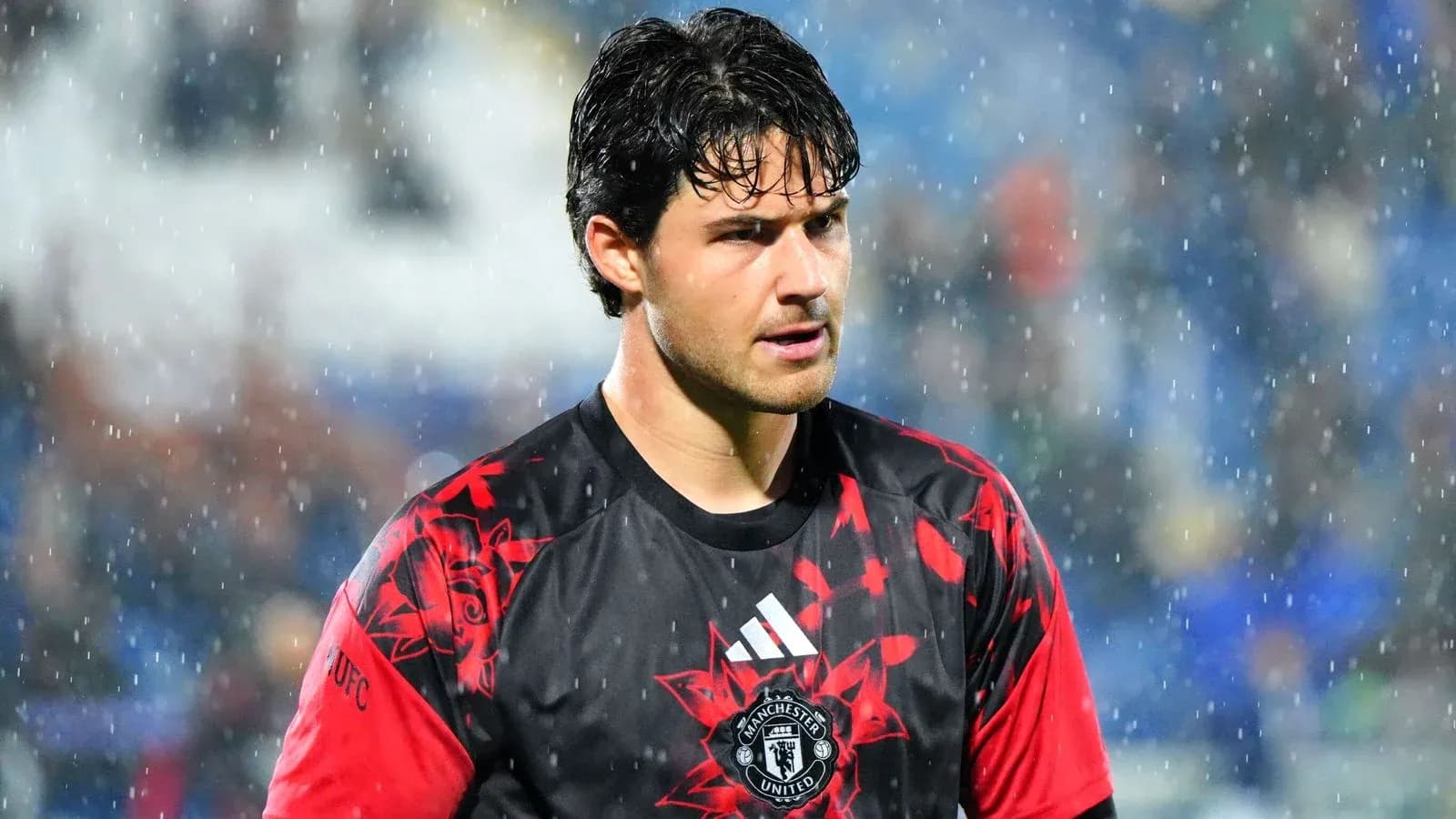
Inside that dressing room, Senne Lammens insists the line still holds.
“We’re all together behind the coach”
United’s No 1 sat down this week with the storm raging around him and, unlike some of his team-mates, chose not to aim upwards.
“For me personally, I think it is,” Lammens said when asked if the dressing room is united.
He knows how it looks from the outside: players frustrated, pointed post-match interviews, body language that screams division. Bruno Fernandes had just questioned tactics on live television. Lisandro Martinez had already taken aim at the club’s ambition the previous week. The narrative writes itself.
Lammens pushed back.
“I think it's easy to see maybe after a game when players are very frustrated, and I get it, I'm very frustrated as well because we all really want to do better and we all want to win and then we might say sometimes things we don't really mean or fully explain what we mean.
“Of course, the people at home can't see that, so we need to also try to look like that when we are on the pitch in the weekend, but I can assure you that we're doing everything we can and we're all together behind the coach, as a staff, players, front office.
“Everyone knows, of course, they have to do better, but I think we are united and we are trying to get better as a team and together.”
It was a calm, measured defence of a group that has looked anything but calm or measured once the whistle blows.
Early blows, broken plans
The pattern is now painfully familiar. United start slowly. United concede early. United chase.
Como scored within minutes. Atletico Madrid did it 60 seconds earlier the week before. Fulham and Spurs also had United on the back foot from the off either side of the international break. Only one clean sheet all season – away to Sabah on September 10 in the Champions League – underlines the problem.
“It's difficult,” Lammens admitted.
“We have to learn from that as well fast, because you can try to come up with plans and tactics, but if you get a goal against in the first or second minute, it kind of screws up a little bit your game plan and you're kind of chasing the game from then on.
“That's probably one of the biggest things we need to work on right now is to keep ourselves in the game and to try and get that first goal ourselves, instead of being 1-0 down straight away.”
He knows the criticism. That it should be an easy fix. That they should “just try harder”.
“I get people thinking it's an easy fix, or like, why don't you just try harder or something like that?
“Trust me, we are trying harder every day and trying to come up with a solution, but sometimes when it's not going your way, everything falls into place for the other team.
“You only need one performance to turn it around, and I think that's what we're trying to aim for and what we're working really hard on right now.
“As you mentioned, it's very easy to have narratives or stories and headlines and something that's been targeted at the team as well.”
The narratives are not coming from nowhere, though. United are on their worst run since 2014-15. Seven games without a win is not bad luck. It is a trend.
Carrick’s shift – and the confusion it brought
Carrick has, until now, been quick to shield his players. He has leaned into the responsibility of the role, absorbed the blows, talked about processes and progress.
Como changed that tone.
There was no sugar-coating. He admitted his side lacked aggression, intensity and running – the very traits that defined his first five months in charge, when United harried Chelsea, Arsenal and Manchester City into submission and punched their way into the Champions League places.
So what has changed?
Lammens offered a rare, honest glimpse into the tactical evolution that has left this team looking so uncertain.
“Last season I felt like, playing-wise, maybe we played sometimes better this season, but last season everything just clicked and went the right way for us.
“We struggled as a team together when they pressed us, but we didn't concede that many goals, and then I think as a counter team a bit more last season we did really well, but you also know, I think everybody knew that we had to improve as well from that, that teams were going to change the way they played against us.
“So that's why we had to evolve this season and in preseason, we tried to do some different things to get us in the best position to win games.”
United have tried to step up a level, to become a side that can control games with the ball rather than thrive only in chaos and transition. The problem? In searching for control, they seem to have misplaced their edge.
“I think we need a little bit more like last season, the way we fought together, even when it wasn't going the best and just trying to fight as a team and defend as a team, I think that's probably something we need to try to get back to.”
It is a revealing admission. United wanted to evolve. In the process, they have drifted away from the very identity that carried them back to the Champions League.
Fight, numbers and a fine line
Ask the supporters what has hurt most this season and many will land on the same word Lammens used: fight.
The running. The duels. The collective snarl. All the unglamorous work that defined last season has flickered only in patches.
“I get it, I see people talking about numbers and maybe stats and data, I'm not sure about that, because every game is a little bit different,” Lammens said.
“I think, like I said, with the ball we try to do a bit of different things, try to improve, because last season we weren't always the best with the ball. I think we have improved in those sort of things, but maybe the mindset of having the ball and trying to play around has that mindset of when you don't have the ball and try to fight for it the way we did last season.
“We need to get a bit of both. It is a fine line, to be honest, that aggressiveness. When you don't have the ball and when you have the ball, you want that calmness, that being able to play from the back and being able to play through the press. I think it's just finding that fine line in ourselves.”
That “fine line” is where United’s season now sits.
On one side: a team that can marry composure in possession with the ferocity that once made them such an awkward opponent. On the other: a side stuck between identities, easy to play against, quick to concede and slower to respond.
An emerging voice in a restless club
This has been a bruising spell for everyone at United. Senior players have gone public with their frustrations. The manager has felt compelled to question his squad’s humility. The run of results has dragged the club back into the sort of crisis conversation they thought they had left behind.
Amid that noise, Lammens did something simple and rare. He fronted up. He defended his manager without pretending the football has been acceptable. He acknowledged the tactical shift without hiding behind it. He talked about fight, about standards, about the need to rediscover what made them competitive in the first place.
It was not spin. It sounded like responsibility.
For Carrick, facing what has been described inside the club as a “pivotal” Bournemouth game, that might be the most important development of the week. Tactics can be tweaked. Systems can be adjusted. What he needs, more than anything, are players willing to own the situation and drag others with them.
If United are to stop this run before it defines their season, the next response cannot come from a press room monologue or another post-match interview. It has to come from the dressing room leaders who are only just starting to find their voice.