Manchester United's Left-Back Dilemma: A Risky Gamble
As the clock hit 23:00 BST on 1 September and the window slammed shut, the same question hung in the air around Old Trafford: what about a left-back?
For months, it had felt like the most obvious piece of Manchester United’s summer business. The 2025-26 season had barely finished before the debate began over Michael Carrick’s squad and its soft spots. One area kept coming back: the left side of defence.
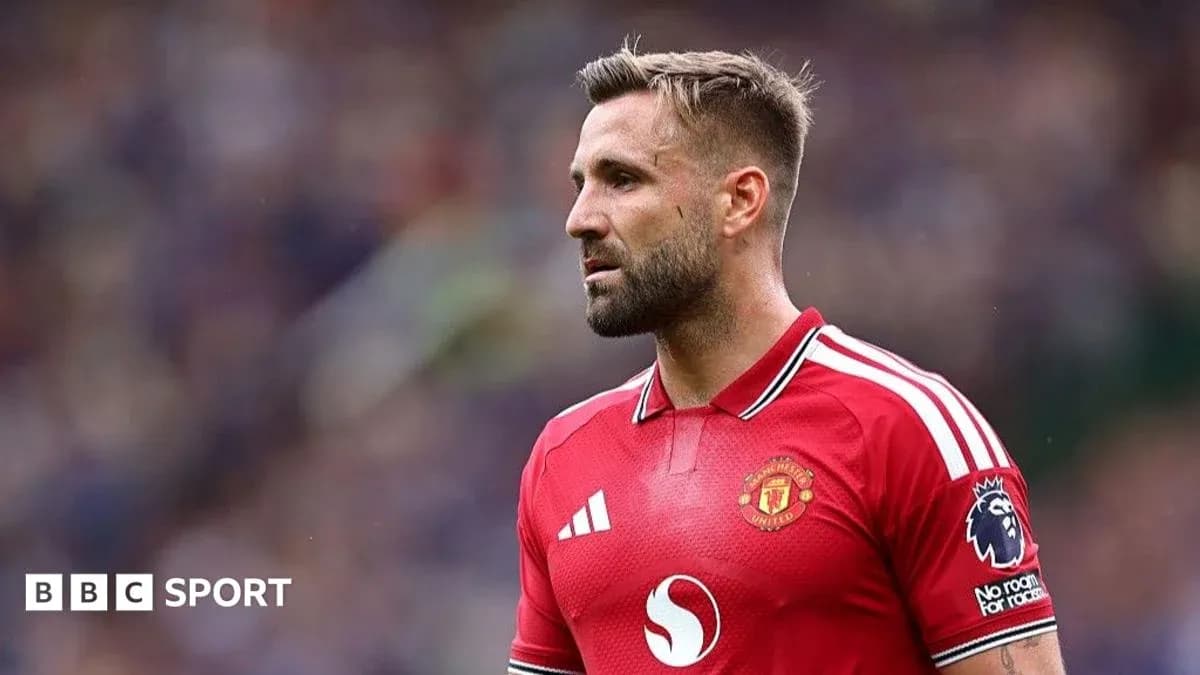
Luke Shaw remains the only senior, specialist left-back at the club. He started all 38 Premier League games last season, a remarkable effort given his history with injuries and setbacks. It was heroic. It was also unsustainable.
Tyrell Malacia’s exit at the end of June, when his contract ran down, only sharpened the focus. With Shaw now 31 and United staring at a season that could stretch beyond 60 games across competitions, a reinforcement felt less like a luxury and more like basic planning. Supporters, and many inside the club, expected movement.
Names came and went on the recruitment whiteboard. Lewis Hall at Newcastle. Alejandro Balde at Barcelona. Jorge Salinas at Racing Santander. At one stage, United even explored the idea of Rayan Ait-Nouri making the short, politically charged journey across Manchester, with a loan move from City.
City shut that door. Any deal, they made clear, would need to include an obligation to buy. United, who had already decided to keep their powder dry for their preferred long-term targets, stepped back.
The deadline passed. The window closed. And United, by design rather than neglect, are left with what can only be described as a calculated gamble.
Hall admired, budget spent
Inside Old Trafford, there is no ambiguity about Lewis Hall. They rate him. Highly.
Had Newcastle been open to a realistic deal, United would have pushed it through. But Newcastle, already stripped of key players by Premier League rivals this summer, knew what they had. Talks around the 22-year-old quickly made one thing clear: prising Hall away would require a huge fee.
United’s budget was not infinite. They had drawn a line early in the window on what they were prepared to pay, and for whom. When the numbers for Hall started to balloon, the club made a strategic call.
The priority lay in midfield. That was where they felt the squad most urgently needed surgery. The result was a £70m commitment to bring Carlos Baleba from Brighton, a move that swallowed a major portion of their available spend.
Hall, in the internal calculations, became a player worth waiting for. Next summer, not this one.
The same pattern repeated elsewhere. United would have taken Balde on loan; Barcelona only wanted to sell. Salinas’ release clause was relatively modest, but Atletico Madrid were in pole position and stayed there. By the time United circled back to Argentina defender Nicolas Tagliafico, they missed out again – and their own attention had already begun to drift.
So when an agent revived the possibility of Ait-Nouri late in the window, and United moved to test City’s resolve, it felt like a quiet admission: they were not entirely convinced by the path they had chosen.
A patchwork plan at left-back
Strip it back, and the plan looks like this.
Shaw remains first-choice left-back. Behind him, Carrick leans on Noussair Mazraoui as cover on that flank – a role he knows from Morocco duty – with Diogo Dalot capable of flipping sides if needed. Then comes Harry Amass, the academy left-back whose situation has baffled more than a few observers.
On paper, it is a mix of versatility, youth, and hope. On grass, it will be tested.
The Amass story is particularly curious. A natural left-back who progressed through United’s academy, he impressed on loan at Sheffield Wednesday last season before an untimely injury struck just after he joined Norwich in the winter window. This summer, at 19, he shadowed Shaw in pre-season and caught the eye with his composure and maturity.
Yet United were, at various points, open to letting him go.
The doubts are not new. In the summer of 2024, Erik ten Hag left Amass out of the Community Shield squad, despite the teenager having held his own against Mo Salah in a pre-season friendly in the United States just a week earlier. Ten Hag’s view then was blunt: physically, Amass was not at the level required.
Two years on, logic suggests he should be stronger, more robust, more ready. Clubs across Europe clearly think so. There have been repeated expressions of interest, and his absence from United’s Premier League 2 game against Leicester on Monday only fuelled the expectation that he would head out on loan before the deadline.
He did not. He stayed. And yet his precise role in the senior setup remains undefined.
Yoro’s emergence changes the picture
One reason United feel they can stretch Shaw and improvise behind him lies on the opposite flank.
Leny Yoro, signed from Lille in 2024 for £52m as a central defender, has spent most of this pre-season operating at right-back under Carrick. Against Ipswich on Sunday, he came on in that role for Dalot, at the same time Mazraoui replaced Shaw on the left. The pattern was not accidental.
Yoro is only 20. He is learning the nuances of the full-back role on the job. But he has the tools: pace, strength, comfort on the ball. United fans do not have to look far for a template. Josko Gvardiol arrived at Manchester City as a centre-back and has since flourished as a full-back in a system built on flexibility and risk.
United are gambling that Yoro can grow in similar fashion, that Mazraoui can slide across when required, that Dalot’s adaptability and Amass’s potential can cover the gaps. It is a web of contingencies rather than the clean, specialist signing many expected.
A risk they are willing to own
This is not a club asleep at the wheel. It is a club that has chosen, quite deliberately, not to repeat past mistakes.
The hierarchy has spent the summer taking a hard line on fees, refusing to be dragged into paying more than they believe a player is worth. Recent history has given them enough cautionary tales. Alex Telles. Matteo Darmian. Sergio Reguilon. All arrived as plug-in solutions at full-back. None came close to the standard required for a team with United’s ambitions.
That is the backdrop to this window. They would rather carry a risk in one position than add another name to that list.
On a spreadsheet, it makes sense. In the calm of the training ground, with sports scientists mapping workloads and analysts plotting rotations, it probably looks like the right call.
But football does not live on spreadsheets. It lives in the chaos of a December schedule, in the moment Shaw feels a hamstring tighten, in the away days where a makeshift full-back is suddenly exposed under pressure.
United have made their bet. Over the next few months, the fixture list will decide whether it was bold judgement or avoidable folly.