Manchester United's Goals Flowing Amid Defensive Woes
Manchester United have finally rediscovered the goal touch. Seven scored across two Premier League games against Ipswich Town and Everton suggest an attack beginning to hum under Michael Carrick.
The problem sits 60 yards further back.
Three league games into the new season and United have conceded two goals in each of them. It is not just a worrying habit; it is a statistical throwback to some of the club’s most unstable eras.
Goals Flowing, Nerves Exposed
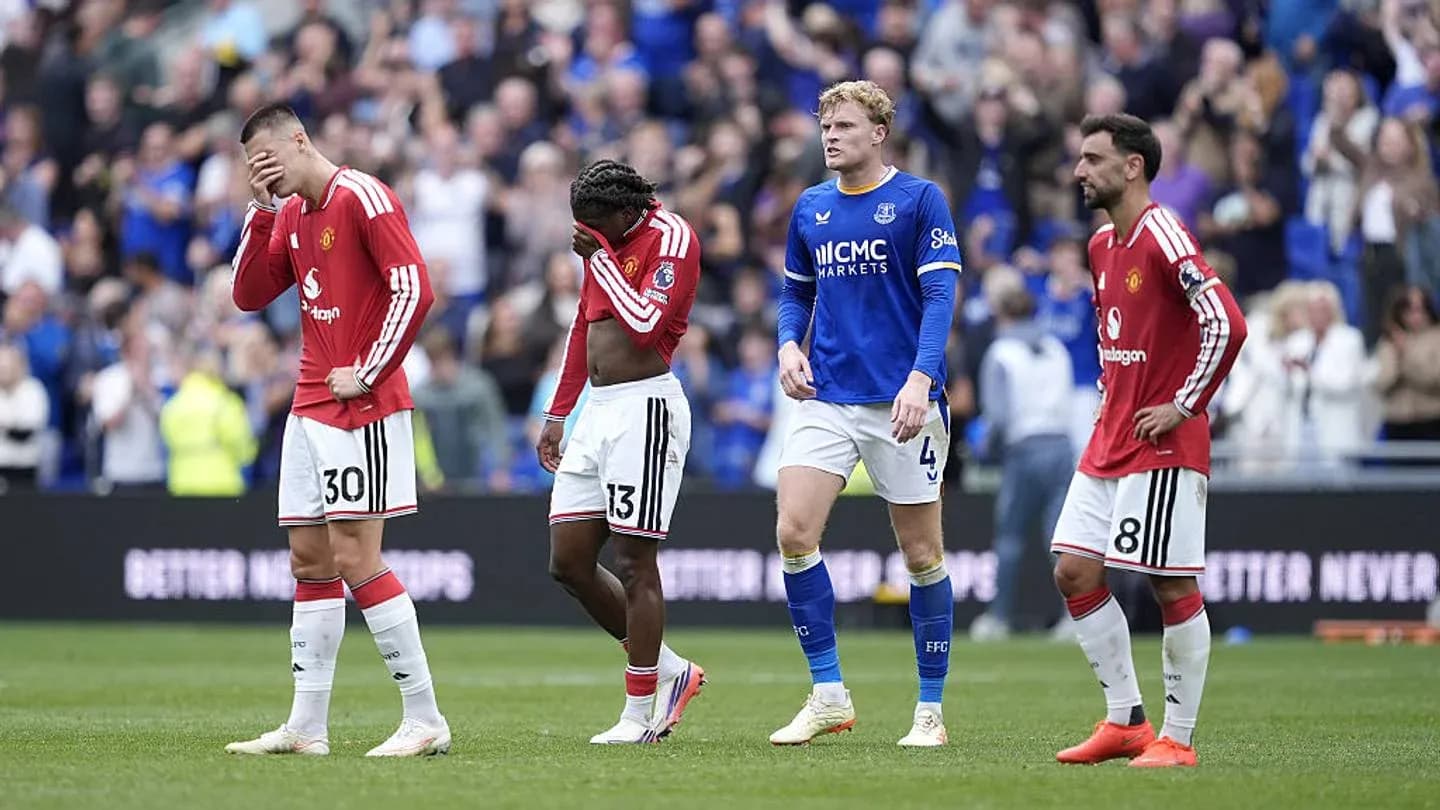
The contrast is stark. At Old Trafford, Ipswich were swept aside 5–2, a scoreline that looked emphatic enough to gloss over the two goals conceded. At Goodison Park, United twice led but still walked away with a 2–2 draw after Everton snatched a 96th‑minute equaliser. On opening weekend, Hull City cut through to win 2–0.
Seven scored. Six conceded. Three games, three times breached twice.
For a club that has built its greatest sides on a ruthless spine as much as attacking flair, this is the kind of pattern that sets alarm bells ringing, even with the front line firing.
Carrick knows it. He has called it “little moments we can deal with a bit better,” but the numbers are already writing their own story.
A Rare, Unwanted Pattern
This is only the second time in the Premier League era that United have let in at least two goals in each of their first three matches. The last time came in 2020–21, under Ole Gunnar Solskjær, when the season began with a 3–1 home defeat to Crystal Palace, a chaotic 3–2 win at Brighton & Hove Albion and a brutal 6–1 humiliation by Tottenham Hotspur. Eleven conceded in three games. Chaos disguised, at times, by individual brilliance.
Before that, you have to leave the modern Premier League landscape altogether and step back more than 50 years.
In 1972–73, United opened the campaign with a 1–2 home defeat to Ipswich Town, followed by a 2–0 loss at Liverpool and another 2–0 reverse at Everton. It was a bleak start in a bleak period. Four years earlier, they had been champions of Europe. Two years later, they would be relegated. Bobby Charlton and Denis Law were in their final season, George Best was sliding towards the exit, and manager Frank O’Farrell would be gone by Christmas.
That is the historical company this current defensive wobble keeps.
The club has seen similar fragility at the start of seasons only a handful of times in the last six decades. In 1969–70, United shipped two or more in each of their first three league games: a 2–2 draw with Crystal Palace, a 2–0 defeat to Everton, and a 4–1 loss at Southampton. Go back further to 1964–65 and they did it again, drawing 2–2 with West Bromwich Albion, losing 3–1 to West Ham United and drawing 2–2 with Leicester City.
That 1964–65 side, under Matt Busby, still went on to win the title. Leaky beginnings do not automatically condemn a season. But in the modern Premier League, where margins at the top are razor-thin, they leave you chasing, not controlling.
Carrick’s Balancing Act
Carrick’s diagnosis is pointed without being panicked. Against Hull, set pieces were the glaring flaw. Against Everton, it was two long‑range strikes, the kind that often sail over or into the keeper’s arms but on this occasion arrowed into the top corner.
“The mentality is there,” he insisted. The issue is not desire. It is detail.
Yet those “little moments” are adding up to something larger. Each goal conceded shifts pressure onto the forwards to produce, again and again, just to keep United in games. That is not a sustainable way to live in a title race.
Last season laid that out in black and white. United scored 69 league goals, almost identical to Arsenal’s 71. The difference came in their own box: 50 conceded compared to Arsenal’s 27. The gap in the table? Fourteen points.
You can outscore problems for a while. You do not win championships that way.
Old Truths, New Demands
United’s current vulnerability feels unusual partly because the club has spent decades trying to grow away from the wild, open football of English football’s earlier eras. In the 1960s, 3‑2‑5 systems and forward-heavy line‑ups made high‑scoring shootouts common. Even under Busby, United could start a title‑winning season by conceding freely.
This is not that game anymore. Tactical systems are tighter. Top sides squeeze space, suffocate transitions, and build campaigns on defensive reliability as much as attacking flair. When a club of United’s stature starts a season conceding at this rate, it stands out in a way it did not half a century ago.
Carrick is not searching for a magic switch. There is no single culprit to exile, no one structural tweak that instantly seals the gaps. Set‑piece organisation, pressure on the ball around the box, the timing of the press, the protection in front of the back line – these are collective responsibilities.
That is why he framed it as something “we need to get better at as a team.” Not just the back four. Not just the goalkeeper. Everyone.
A Familiar Warning
The numbers are clear. Three games, six conceded, history creeping into the conversation far earlier than anyone at Old Trafford would like.
The goals at the other end are encouraging, even exhilarating at times. But United have been here before: seasons where attacking verve masked structural cracks until the pressure of a title race or a top‑four chase exposed them completely.
Right now, Carrick’s side sit at a crossroads already. Does this become another season where the forwards are asked to rescue games every week? Or is this the moment United finally turn those “little moments” into the kind of defensive steel that decides where the trophy ends up in May?