Manchester United's Defensive Woes Continue Against Everton
Manchester United let it slip. Again.
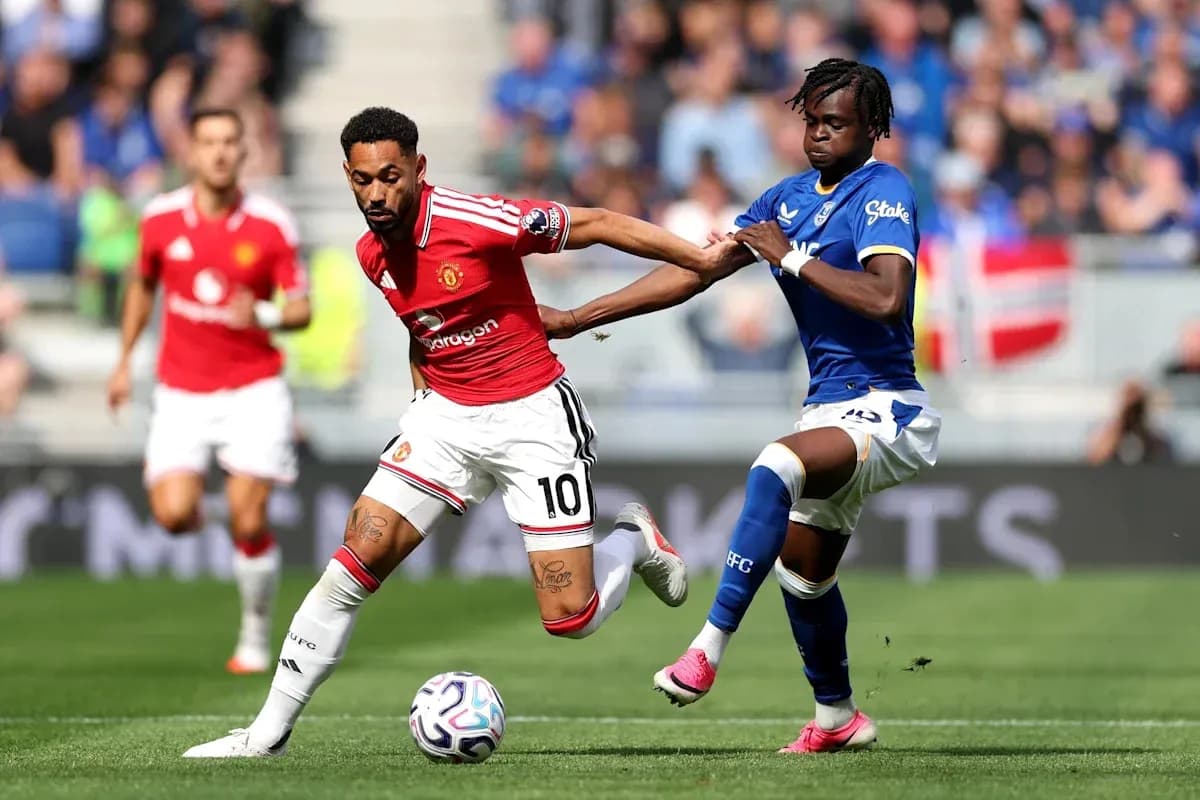
Twice in front at Everton, twice pegged back, and once more walking away from a winnable game wondering how a decent performance turned into another two goals conceded and two points dropped. The pattern is already depressingly familiar, three games into the season.
This wasn’t a side overrun or outclassed. United played well in long stretches, stitched together a sharp first half, and twice found a way to strike after restarts. They had control of the story. They just couldn’t write the ending.
All the approach, none of the finish
In attack, United moved the ball with purpose. Three creative forwards dragged Everton around, found pockets, and opened up lanes. The build-up often looked slick. The final act did not.
Too often, promising moves died on the edge of the box. Runners didn’t arrive in the right zones, crosses flashed through empty areas, and the ball never quite found a player in a truly dangerous position. The structure was there; the penalty area presence was not.
That’s the gap Benjamin Sesko is supposed to fill. His late header, climbing to meet a Luke Shaw cross and steering it home in the 88th minute, looked like the decisive contribution of a proper No 9. If he can stay fit, he offers exactly the kind of movement United have been missing. Bryan Mbeumo’s return to a central striking role could help too, giving United another option who naturally attacks space in the box.
On the right, the absence of Amad is starting to bite. Without him, the balance of the front line shifts. Shea Lacey is gifted but not yet ready to carry that responsibility week after week, and there’s little indication that Matheus Cunha will be redeployed as a right winger. United are improvising in a key attacking lane, and it shows when they try to turn dominance into goals.
Still, two goals away from home should be enough to win. It isn’t, because the problems at the other end are louder.
A back four that never settles
Six goals conceded in three games against Hull City, Ipswich Town and Everton tells its own story. None of those sides are renowned for relentless attacking firepower. All of them have scored twice against Manchester United.
At Goodison, the back four never looked secure for long. Even when United led 1-0 for most of the second half, there was a sense the dam could crack at any moment.
Luke Shaw, under scrutiny after two poor outings to start the season, actually produced a better performance. He overlapped Marcus Rashford with intent, delivered several dangerous crosses — including the one Sesko buried — and threw himself in front of shots. Yet his recurring flaw resurfaced at the worst time.
For Tyrique George’s 83rd-minute equaliser, Shaw drifted too far inside, leaving George the channel he wanted on the left. The Everton forward needed no second invitation, smashing a vicious effort into the near-post top corner. Arne Lammens got a hand to it and might feel he should have done more, but the ball still ripped into the net. United’s shape had broken down again, and they paid for it.
Shaw wasn’t alone. Harry Maguire, Lisandro Martinez and Diogo Dalot all had moments they will want back. Maguire completely lost Thierno Barry on a 42nd-minute header that really should have been an Everton goal. Dalot tried to hack clear in first-half stoppage time and instead passed the ball straight to Jarrad Branthwaite, who fired tamely at Lammens. Later, a badly mishit Dalot cross in midfield turned into a turnover that left Shaw and Martinez scrambling to recover against Brennan Johnson, just about managing to deflect the danger over the bar.
These aren’t isolated slips. They’re part of a wider defensive picture that never quite looks in control.
Sitting back, paying the price
The most worrying spell came with United in front. Protecting a 1-0 lead, they retreated. Everton grew. The ball stopped sticking to red shirts. Possession swung heavily towards the hosts.
United didn’t just manage the game; they surrendered it. They allowed Everton to pile on pressure, recycle attacks and keep testing a back line already short on confidence. When you invite that many waves, you invite spectacular goals too.
Once George levelled, Michael Carrick reacted, changing both full-backs. Noussair Mazraoui came on at left back, Leny Yoro on the right. The idea was clear: fresh legs to close down the flanks and see out the game. The effect was the opposite.
Mazraoui immediately lost track of George in the 90th minute, allowing another near-post effort that Lammens saved. The flag went up anyway, but the warning lights flashed brighter. United didn’t heed them.
Five minutes into stoppage time, with the last attack of the match, Everton carved them open again. Hayden Hackney glided past Yoro far too easily down the right. The cutback found Kiernan Dewsbury-Hall, Mazraoui swung at the clearance, and the ball fell perfectly to Ainsley Maitland-Niles. What followed was outrageous: a Puskas-level strike lashed into the top corner to rescue Everton and rip two points out of United’s hands.
Carrick’s substitutions at full-back didn’t work. Yet given how Dalot and Shaw had defended earlier, it’s fair to ask whether leaving them on would have changed anything. The deeper concern is that whoever plays, the same issues keep surfacing.
Structural flaw, not just bad days
The criticism of the full-backs is not just about individual errors. It’s about what happens to the entire defensive unit when they push on and can’t recover.
Shaw can still deliver quality in the final third, but he no longer has the recovery speed to bail himself out when caught high. Dalot faces a similar problem on the opposite flank. When both step up, the centre-backs are left trying to cover huge spaces, exposed to runners and long diagonals. Any opponent with pace and a plan will see the opportunity.
United did a lot of work on the midfield in the summer and it shows in spells of controlled possession and improved chance creation. The front line, even with gaps, carries genuine threat. The balance of the squad, though, still feels off. The defence looks like the afterthought in a rebuild that focused heavily on the middle of the pitch.
Matthijs de Ligt’s looming return from a long layoff offers one potential solution, but not a complete one. A single centre-back, no matter how accomplished, cannot fix full-backs who are constantly exposed or a collective tendency to drop deeper and deeper when protecting a lead. Ayden Heaven’s name will inevitably come up as calls grow for new blood at the back, yet throwing in youth only helps if the structure around him makes sense.
Three games. Six goals conceded. A back line that never truly convinces. And now, the Champions League on the horizon.
United can talk about positives — the sharper midfield, the flashes from Sesko, the attacking combinations that suggest goals will come. But until the defence stops giving up chances and spectacular late equalisers, those positives will always feel like decoration on a fragile frame.
The question isn’t whether they can score enough this season. It’s whether this defence will let any of it matter.