Manchester United's Decline: A Decade of Mismanagement
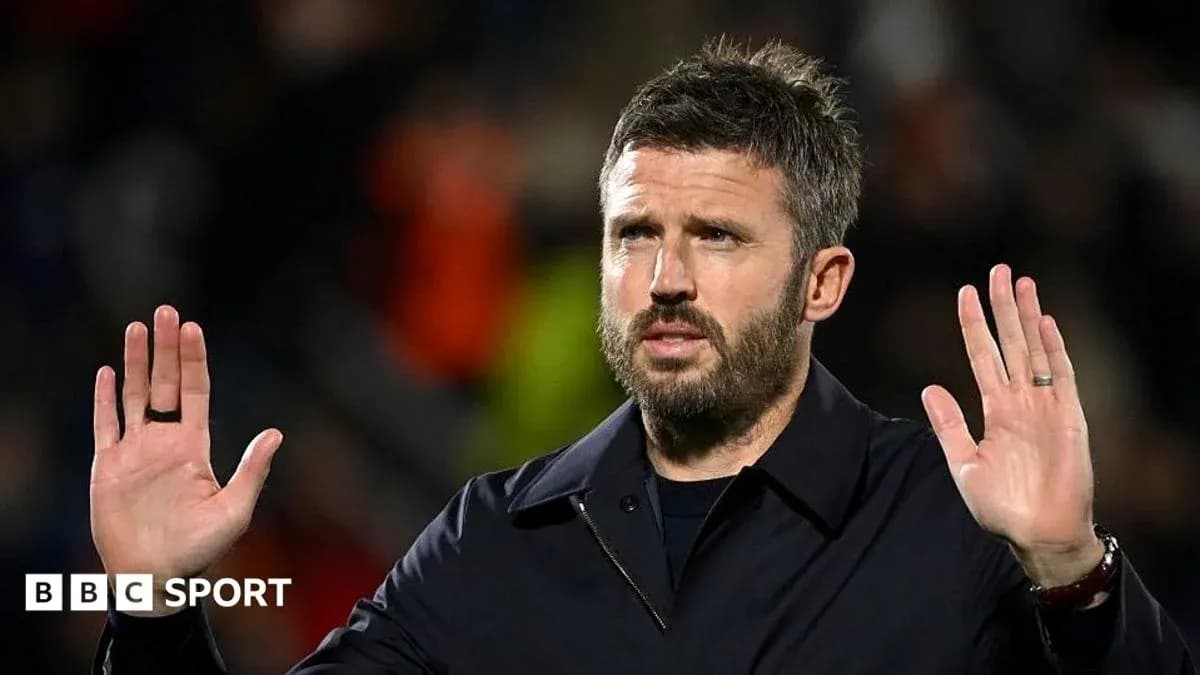
Michael Carrick stood alone, palms raised in apology, framed by a scoreboard that has become a symbol of Manchester United’s modern decay: 4-1. Again.
The scene at Como in the Champions League was a near-perfect replica of Watford in November 2021, when Ole Gunnar Solskjaer walked towards the away end, broken, after the same scoreline sealed his fate. Different ground, different era, same ritual. Another manager swallowed by the job that used to define greatness.
Carrick is the seventh full-time appointment since Sir Alex Ferguson walked away in 2013 with 38 trophies and an aura that still hangs over Old Trafford like a ghost. Every successor has been sold as a solution. Every one has ended in dismissal.
This feels worse. Not just because of the results, but because of the noise coming from inside the building.
A dressing room cracking in public
Carrick’s position already looks untenable. United are losing games and, more damagingly, losing faith in each other.
Lisandro Martinez turned his anger upwards after the Champions League defeat at Atletico Madrid, aiming his frustration at director of football Jason Wilcox. Bruno Fernandes then went public with his concerns over tactics after the humiliation in Como. When senior players stop protecting the structure and start questioning it, the rot is no longer hidden.
This is not simply a team out of form. It is a club at war with itself.
So the question lingers: how many times can United pin this on the man in the dugout? How often can the cameras pan to another crestfallen manager in front of the away end before the lens finally shifts higher, to those who keep hiring and firing?
At what point does Manchester United stop being a badly managed club and start being an unmanageable one?
A decade of answers, all wrong
The roll call since Ferguson is long and damning: David Moyes, Louis van Gaal, Jose Mourinho, Solskjaer, Erik ten Hag, Ruben Amorim and now Carrick. Around them, a carousel of interims – Ryan Giggs, Ralf Rangnick, Ruud van Nistelrooy, Darren Fletcher – each handed the keys briefly, none able to change the direction of travel.
The executives in charge, from Ed Woodward to the Glazer family and now Sir Jim Ratcliffe, have tried almost every managerial archetype in the game.
Moyes, the chosen heir, arrived from Everton and found the scale of United suffocating. Van Gaal and Mourinho came with medals and reputations forged at Europe’s superclubs. Solskjaer was the romantic appointment, the anti-Mourinho, hired off the back of a feelgood interim run rather than a compelling CV. Ten Hag rode in on the wave of Ajax’s thrilling Champions League semi-final side. Amorim was the bright young thing from Sporting, the hottest name on the European coaching circuit.
All of them, in the end, were spat out.
There were trophies along the way. Van Gaal’s FA Cup in 2016. Mourinho’s League Cup and Europa League double in 2017. Ten Hag’s FA Cup win over Manchester City in 2024, a day that was supposed to be a turning point.
They are crumbs compared to what came before.
The succession that never was
United did not collapse overnight. This has been a long, slow slide, set in motion the moment the club botched the handover from Ferguson.
Carlo Ancelotti, Pep Guardiola, Jurgen Klopp – three of the defining coaches of this era – all resisted Old Trafford. In December 2019, all three were working within 35 miles of each other in the north-west. None of them worked for United.
Ancelotti was at Everton. Guardiola at Manchester City. Klopp at Liverpool. United, by contrast, had Solskjaer, the sentimental choice who lasted less than three years and left with the sense that the job had been too big for him and the structure around him too flimsy.
Now it is Carrick who looks like Solskjaer Mark II.
Another beloved former player. Another caretaker bounce turned permanent deal. Another manager whose only previous full-time role ended in a sacking in the Championship, this time at Middlesbrough. Solskjaer carried the same scar from his short, unhappy spell at Cardiff City.
United have turned nostalgia into a hiring strategy. The bill keeps arriving later.
Has it ever felt this bleak?
The questions grow louder with each defeat. Since 2013, has it ever felt worse than this? Has the mood ever been this flat, the hope this thin, the anger this entrenched?
United will always be able to find a manager. The name still carries weight. But the job is no longer the irresistible summit it once was. The best in the world can now look at Old Trafford and see risk, instability and the near-inevitability of a messy exit.
Any elite coach would also see a squad that needs major surgery and a project that demands heavy investment. There is no guarantee that even the most decorated manager could fix this quickly – or at all – without a vast financial outlay.
Carrick, for now, is the one out front, the face of a failing operation. On current evidence, he will be the one to pay. His appointment already feels like a repeat of the Solskjaer mistake: the comforting choice after Champions League qualification, the popular figure in the stands whose goodwill has evaporated under the glare of results.
The responsibility, though, stretches far beyond the technical area.
Power, protest and paralysis
The Glazer family have been the constant thread in this decline. Since their leveraged takeover in 2005, United fans have marched, chanted and protested against the debt, the dividends, the direction. The owners have stayed put, insulated from the fury.
Ratcliffe’s arrival as part-owner, hailed by some as a fresh start, has only complicated the picture. His partnership with the Glazers has turned significant parts of the fanbase against him as well, folding him into the same narrative of mistrust.
Running a football club, Ratcliffe has discovered, is not like running a petrochemicals empire. He has talked about delegating football decisions to Wilcox and chief executive Omar Berrada, yet instability has followed him into Old Trafford.
The Ten Hag saga is the most glaring example. United were ready to sack him before the FA Cup final against City. He won, stayed, received a contract extension and around £200m to reshape the squad. Six months later, he was gone, with a pay-off of more than £10m for him and his staff.
Financially reckless. Football-wise, disastrous. A club with no conviction in its own decisions.
Then came the Dan Ashworth debacle in 2024. United fought to bring in one of the most respected sporting directors in the game, finally landing him from Newcastle United after a lengthy spell on gardening leave. Five months after he officially started, he was out.
The optics were brutal. Ashworth spent as long waiting to join United as he did actually working for them.
Theories swirled. Some suggested he carried the can for Ten Hag’s stay of execution. Others claimed he clashed with the club’s preferred direction, favouring English options like Graham Potter and Gareth Southgate over Amorim.
United chose Amorim. His rigid commitment to a 3-4-3 system had already cooled Liverpool’s interest as they turned to Arne Slot. At Old Trafford, that tactical obsession quickly became a flaw that defined his reign.
Fourteen months later, Amorim was gone too, leaving with a final blast at the hierarchy and a bitter confrontation with Wilcox.
A club cutting costs and losing trust
By the time Carrick walked through the door, the mood around Old Trafford was already sour.
Ratcliffe’s aggressive cost-cutting had stripped out staff and eroded internal morale. “Efficiencies” became a euphemism for departures and uncertainty. On the terraces, resentment hardened.
This summer, relations with supporters took another hit when United launched a ticket-touting investigation. The club underestimated how many fans shared account details and initially threatened season-ticket confiscations for those who did not respond as demanded. After a backlash, some of the harsher language was softened, but officials still defended the operation.
On the pitch, the football has been flat. Off it, the numbers tell a story of strain and contradiction.
Overall debt remains at £1bn, despite Ratcliffe’s drive to cut costs. United did post record revenue of £678m and a £23m operating profit, even without European football for the first time in a decade – a remarkable swing from the £113m loss in 2023-24. They also spent £64m on land for a new stadium, with Ratcliffe determined that a 100,000-capacity arena, projected to cost more than £2bn, will be his legacy.
The ambition off the field is vast. The execution on it is chaotic.
An empire drifting into the distance
Strip away the noise and one truth remains: a decade of bad decisions, backstage and on the grass, has left Manchester United poisoned by its own cocktail of ego, nostalgia and misjudgment.
Carrick may be the next to fall. He almost certainly will not be the last.
While United churn through managers and sporting directors, the clubs they still like to call their rivals are not just pulling away. They are disappearing over the horizon.
The question now is brutal and simple: who, in their right mind, would look at this job and believe they can be the one to tame the beast that has already devoured everyone else?