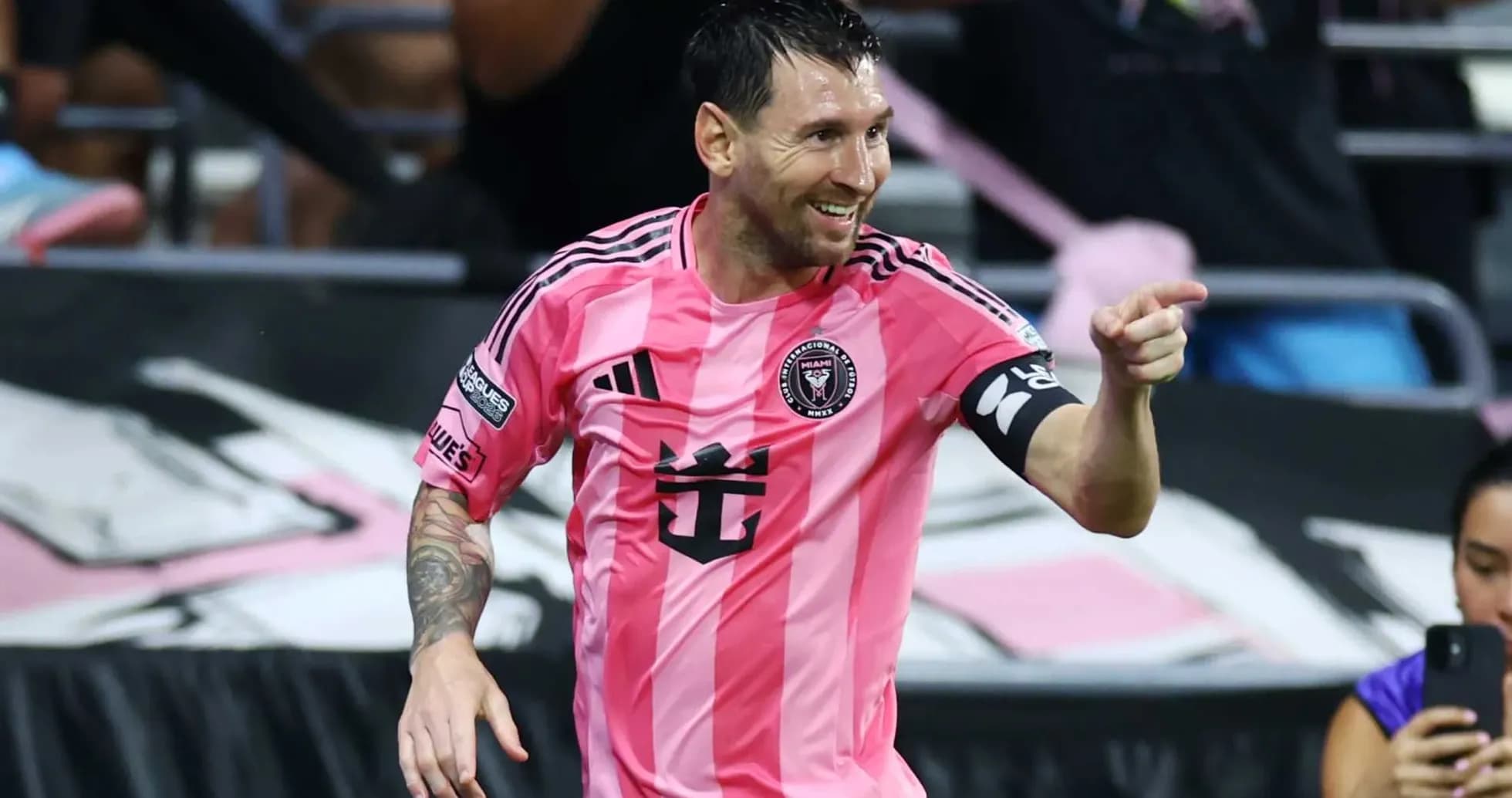
Lionel Messi Set to Become Owner of Eldense in Spanish Football
Lionel Messi is poised to swap the penalty area for the boardroom in Spanish football.
According to Spanish daily Marca, the Argentine icon has reached a preliminary agreement to buy Eldense, a freshly promoted Segunda División club based in Elda, in the province of Alicante. If completed, the deal would hand Messi 100% of the club’s shares, with no third-party investors involved.
This is not a one-off experiment. It is the second step in a clear strategy.
Earlier this year, Messi moved into Spanish football ownership by acquiring Cornellà, a Catalan club in the third tier. That purchase planted his flag back in a region that shaped his career. Eldense would deepen that presence, stretching his influence south along the Mediterranean, closer to where he intends to settle once his playing days at Inter Miami are over.
The idea driving the project is straightforward: Messi wants to invest his legacy back into the game. Not as a figurehead. As an owner.
A club in turmoil, a star at the door
Eldense arrive at this turning point with more problems than points.
On the pitch, the start to life in the second division has been brutal. Two points from four league matches, no wins, and the first managerial sacking of the Segunda season. Coach Claudio Barragán was dismissed last Monday, leaving the club without a replacement on the bench and without a clear direction on the field.
Off the pitch, the picture is more fluid than chaotic.
The club has already experienced one major change of hands in recent years. In October 2015, an international investment group with Colombian roots, led by businessman Juan Carlos Trujillo, bought Eldense from Pascual Pérez. That move was meant to stabilise and modernise the institution.
Speculation has swirled again in recent months. Argentine businessman Ricardo Beni had been strongly linked with a takeover worth around 12 million euros. His name circled the club, but never landed. Now, Messi’s name has returned with far greater force and a far clearer path.
Legal checks, sporting questions
The agreement, for now, is preliminary. Completion hinges on the usual final steps: legal and contractual sign-off, financial due diligence, and the green light from Spain’s National Sports Council. Those procedures are expected to conclude in the coming days.
Only then will Eldense officially pass into the hands of one of the greatest players the sport has ever seen.
The timing is striking. While Messi continues to play at the elite level with Inter Miami, he is already shaping his post-retirement footprint in Europe. Eldense’s location is no coincidence. Elda sits relatively close to Catalonia, where Messi plans to live once he hangs up his boots. His business map is starting to mirror his future personal one.
For Eldense, the prospect is transformative. A club fighting to find its feet in the second division could suddenly be fronted by a global superstar with the resources, reach, and football knowledge to change its trajectory.
But the immediate questions are brutally simple.
Who will coach the team? How quickly can a new sporting structure be built around a squad struggling to adapt to the demands of the Segunda? And how will Messi’s ownership model balance long-term project building with the short-term urgency of staying in the division?
The signatures and approvals may be days away. The real work, if the deal is sealed, starts the moment Lionel Messi becomes not just a legend of Spanish football, but an owner within it.