Kylian Mbappé: The Unapologetic Superstar's Case for the Ballon d'Or
Kylian Mbappé walked into Real Madrid’s Champions League curtain-raiser week with something more than his usual electric stride. He brought a statement.
He believes he is the best player in the world. He believes he should win the Ballon d’Or. And he’s not hiding behind the usual pleasantries to say it.
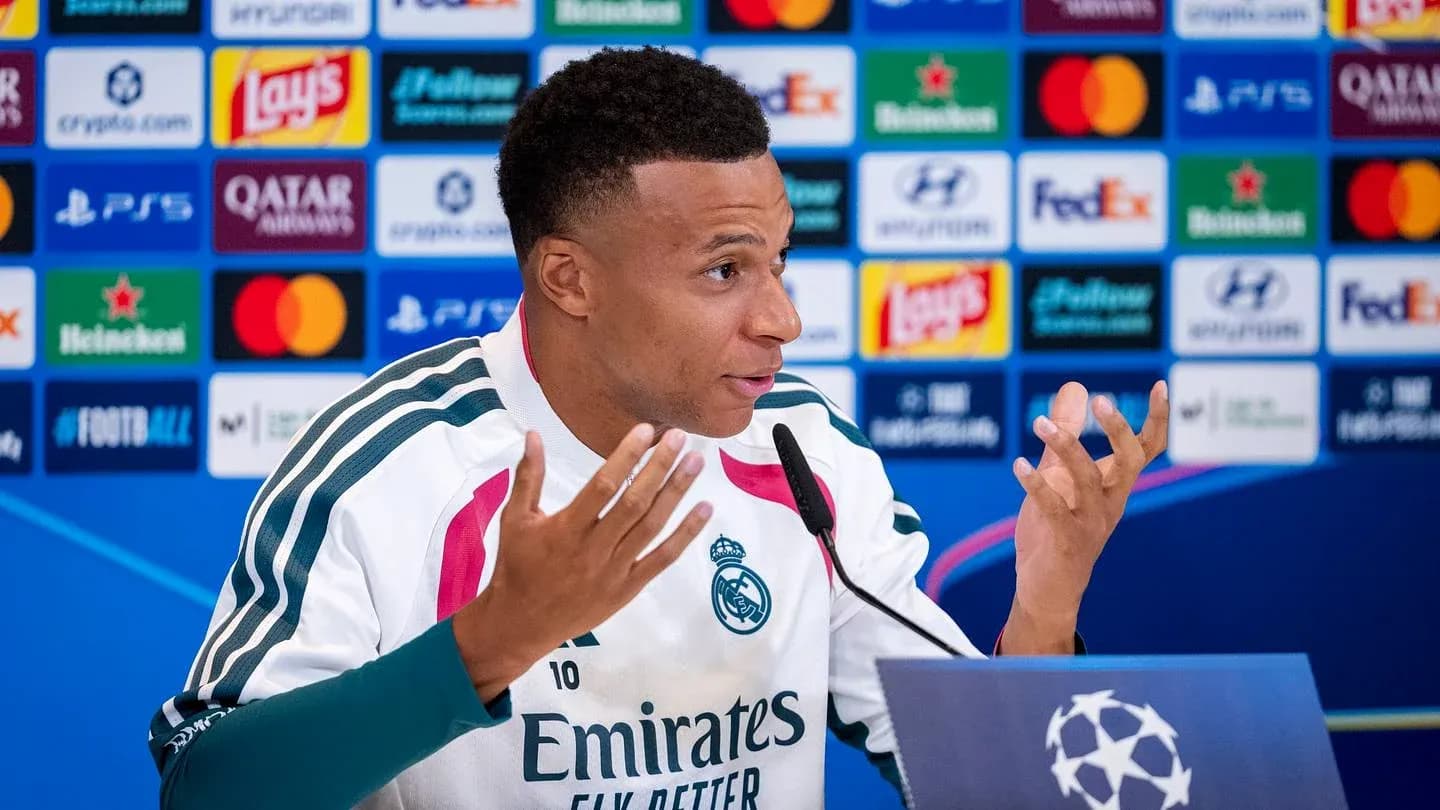
Speaking to the media before Madrid’s clash with Inter, Mbappé fielded the predictable questions about his form, his status, his chances of lifting the game’s most prestigious individual prize. In the press room, he dialled the volume down a touch, playing the part of the responsible superstar at a superclub. But the real soundtrack to his mindset had already been released a day earlier.
In a candid interview with L’Equipe, Mbappé stripped away the diplomatic filter and laid out his case with the kind of clarity that makes people either nod in agreement or bristle.
“Who would I vote for the Ballon d'Or? I'd vote for myself. It's an individual award, we need to see what the player did individually,” he said. No softening. No caveats. Just a forward who knows what he’s done and isn’t afraid to say it out loud.
He dismissed the idea that a “trophyless” season automatically disqualifies him. “I've never seen a single Ballon d'Or winner that ticked every single box of the criteria,” he pointed out, before cutting to the heart of his argument: history.
“Has any player ever won the Ballon d'Or unanimously? No. Which means there's always someone who thought the player doesn't deserve it. Being the best scorer in World Cup history, that's something that sticks in people's minds. Being the top scorer of all the biggest competitions, where the best players play, the UCL, the World Cup, I don't know if anyone did it before.
“I believe that making history should always be rewarded. So when you look at my arguments, when you look at what the other players did this year, I'd say yes, I wouldn't be robbing anybody if I win it. But I understand people who disagree, this is not a dictatorship."
That last line matters. It shows he knows exactly what he’s doing.
The return of the unapologetic superstar
You can argue all day about whether Mbappé’s right. Some will insist Harry Kane deserves it for his goals and leadership. Others will push the claims of Michael Olise or Ousmane Dembélé after standout seasons. There will even be those already dreaming of Lamine Yamal making history at an absurdly young age.
But strip away the tribalism and one thing stands out: football needs this version of Mbappé.
The game has drifted towards a sanitised era of superstar diplomacy. Players are trained to say the “right” thing. They talk about the team, about being grateful, about how “many players deserve it.” They step carefully, aware that every word will be clipped, shared, and dissected. The safest option is humility on repeat.
Mbappé has chosen a different lane.
By publicly backing himself, he walks straight into the role of villain for rival fanbases. The moment a player says, “I’m the best,” half the football world sharpens its knives. It happened with Cristiano Ronaldo, who built an entire aura on his refusal to downplay his own greatness. On the other side stood Lionel Messi, whose quieter tone helped create a more universally affectionate image.
Mbappé is clearly closer to the Ronaldo model. And that’s not a bad thing for the sport.
Elite athletes do not get to the top by accident. They live with a constant, almost obsessive need to be better than everyone else. They replay misses in their head. They chase records that most people never even knew existed. To pretend they don’t think they’re special would be dishonest.
What Mbappé has done is drag that internal monologue into the public square.
Confidence or arrogance? Football still can’t decide
In basketball, this kind of talk is currency. Superstars announce their ambitions. They declare themselves the best. They lean into rivalries and legacies, and the culture celebrates it as competitive fire.
In football, the same attitude often gets relabelled as arrogance.
The difference isn’t in the athletes. It’s in how the sport reacts to them. When Mbappé says he’d vote for himself, he’s not breaking some sacred code. He’s doing what top-level competitors have always done: backing their own work.
And he’s not alone in this new, sharper edge. Lamine Yamal, still a teenager and already a lightning rod for criticism, is beginning to show a similar steel. Real Madrid fans might call it arrogance when it comes from a Barcelona prodigy, but beneath the noise, it’s the same trait: a refusal to shrink from expectations.
These personalities are not a problem for football. They are a requirement.
Because if the best players in the world don’t believe they are the best, who will? And if they never say it, how honest is the conversation around greatness really going to be?
Mbappé’s stance on the Ballon d’Or won’t convince everyone. It doesn’t need to. Awards are always subjective, always political, always contested. He knows that. He said it himself: no winner has ever carried unanimous approval.
What he has done is set his own standard, publicly and unapologetically. He has made it clear that, in his mind, making history matters more than ticking every box on a checklist drawn up by others.
He may not walk away with the Ballon d’Or this year. But he has already made one thing unmistakably clear: he refuses to play the role of the modest superstar who downplays his own greatness for comfort’s sake.
And if that stance divides opinion, it only underlines the real question that will follow him all season: can anyone actually stop a player who already sees himself as the best in the world?