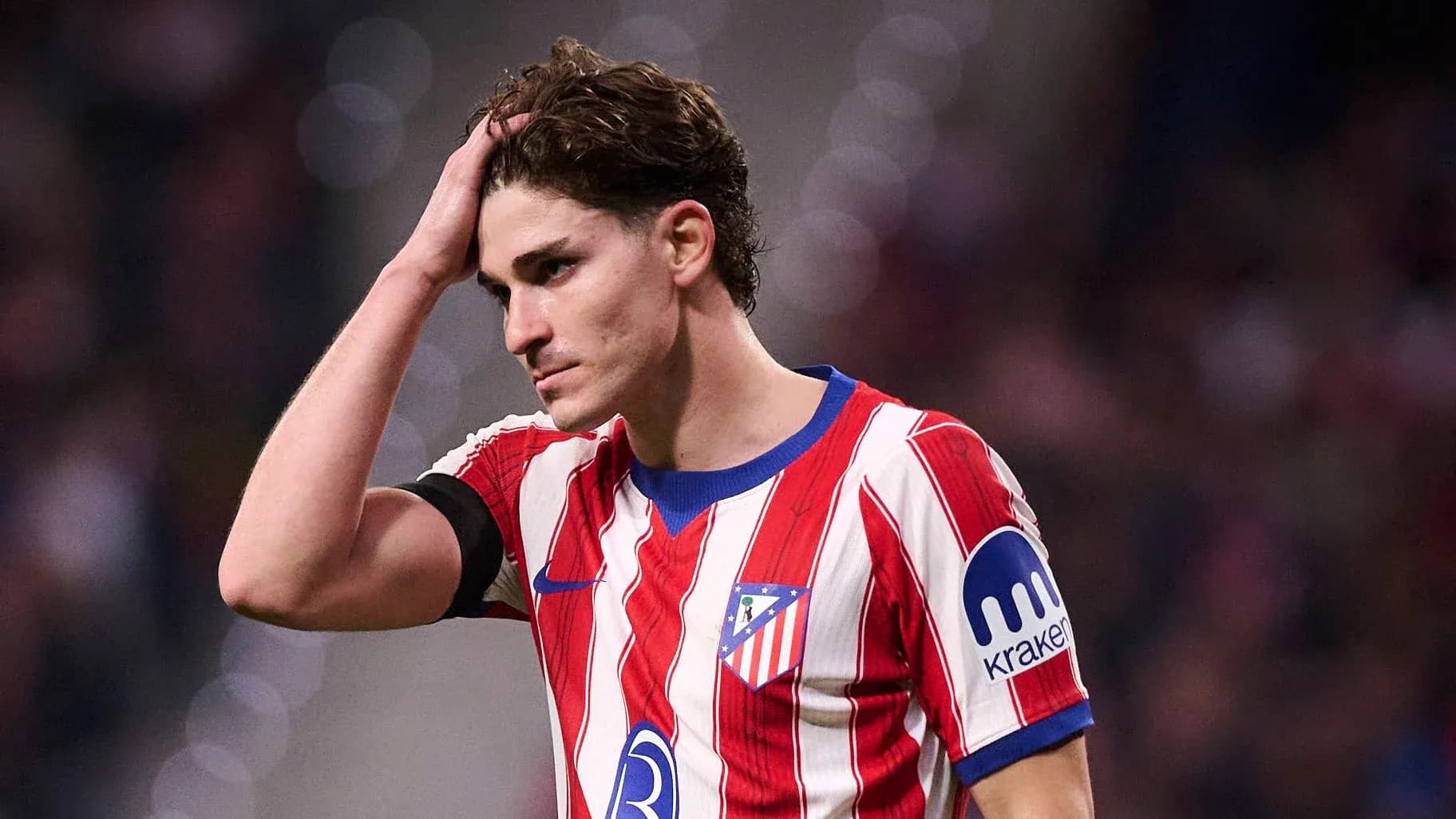
Jeremy Doku: The Rising Star of Football
Jeremy Doku doesn’t just run at full-backs. He hunts them.
Give him the ball, a yard of grass and a defender squared up, and the script is usually the same: a feint, a burst, a flailing leg left behind. His game is built on that raw, fearless confrontation – driving opponents back, forcing them to turn, making them defend while retreating. Few wingers in Europe change the temperature of a game quite as quickly.
That electricity first crackled into life at Anderlecht. As a teenager in Belgium, Doku didn’t ease his way into senior football; he tore into it. The moment he started taking touches in purple and white, the word spread. Former Belgium international Philippe Albert remembers that first impression clearly: as soon as Doku played, he says, “everybody in Belgium knew that he would become a terrific player.”
Rennes moved quickest. In 2020, the French club gambled big on potential and won a race that many had only just realised had started. Over three seasons in Ligue 1, Doku’s numbers edged upwards. Not spectacular yet, but steadily improving – a few more goals, a few more assists, a lot more clips of full-backs left on the floor. Europe’s elite took note of a winger with a low centre of gravity, explosive acceleration and the kind of one‑v‑one threat coaches build game plans around.
Manchester City didn’t just take note. They wrote a £55 million cheque.
For a player still learning his craft, landing in Pep Guardiola’s world is both a blessing and a brutal education. At City, talent is the entry ticket, not the guarantee. Doku arrived to a dressing room full of serial winners, under a coach who demands precision as much as flair. He was never going to walk straight into an untouchable starting role.
Early on, he flickered in and out of the XI. Cameos, starts, spells on the bench. But when the rhythm clicked, the rewards were instant. Premier League, FA Cup, Carabao Cup, Community Shield, FIFA Club World Cup – Doku has already lived through a trophy parade most players would take for a career. The medals arrived before the complete version of the player.
Albert has watched that evolution with interest. The talent, he insists, has never been in doubt. The issue, he points out, lies in refinement. Sometimes Doku does “great things,” sometimes he simply touches the ball too much. Under Guardiola, that instinct has been sharpened. The dribbler is learning when to devastate and when to simplify.
On the international stage, the story has been more complicated. The last World Cup did not become his global showcase. Doku had to leave the Belgium camp for the birth of his child and never truly found his stride in the tournament. Others have emerged since, and Albert is blunt about the challenge ahead: new faces in the national team mean Doku will “have some difficulties to get back in the starting XI with Belgium.”
The equation is clear, though. If he plays regularly for Manchester City and stays in top shape, Albert believes he will always be in contention. Club form still talks loudest.
Doku himself knows exactly where the gap lies. Speaking in April, he laid it out with admirable clarity: assists, he feels, are “fine.” The missing piece is goals. Not the spectacular solo efforts – he already has those – but the ugly ones. The tap-ins. The back-post finishes that swell a season’s tally and change the way a winger is judged.
“I feel like if I have goals we are talking about a different conversation,” he said. He wants to arrive in those easy scoring zones, to add “even five tap-ins a-season.” That, he believes, would transform perceptions and push him towards the bracket occupied by the game’s most ruthless wide men.
And that is the bar he’s chasing. To stand alongside Real Madrid’s Vinicius and Bayern Munich’s Diaz, the modern blueprint for wide forwards is unforgiving: 20-plus goals, heavy assist numbers, decisive contributions in the biggest games. Doku has never hit double figures in a single campaign. He knows it. So does everyone tracking his progress.
Albert has no doubt about the ceiling. Asked if Doku can reach that level, his answer is firm: “Of course. Doku has plenty of qualities.” The raw materials are there – the acceleration, the courage to take responsibility, the ability to unpick a defence without help. What remains is the final layer: efficiency, end product, cold numbers to match the heat of his performances.
Around him, the noise at City has started to swell. Not from the pitch, but from the boardroom and the legal corridors. The club faces 114 Financial Fair Play charges, with the spectre of serious sanctions hanging over the Etihad. Talk of points deductions and even relegation to the Championship has crept into the conversation, an extraordinary backdrop for a squad built to dominate Europe, not England’s second tier.
For a player in Doku’s stage of career, that possibility looms large. He is entering the years when a winger typically explodes statistically, when ambition and physical peak align. The idea of spending that time outside the elite level, even hypothetically, is jarring. It is no surprise that potential destinations for 2027 are already being quietly discussed in some quarters, even if for now they remain just that – speculation.
So Doku stands at a crossroads that isn’t really of his making. On one side, a City team that can offer him the perfect platform to chase his stated ambition: to become, as he puts it, “the world’s best winger, for sure, 100%.” On the other, an uncertain horizon shaped by decisions in meeting rooms far removed from the touchline where he does his damage.
The dribbles, the acceleration, the fear he puts into full-backs – those are all established. The next step is harsher, simpler and entirely unforgiving.
Can Jeremy Doku turn highlight reels into hard numbers before the game around him changes?