Harry Kane Leads England's Star-Studded 2026 Ballon d'Or Shortlist
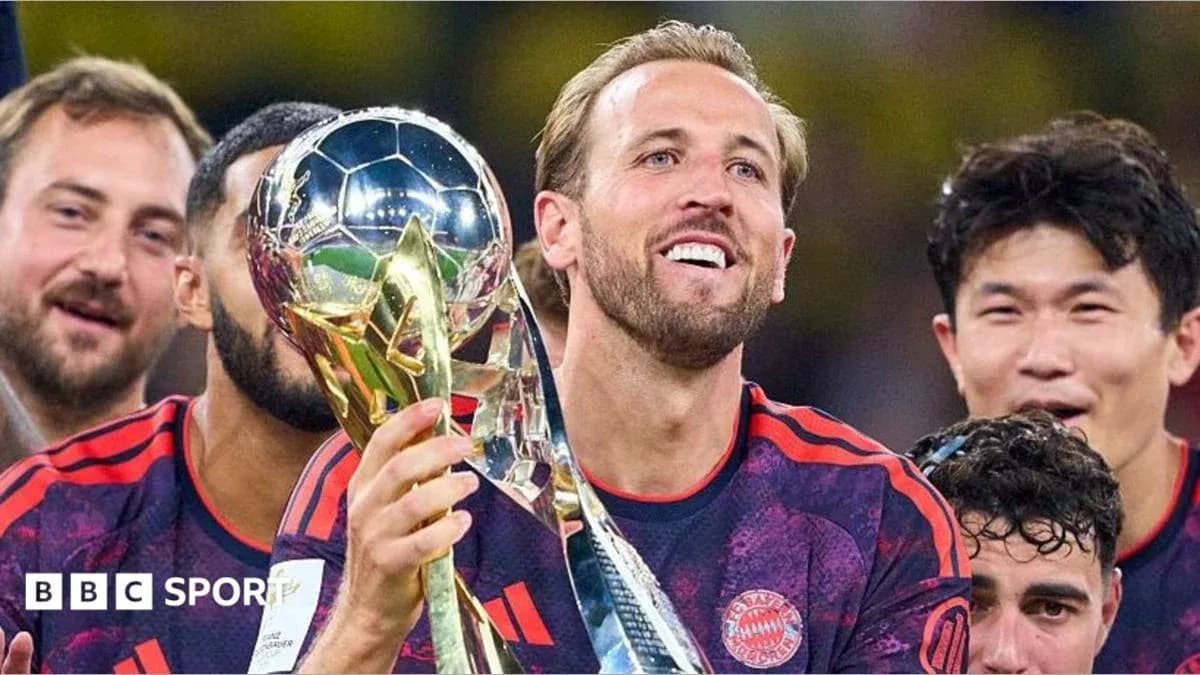
Harry Kane stands at the front of the queue. The Bayern Munich striker, the bookmakers’ favourite for the 2026 Ballon d'Or, leads a powerful English contingent on a 30-man shortlist stacked with World Cup winners, Champions League royalty and one enduring legend who refuses to step quietly from the stage.
Kane is joined by Real Madrid’s Jude Bellingham and Arsenal’s Declan Rice, three pillars of England’s present and future now firmly embedded among the game’s elite. Their inclusion underlines how central English talent has become to the European superclub landscape: Kane the relentless finisher in Germany, Bellingham the heartbeat of Madrid, Rice the commanding fulcrum of Mikel Arteta’s Arsenal.
Messi back in the frame
And still, there is Lionel Messi. At 39, with international retirement confirmed and his European days behind him, the Inter Miami forward remains on the list, chasing a scarcely believable ninth Ballon d'Or.
His final World Cup campaign ended in heartbreak as Argentina lost the final to Spain in July, yet Messi still produced eight goals on the biggest stage, another deep imprint on a tournament he has dominated for a generation. That body of work keeps him in the conversation, even as the spotlight tilts towards a younger cast.
Spain’s golden generation steps up
The World Cup win has inevitably coloured this year’s nominations, and Spain’s new wave is everywhere you look. Six members of the world champions make the cut, with Lamine Yamal the most striking symbol of a shifting era.
Yamal, already a global star before his 20th birthday, now carries the sheen of a world champion and a Ballon d'Or nominee. His inclusion feels less like a reward and more like a statement: Spain intend to stay at the top.
The decisive moment of that World Cup final also finds its way onto the list. Ferran Torres, who scored the winning goal and sealed Spain’s triumph over Argentina, is nominated after his summer move from Barcelona to Paris St‑Germain. A player often questioned at club level now has his name written into football history and, with this nod, into its individual honours as well.
PSG dominance and Real firepower
Paris St‑Germain’s grip on the Champions League has translated directly into Ballon d'Or recognition. Back-to-back European titles have produced a remarkable nine nominees from the French champions, not including their new arrival Torres.
Ousmane Dembele, last year’s winner, returns to the shortlist as the creative livewire of a side that has turned domestic dominance into continental control. Around him, a cast of PSG teammates underline just how thoroughly the club has reshaped the European hierarchy.
Across the Spanish capital, Real Madrid’s attacking power also receives its due. Kylian Mbappe and Vinicius Jr both feature, two forwards whose blend of speed, swagger and ruthless finishing has terrorised defences and kept Madrid at the sharp end of every major competition.
Premier League steel
The Premier League’s influence is not limited to Kane and Rice. Arsenal’s rise under Arteta earns further recognition with defensive duo Gabriel and William Saliba both nominated.
Their presence on the list reflects more than individual form. It speaks to a rebuilt Arsenal side that now defends with authority and competes deep into major competitions, a club once known for fragility now represented by two of Europe’s most imposing centre-backs.
A landmark year, a symbolic city
This edition of the Ballon d'Or carries an extra layer of significance. The award celebrates its 70th anniversary, seven decades on from its creation by France Football in 1956.
To mark the occasion, organisers have chosen London as the host city for the ceremony on 26 October, a “symbolic choice of venue” that reaches back to the competition’s origins. The first Ballon d'Or went to Sir Stanley Matthews, the English winger whose name still evokes an era of heavy leather balls, muddy pitches and artistry that transcended it all.
Seventy years later, the game looks unrecognisable. The prize, though, remains the same: one golden ball, one name, and a place in football’s most exclusive club. This time, the question is stark.
Does the future finally push the past aside, or does Messi write his name on it again?