Harry Kane's Quest for the Ballon d'Or: History vs. Goals
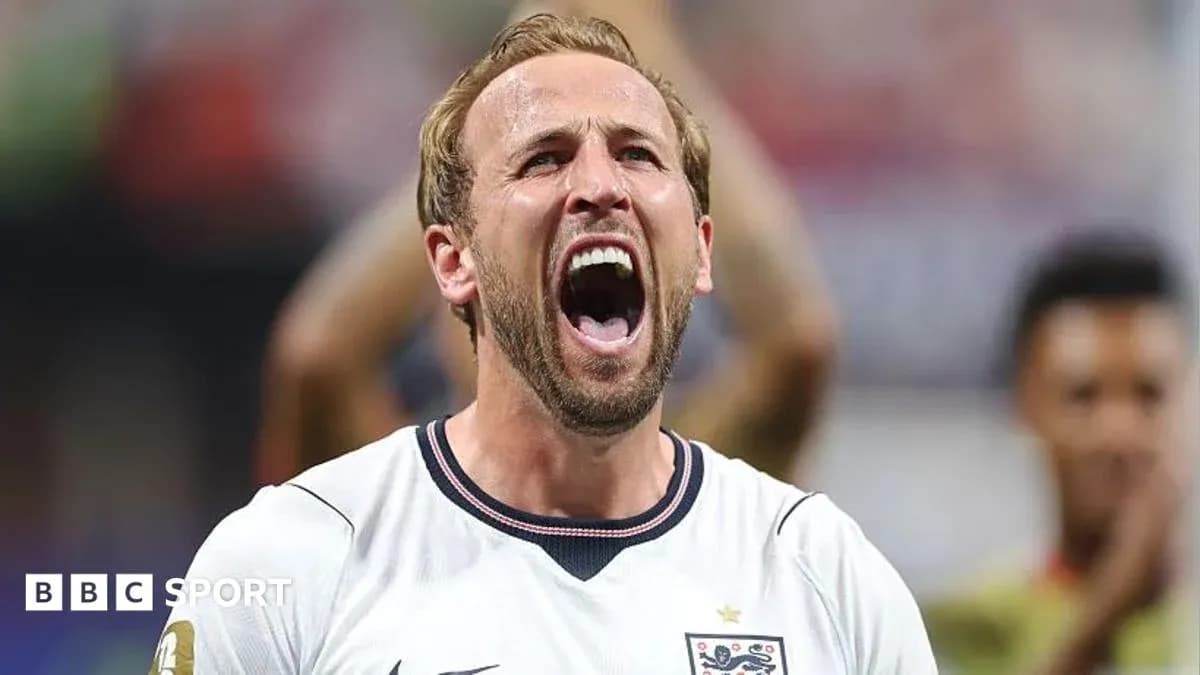
Harry Kane stands on the brink of the biggest individual prize in football, armed with the kind of numbers that usually end arguments, not start them. Goals for fun with club and country, records tumbling, bookmakers backing him as favourite.
History, though, has never been easily bullied by statistics.
Since 1956, when Sir Stanley Matthews walked off with the first Ballon d'Or, the award has followed a familiar compass: it points towards the players who bend the biggest tournaments to their will. World Cups, European Championships, Champions Leagues, Copa Americas – those are the stages that shape votes, reputations and legacies.
Kane is trying to gatecrash a club that usually requires a trophy parade.
A prize shaped by the World Cup
World Cup years have always left a heavy fingerprint on the Ballon d'Or. Raymond Kopa set the tone in 1958, his performances dragging France to the semi-finals and earning him the award. Decades later, when France Football revisited those early editions to imagine a world without eligibility restrictions, the pattern became even clearer.
Their retrospective verdict? Pele would have owned 1958, the teenage phenomenon driving Brazil to their first World Cup. Garrincha would have taken 1962 after guiding Brazil to back-to-back titles. Pele again in 1970, orchestrating Brazil’s third crown. South American brilliance that the original rules simply locked out.
Even without the rewrite, the roll call in World Cup years reads like a who's who of champions. Bobby Charlton in 1966. Paolo Rossi in 1982. Lothar Matthaus in 1990. Zinedine Zidane in 1998. Ronaldo in 2002. Fabio Cannavaro in 2006. Lift the World Cup, lift the Ballon d'Or – it became the unofficial script.
When the winner did not actually win the trophy, they still went deep. Johan Cruyff in 1974, redefining the sport as the Netherlands reached the final. Luka Modric in 2018, Croatia’s conductor on an improbable run to the last game. Perform on the biggest stage, under the brightest lights, and voters usually fall into line.
The rare breaks in the pattern
There have been cracks in that logic, but they only highlight how hard it is to break through without a medal around your neck.
Kevin Keegan claimed the 1978 Ballon d'Or even though England never made it to that World Cup. France Football’s later review suggested Mario Kempes, Argentina’s top scorer and World Cup winner, would have been the rightful choice. The same retrospective lens handed imagined Ballons d’Or to Diego Maradona in 1986 and Romario in 1994 – both World Cup winners, both irresistible.
Strip away the old eligibility rules and the conclusion is blunt. Between 1958 and 1994, every South American World Cup-winning side would have produced a Ballon d'Or winner. The World Cup has not just influenced the vote; it has dominated it.
And it is not just that tournament. In the modern era, success in one of football’s major competitions has become almost a prerequisite. Only four of the last 19 Ballon d'Or winners failed to win either the Champions League, World Cup, European Championship or Copa America in their triumphant year.
Those four outliers? They explain just how abnormal you have to be to bend the rules.
Lionel Messi did it in 2010, despite Argentina’s World Cup quarter-final exit, on the back of a staggering season with Barcelona. He did it again in 2012, and again in 2019, without a major international or continental trophy to lean on. Cristiano Ronaldo forced his way through in 2013, even though Portugal did not get past the World Cup play-offs, powered instead by his output for Real Madrid.
On the other side of that equation sit the nearly men. Wesley Sneijder, treble winner with Inter Milan and World Cup finalist with the Netherlands in 2010, watched the award go elsewhere. Franck Ribery, central to Bayern Munich’s 2013 treble, suffered the same fate. Mohamed Salah’s record-breaking 2017-18 season could not dislodge the established narrative either.
Individual brilliance, without the right trophy in the background, often ends up as a footnote.
Kane against the weight of history
That is the storm Kane is walking into.
His numbers this year are the kind that normally end debates before they start. He has never finished higher than 10th in the Ballon d'Or voting, yet arrives at this edition as the bookmakers’ pick, the spearhead of a prolific campaign for club and country. Few players have entered an election with stronger individual credentials.
But the names around him on the shortlist underline the old truth: this award usually follows silverware.
Rodri looks like his most serious rival. A former Ballon d'Or winner, he anchored Spain’s charge to a second World Cup title and walked away with the Golden Ball as the tournament’s outstanding player. That combination – dominant performances and the biggest trophy of all – has historically been decisive.
Lamine Yamal has a World Cup winner’s medal of his own, adding it to a season in which he helped Barcelona reclaim La Liga. Pau Cubarsi, his teenage team-mate, collected the Fifa Young Player Award after a string of standout displays. Youthful brilliance, backed by major honours, rarely goes unnoticed in these votes.
Then there are the familiar heavyweights. Kylian Mbappe finished as the World Cup’s top scorer with 10 goals, while also winning the Champions League Golden Boot and La Liga’s top scorer award. He did all that in a year when France fell short of the World Cup final and Real Madrid ended without a major trophy, a reminder that even the elite sometimes collide with the same barrier Kane is now facing.
Messi remains in the frame as well. He captained Argentina to a second successive World Cup final and, at 39, still scored eight times at the tournament. Age has not dulled the aura, and voters have shown time and again how reluctant they are to close that chapter.
A place among English and Bundesliga greats?
If Kane does break through, the significance will stretch far beyond his own story.
He would become only the fifth Englishman to win the Ballon d'Or, following Matthews, Charlton, Keegan and Michael Owen. Four names that define different eras of the English game, each attached to a moment when the country briefly sat at the summit of the sport’s individual hierarchy.
He would also be the first player representing a Bundesliga club to lift the trophy since Matthias Sammer in 1996. For a league that has produced so many great sides and so many great players, that gap is striking.
History says the odds are against him. The pattern is clear, the precedent brutal. The Ballon d'Or, more often than not, goes home with the man holding the biggest cup.
Yet few seasons in the modern era have showcased a more ruthless, sustained goalscoring campaign than Kane’s. The jury – one journalist per country from the men’s top 100 nations – now has to decide what it values most.
Do they stay loyal to the old script, where trophies trump everything? Or, for once, does the pure weight of goals force them to rewrite the rules and carve Kane’s name into one of football’s most exclusive honours lists?