The Evolution of European Football: From Maradona to the Super League
On 16 September 1987, Diego Maradona’s Napoli walked into the white heat of La Quinta del Buitre’s Real Madrid and were out of Europe almost before they’d unpacked. A 2-0 defeat at the Bernabéu, a 1-1 draw in the return at the San Paolo, and one of the continent’s most glamorous sides were gone in the first round of the European Cup.
Some people shrugged. Silvio Berlusconi did not.
The AC Milan owner, watching a tournament that could casually spit out a Maradona side in September, decided that was bad for business. If Napoli could vanish that quickly, Milan could too. He wanted a stage where the giants stayed on screen longer, where the stars did not exit before the theme music had finished playing. Out of that anxiety grew his push for a European super league.
The super league never arrived in the form he imagined, but Uefa felt the tremor. Five years later, the Champions League appeared, a rebranded, reworked version of the old European Cup. More games, more television, more money, more protection for the established elite.
It still wasn’t enough. It never is.
One club per country became two. Two became three. Then four. In some cases, five. The ladder was pulled up slowly, rung by rung, dressed in the language of “modernisation” and “competition”, but always with the same outcome: the richest teams facing each other more often, and for longer, with less danger of disappearing early.
Now comes the Swiss model, the logical end point of that Berlusconi instinct. A bloated league phase. A blizzard of fixtures. A guarantee that the biggest brands spend as much time as possible on prime-time television, with jeopardy pushed back into the distance. Gabriel Hanot, the French journalist who first imagined a pure, knockout European competition, would look at this and weep.
And yet, what a night of football it delivers.
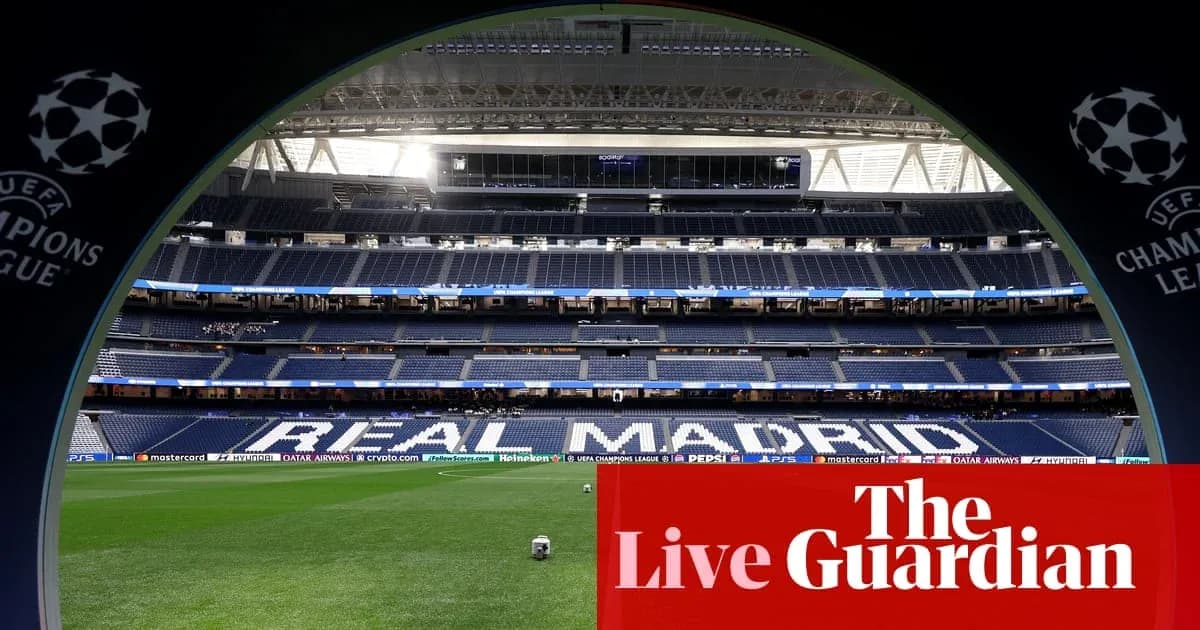
Real Madrid v Internazionale. The kind of tie that sells itself, no matter how distorted the path that produced it. Football, again, is the victim of its own brilliance. You can rail at the format, but you still lean forward when that fixture appears on the screen.
There is plenty to feed on. José Mourinho, cast once more as the man on his final chance, prowls the touchline in Madrid. Has he recovered any of that old electricity, that siege-mentality alchemy that once made his teams feel inevitable? Across from him stands Cristian Chivu, the former disciple now in charge at Inter, taking over the club where Mourinho carved his legend into European history. Mentor and former pupil, reunited in the competition that defines them both.
That alone would be enough. It isn’t all.
In Dortmund, an 18-year-old named Konstantinos Karetsas has lit up the Westfalen with the kind of start that makes scouts scribble faster and fans arrive a little earlier. Borussia Dortmund face Villarreal, a fixture that might once have been tucked away in the shadows, but now carries the intrigue of a rising talent trying to bend a European night to his will.
Elsewhere, Porto meet Manchester City, the reigning power who have turned these midweek trips into something close to routine – though in Porto, routine rarely stays that way for long. Lille host Real Betis, another of those games that may not shift the balance of the competition but will, for 90 minutes, completely occupy the people who care.
What any of it means in the grand architecture of this new format is harder to say. The tables, the seedings, the convoluted paths to the knockouts – all of it can feel like a puzzle designed more for broadcasters than for supporters. But context loses to spectacle when millions of eyes fix on a ball, a pitch, a possibility.
And while Europe takes centre stage, the domestic calendar refuses to stand aside. The League Cup rumbles into life across England, 7.45pm and 8pm BST kick-offs scattered around the country, managers juggling squads, supporters weighing up whether this is a trophy to chase or a distraction to endure. It may not have the gloss of the Champions League, but it still offers something the new European structure tries so hard to control: the chance of a genuine shock.
By 8pm BST, the Champions League joins the party. Real Madrid v Inter. Dortmund v Villarreal. Porto v Manchester City. Lille v Real Betis. The old European Cup died the night men like Berlusconi decided Maradona going out early was bad business. This new beast is the result.
The question now is simple: with all this football, all this noise, and all these carefully protected giants, where will the next truly unforgettable night come from – the polished super stage, or some raw, restless corner of the game that refuses to be scripted?