Everton’s Transfer Window Fiasco: A Fanbase in Fury
Everton’s transfer window did not simply end badly. It collapsed in public, in real time, leaving owners The Friedkin Group and chief executive Angus Kinnear squarely in the crosshairs of a furious fanbase.
What had already been a tense summer turned poisonous. The attempted sale of home-grown forward Harrison Armstrong to Nottingham Forest lit the fuse. Supporters reacted with such venom that Everton’s own board stepped in and blocked the move, aware they were about to trade away the club’s most exciting academy product since Wayne Rooney for short-term cash and long-term chaos.
That, though, was only the warm-up act.
Balogun saga descends into farce
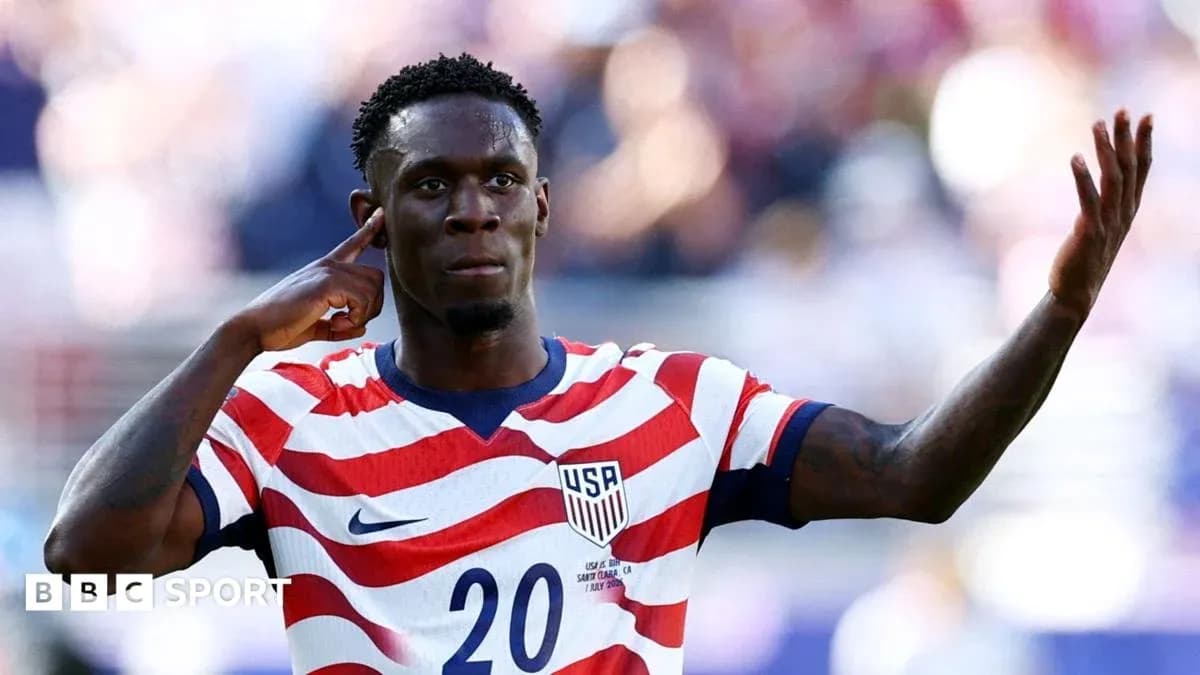
The final day of the window was supposed to deliver the statement signing: Folarin Balogun from AS Monaco for £40m. Instead, it became a case study in how not to run elite recruitment.
By Tuesday night, everything looked done. Balogun, 25, had agreed personal terms. Both clubs had signed the deal sheet, allowing the transfer to be completed after the 23:00 BST deadline. Everton had even booked an 8am flight to bring the United States striker to Merseyside.
The details, though, started to fray. Balogun arrived later than planned. Everton grew irritated at delays in receiving paperwork from Monaco. Then came the medical. Issues were flagged. The deal had to be renegotiated.
At that point, Everton’s strategy lurched from bold to panicked.
They pivoted to Joshua Zirkzee, exploring a loan from Manchester United. The Dutchman was keen. United were not. Old Trafford closed its doors. A call went in to Aston Villa for Tammy Abraham. He listened, then chose to stay put at Villa Park. Another dead end.
Back to Balogun. With minutes left in the window, Everton and Monaco finally reached a revised agreement: a smaller up-front fee, a package of add-ons tied to performance and progression, the same personal terms for the player. On paper, the deal was alive.
Then Balogun walked.
The striker left Finch Farm without signing, Monaco sporting director Thiago Scuro later telling reporters that Balogun was “not comfortable” with how Everton had treated him during his medical.
Everton insist they supported the player throughout, were transparent about the medical findings and made it clear they would work with Monaco to find a solution that still allowed the transfer to go through. None of that mattered once the player’s trust evaporated.
The club’s marquee target had been in the building. He left as a Monaco player. Symbolically, it was devastating.
A squad stripped bare
The timing made it worse. Hours earlier, Everton had sanctioned Beto’s £15.5m move to Fiorentina. Their centre-forward department, already thin, now looks skeletal.
At the same time, their most creative force, Iliman Ndiaye, was completing a £65m switch to Manchester City. Two key attacking players out, one major target spooked into retreat, and no replacement through the door. The arithmetic is brutal.
Everton can argue that Balogun made a personal choice they could not control. The more uncomfortable question is why such an obvious need at centre-forward was left to the final day of the window, when margins are tight and options disappear in hours.
Kinnear had gone on BBC Radio Merseyside recently and declared the squad “in a good place”. He spoke about a clear metric: that by the close of the window, Everton would have secured “the absolute best player we can in their position”.
He also relayed the view of the American ownership that missing out on Europe last season was “failure”. David Moyes admitted he was “surprised” to hear that description.
Now the word “failure” is being thrown back at the hierarchy, not the manager. And this time it is not about league position. It is about competence.
The “good place” Kinnear described has, in reality, left Moyes with a single senior striker in the raw Thierno Barry and only 18 senior outfield players. For a 63-year-old manager who has already struggled to hide his frustration with the summer’s business, it is an alarming position.
Everton did at least secure Jack Grealish on loan and finally address a long-standing right-back problem by bringing in Ashley Maitland-Niles from Lyon for £3m. Those moves, though, sit in the shadow of the wider mess.
Right-back solved, but at a cost
Even the solution at right-back came with familiar turbulence. For much of the window, Kenny Tete of Fulham looked the preferred option. A £9.4m deal was in place, only to be abandoned when Fulham failed to secure a replacement. Maitland-Niles was then pushed over the line and announced shortly after midnight.
The end result is a squad with one recognised right-back (Maitland-Niles), one left-back (Vitaliy Mykolenko), and a hole where depth should be. Youngster Adam Aznou has been allowed to join Malaga on loan, trimming numbers further.
One PR disaster – the proposed sale of 19-year-old Armstrong – had been narrowly avoided. Another, arguably more damaging, arrived immediately in its place with the Balogun fiasco and the failure to reinforce key areas.
After the Carabao Cup second-round win at Preston North End, Moyes had warned: “I still think we have got a lot of work to do. We need more players. Our squad is not big enough and we need to get more quality in some areas if we can do.”
He has been proved right, and in the harshest way.
Fans turn from flags to fury
Supporters have not waited to deliver their verdict. A petition calling for Kinnear’s resignation is already circulating. Organised fan groups, long a source of colour and noise, have turned their energy towards open criticism.
“The Everton Fans’ Forum” issued a detailed statement accusing the club of leaving the squad “dangerously short” in key positions. Their words cut through the usual noise of deadline day.
“The conclusion of this summer’s transfer window leaves Everton supporters with serious questions about the club’s planning, recruitment and decision-making,” it read. “This is not about demanding that Everton spend recklessly. Supporters understand the financial restrictions the club operates under. We are not demanding marquee signings simply for the sake of it.
“We are demanding competence, preparation and accountability.”
“The 1878s”, the volunteer group behind the huge flags, banners and tifos that have transformed atmospheres at the new Hill Dickinson Stadium, have gone further. Their displays were described as “unbelievable” by Moyes not long ago. Now, they are stopping.
In a statement, they announced they are “standing down for the foreseeable future” in protest at the window, saying they are “utterly disappointed and disgusted” with how it unfolded, particularly the chaotic finale.
They also made clear that regulations prevent them from using overtly derogatory wording or images on flags. If they could display their anger visually, they insisted, they would. The rules stop them. Their silence, then, becomes its own kind of banner.
Signings overshadowed by chaos
Strip away the noise and there were signings. Some of them, on paper, are smart.
PFA Championship Player of the Year Hayden Hackney has arrived from Middlesbrough, a midfielder with the energy and technical quality to step up. Christian Norgaard has been brought in from Arsenal to replace Idrissa Gueye, though the 32-year-old is currently injured with no return date set.
Young German Merlin Rohl has joined, as has England Under-21 winger Tyrique George, whose loan last season has now been made permanent. Brennan Johnson has come in from Crystal Palace in a straight swap for Dwight McNeil, a bold reshaping of the wide options.
None of it changes the central truth of this window: Everton end it weaker than they started. Thinner in attack, lighter in depth, more fragile in the eyes of their own supporters.
The club has yet to issue a public statement addressing the Balogun collapse, the Armstrong U-turn or the wider storm around their planning. For TFG and Kinnear, the questions are not going away. The fences with supporters will not mend themselves.
What happens next – on the pitch and in the boardroom – will decide whether this window is remembered as a low point, or the moment Everton’s season was lost before it even truly began.