Emily Owen's Bold Exit from Cheltenham Town Women
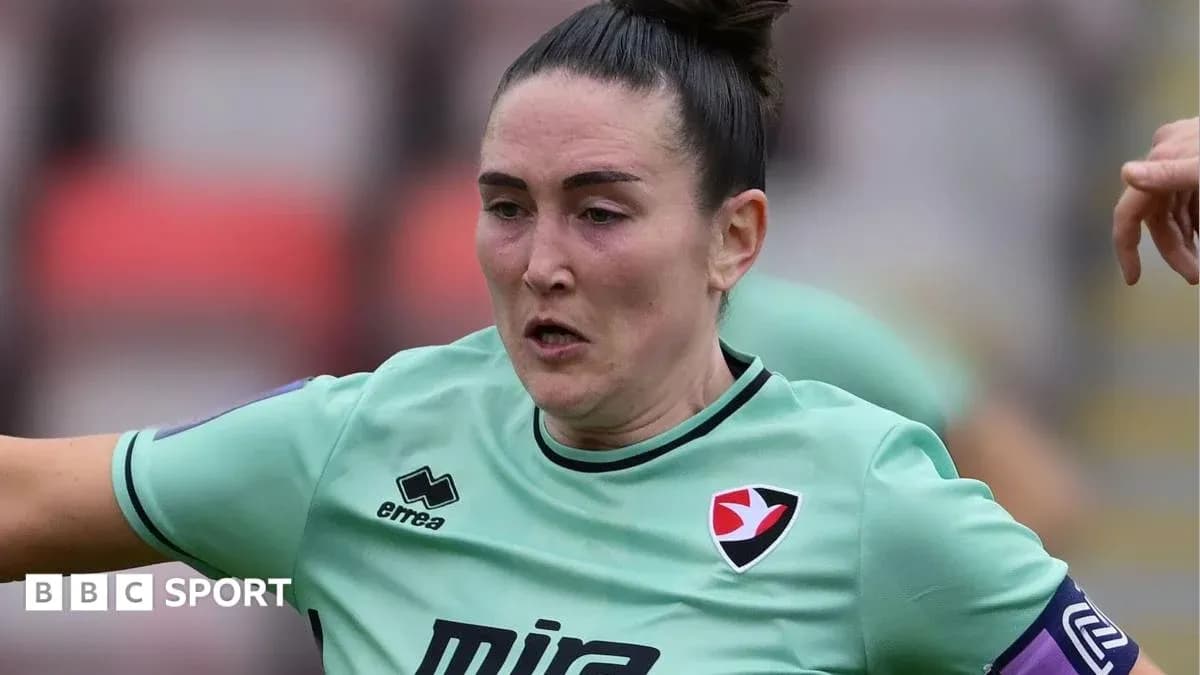
Emily Owen, the long-serving former captain of Cheltenham Town Women, has launched a stinging attack on the club’s internal culture, claiming one figure has created “a dictatorship where players feel psychologically unsafe”.
Owen confirmed her departure from the Women’s National League Southern Premier Division side on Monday after four years and more than 130 appearances. At first, it looked like the familiar script: a respected senior player moves on, the club posts the farewell graphic, the thanks roll in.
Then came her response.
After Cheltenham Town Women announced the news on social media, the defender publicly rejected any notion that this was a routine exit, saying she had left because of “a lack of an individual's principles and outright failures in processes”.
She said she felt compelled to “set the record straight” after hearing rumours about why she had gone. What followed was a rare and pointed public challenge to the way a women’s club is being run.
“One individual in particular has far too much control within this team, turning the environment into a dictatorship where players feel psychologically unsafe,” Owen said.
She did not name the person, but the accusation cut straight to the heart of the modern game’s most sensitive issue: welfare and power dynamics inside dressing rooms. Owen went further, claiming she was not alone in walking away on principle.
She said three other players had also left the club “on moral grounds as boundaries were crossed, that shouldn't be crossed in women's football”.
Cheltenham Town Women, asked about the allegations, chose not to address Owen’s claims directly or discuss any “individual cases”. The club instead issued a broader statement, stressing its stance on player welfare.
“Cheltenham Town Women are committed to ensuring that every player, member of staff and volunteer is treated with respect and feels safe, valued and supported within our environment,” a spokesperson said.
“We will ensure that any concerns brought to our attention are treated appropriately, sensitively and in line with all relevant policies and procedures.”
The contrast is stark. On one side, a former captain talking about “dictatorship” and unsafe psychology. On the other, a club leaning on process, policy and a promise to handle concerns “appropriately”.
For Cheltenham Town Women, this is no ordinary farewell. When a player with Owen’s service and status chooses to go public, and to frame her exit in terms of morals, boundaries and control, it leaves a question hanging over the club that only actions, not statements, will answer in the months ahead.