Edu's Nottingham Forest Tenure Ends Quietly After Turbulent Year
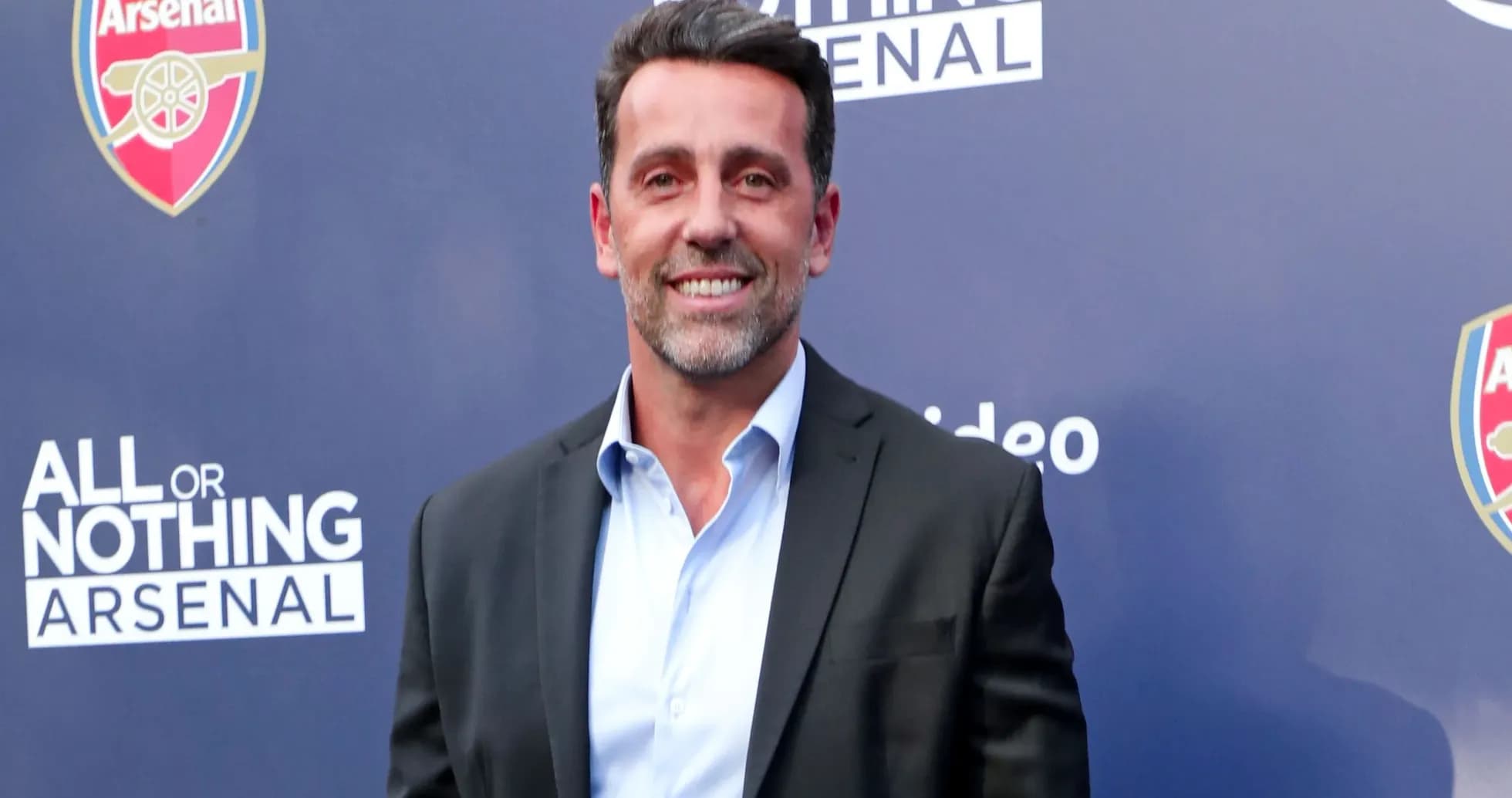
Edu’s Nottingham Forest experiment is over, and it ends not with a statement or a tribute, but with a quiet exit and a club already moving on without him.
The Brazilian executive has officially left Forest just over a year after arriving as global head of football, brought in to spearhead an ambitious multi-club project. In reality, his departure has been months in the making. He has not attended a match since February, nor set foot in the City Ground or the training ground since early March, when the first reports of his impending exit began to surface.
Forest, tellingly, do not intend to announce his departure. There will be no direct replacement either. The club has already reshaped itself around his absence.
Power Shifts Behind the Scenes
As Edu faded from view, Chief Football Officer George Syrianos stepped into the gap. His responsibilities have grown steadily since the Brazilian was sidelined, to the point where he now effectively occupies the space Edu was meant to command.
Syrianos’ rise also cushions the blow of another key departure. When Ross Wilson left for Newcastle United in October last year, Forest lost a major operational figure. The expanded remit for Syrianos now covers much of that void as well. The club’s football structure has been rebuilt on the fly, with little fanfare and even less sentiment.
It has unfolded against a backdrop of chaos.
From European Ambition to Survival Scrap
Edu arrived with pedigree and expectation. Forest, under Nuno Espirito Santo, had flirted with the fringes of the Champions League places, hinting at a project ready to step into the European conversation.
That promise disintegrated quickly.
A breakdown in the relationship between Nuno and Edu lit the fuse. The fallout led to Nuno’s departure and sent Forest careering into a relegation battle. The stability that had underpinned their push up the table vanished almost overnight.
What followed was a carousel in the dugout that would have embarrassed far less ambitious clubs. Ange Postecoglou lasted just 39 days before being jettisoned. Sean Dyche came next, a firefighter by reputation, only to be dismissed himself in February. Vitor Pereira’s spell barely had time to take shape before he too was replaced.
Oliver Glasner, the former Crystal Palace manager, is the latest man asked to steady a listing ship and restore the consistency that deserted Forest during Edu’s tenure.
Big Names, Small Returns
If the managerial churn told one story, the recruitment under Edu told another, equally troubling one.
Backed by significant investment, Forest targeted high-profile names. The strategy was bold. The returns were brutal.
Omari Hutchinson, Douglas Luiz, Oleksandr Zinchenko – players with strong reputations and, in some cases, Premier League pedigree – all arrived with expectations to transform Forest’s ceiling. None made a meaningful dent in the club’s fortunes at the City Ground.
The disconnect between outlay and output drew sharp criticism from supporters and pundits alike. This was not the shrewd, progressive squad-building that had defined Edu’s reputation in North London. It looked scattergun, reactive, and expensive.
For a club fighting to keep its head above water, misfires on that scale were always going to leave scars.
A Stark Contrast to Arsenal Glory
That is what makes this chapter so jarring in the context of Edu’s broader career.
At Arsenal, he had helped build one of the most admired football operations in Europe. Appointed the club’s first technical director in 2019, he played a central role in reshaping the squad and the culture, and in December of that year he turned to a familiar face, appointing former teammate Mikel Arteta as manager.
The project grew. Edu was promoted to sporting director in November 2022, overseeing Arsenal’s return to the Premier League title conversation and re-establishing the club as a modern, well-run contender. His resignation in November 2024 came as a surprise, but his reputation at that point remained strong: a key architect of Arsenal’s revival.
All of that built on an already decorated career. On the pitch, he was part of the iconic 2003-04 “Invincibles” side, a midfielder woven into one of English football’s greatest teams. Off it, he had accumulated serious experience long before Forest called: five years as director of football at Corinthians, a brief advisory role with the Iran national team in 2014, and three years as general coordinator for Brazil’s national side.
Those roles painted a picture of a polished, high-level operator. Forest was supposed to be the next step in that upward curve.
A Reputation Dented, Not Destroyed
Instead, his time at the City Ground has become a cautionary tale about fit, timing and control.
Forest’s season veered from European talk to survival mode. Managers came and went at dizzying speed. Expensive signings failed to move the needle. The executive hired to orchestrate a multi-club vision ended up isolated, then absent, then gone.
Edu’s exit marks a clear low point in a career otherwise defined by success. Yet football rarely allows a single bad spell to write the final line of a résumé as substantial as his.
Forest, already reorganised around Syrianos and Glasner, now have to prove that the turbulence of the past year was an aberration rather than a new identity.
As for Edu, the question is no longer about what he achieved at Arsenal or with Brazil. It is whether this bruising stint at the City Ground becomes a footnote in his story – or the moment that changes the way clubs view him at the top of the game.